






Financial Decision Making
Latest News
Advertisement
Latest Videos



Shorts
0:34
Why hospitals don't need to own everything
2 months ago
by
Ron Southwick
0:43
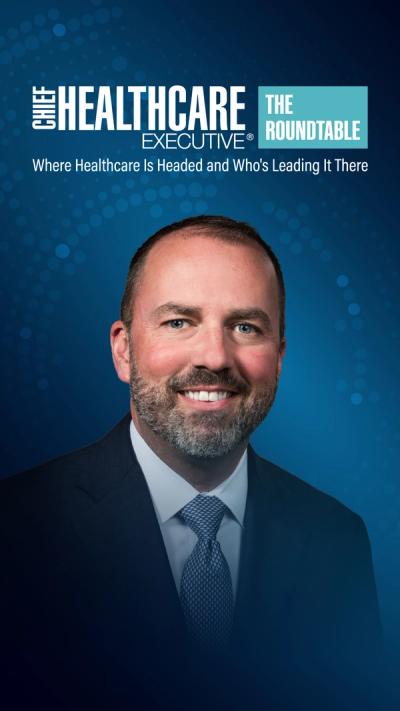
The Roundtable: The mission to do the right thing
3 months ago
by
Chief Healthcare Executive Staff
0:34
Hospitals need an energy strategy
3 months ago
by
Ron Southwick

0:48
Treasury management reaches the hospital boardroom
4 months ago
by
Ron Southwick
0:34
A key piece of advice for hospital CFOs
4 months ago
by
Ron Southwick
0:34
Hospitals will face inflation for some time
6 months ago
by
Ron Southwick

0:43
Tackling financial sustainability, cost, and outcomes
8 months ago
by
Ron Southwick
Podcasts

























Advertisement
More News
The Business Group on Health says employers are seeing higher costs in hospital care and drug expenses. Some are cutting back on GLP-1 coverage and examining vendor contracts.
When power becomes unpredictable, the consequences move quickly. Clinically, it can delay procedures or force changes in care delivery. Operationally, it can disrupt scheduling, staffing and throughput.

Pediatric hospitals have more cash and are seeing strong financial performance. But Medicaid cuts are looming and they continue to see shortages of doctors in specialties.

Analysts from Fitch Ratings say there are encouraging signs in hospital performance, but looming headwinds with Medicaid cuts unfolding.
Health systems can take steps to improve access to medications with limited distribution, while lowering costs.

The number of deals in the first six months of the year has nearly matched the transactions seen in all of 2025. Analysts expect more mergers and acquisitions in the months ahead.

Many Americans have dropped coverage, and hospitals have warned they will see more uninsured patients.

Health systems, life sciences companies and laboratories face new rules, which carry penalties for violations. Here are strategies for dealing with new regulations on health data.

Health systems are facing more cost pressures that should intensify in the coming year. Joe Kight of U.S. Bank says hospitals should be thinking ahead and viewing liquidity as a strategic asset.
While healthcare will always depend on dedicated full-time clinicians, the workforce itself is evolving. Many nurses today want some degree of flexibility in how they work.

The unfortunate growth of pharmacy deserts is creating new urgency and opportunities for health systems and hospitals to expand pharmacy services — if executives are careful to develop strategies that ensure the initiatives deliver ROI.
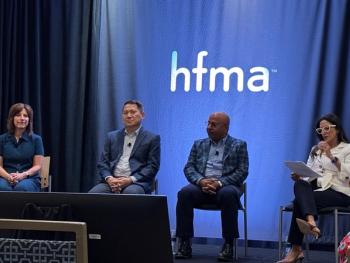
Chief financial officers are taking on a bigger role in health systems as the industry evolves.

States will face new rules in funding Medicaid. Mary Mayhew, CEO of the Florida Hospital Association, says new federal rules are threatening vital programs.
Even with big changes in federal policy and mounting cost pressures, Hancock says devising strategies for the future is the best way to manage and adapt.
She spoke with Chief Healthcare Executive at the HFMA conference about integrating Spectrum Health and Beaumont Health to form Corewell Health. She also talked about facing financial headwinds and the value of partnerships.

The Catholic health system has completed the deal to acquire AMSURG’s 300 ambulatory surgery centers. It marks a shift in Ascension’s long-term strategy.

For both clinicians and attorneys the lesson is quite clear: whatever the AI model, verification of output together with your own medical and legal judgment remains important.

Most doubt the long-term viability of the health system and say the tipping point is coming, and soon, according to a survey by Vitalic Health.

Providers are seeing more patients confused by misinformation and disinformation, and some aren’t going to doctors. She outlines steps health systems can take to counter misinformation.

Corewell Health CEO Tina Freese Decker and CFO Matt Cox talk about the need for candor, trust, and even a bit of tension in making big decisions at the Healthcare Financial Management Association conference.

The Healthcare Financial Management Association presented the Richard L. Clarke award to Dennis Dahlen, chief financial officer of Mayo Clinic.

The Healthcare Financial Management Association’s conference offers scores of sessions, but there are some big themes.
The carefully polished language once designed to inform the masses must give way to clear, immediate answers and real-time updates.

The FBI says healthcare remains the industry of choice for ransomware groups. Authorities are going after attackers, but hospitals face greater risks amid financial pressures.
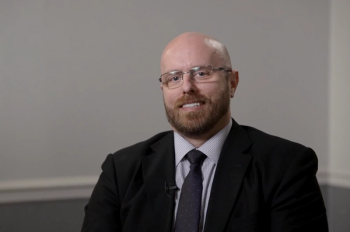
Chris Bjornberg, CEO of the Imperial Valley Health District, discusses managing financial challenges and using partnerships to serve vulnerable communities.
Advertisement
Advertisement