




AI & Data Analytics
Latest News
Advertisement
Video Series








Latest Videos



Shorts
0:51
How AI could transform patient safety
5 days ago
by
Ron Southwick
0:44
The Joint Commission: Investing in technology
11 days ago
by
Ron Southwick
0:56
AI in healthcare: Focus on ethics and equity
12 days ago
by
Ron Southwick

0:43
Health systems don't want state-by-state rules on AI
20 days ago
by
Ron Southwick
0:45
Using AI to spot patients headed for trouble
22 days ago
by
Ron Southwick
0:45
AI could help reduce burnout in nursing
a month ago
by
Ron Southwick
0:33
Using AI to predict patient readmissions
a month ago
by
Ron Southwick
0:32
Rethinking medical training for an AI era
a month ago
by
Ron Southwick
0:44
For AI in healthcare, trust is a growing issue
2 months ago
by
Chief Healthcare Executive Staff
1:57
How AI is changing cancer care and research: The Roundtable
2 months ago
by
Chief Healthcare Executive Staff
Podcasts






























Advertisement
More News
The question isn't whether to let AI into the patient journey. It's whether health systems will earn a seat in that conversation.
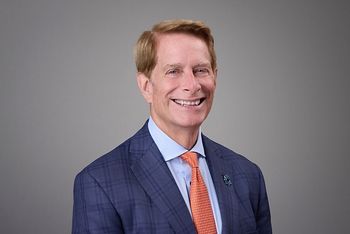
Robert C. Garrett, the longtime leader of the New Jersey health system, will step down in 2027.
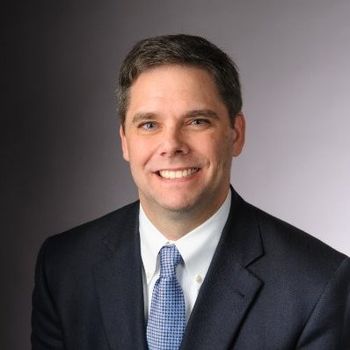
With a new program that uses AI and revamped workflows, the health system is looking to offer more personalized care.

Maria Ghazal, president and CEO, talks about finding consensus across the healthcare ecosystem and in Washington.

The health system is getting patients out of the emergency room and into hospital rooms more quickly.

Health systems need to get nurses involved in choosing, designing and deploying AI solutions at the outset.

The goal is not to replace strategic optimization projects, but to extend their value by monitoring how real operations are changing.

The risk comes in how AI is deployed inside and across the healthcare system.

Health systems are accelerating clinical uses of AI, but leaders stress the need for safegauards.

In the final segment from our panel discussion, executives explain where they are upbeat even in a time of change and turmoil.
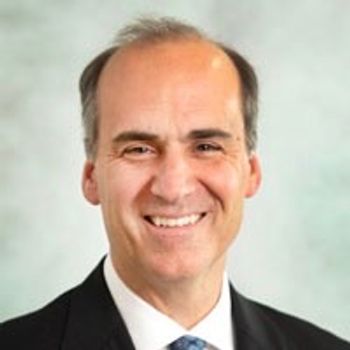
Dr. Andy Anderson of RWJBarnabas Health talks about encouraging results of an early warning system tracking high-risk patients.
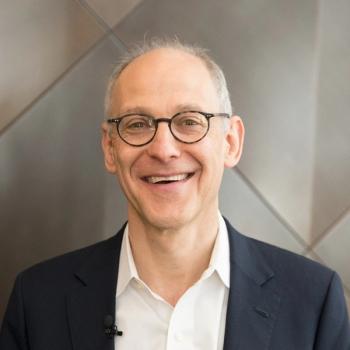
The University of Pennsylvania professor and prolific author talks about a new paper that projects AI will be ready for some medical tasks by 2030. He says health systems must tackle tough questions now.

If AI is going to fulfill its promise, it cannot be treated as an add-on or an experiment. It has to be implemented with the same rigor as any clinical intervention.

Matt Kull, chief information and digital officer of Inova, talks about the Virginia health system’s use of AI to expand capacity and get patient care more quickly.
There are both right and wrong ways to introduce AI into clinical environments. A well-functioning healthcare system hinges on human expertise and empathy, not simply AI automation.
Karen Goyette of Hartford talks about the growing focus on ambulatory care, the expansion of urgent care and providing more virtual options.
Our panel of healthcare leaders talk about the need to build trust in the use of AI.
Right now, most AI implementations are focused on optimizing the existing system. They are making current workflows faster and more scalable, but they are not yet changing how care is delivered.

Health systems need to have clear goals for pilot programs to succeed. Some also argue against pilot programs at all.
Our panel of leaders talks about AI’s impact on patient experience, improving care and accelerating research.

IBM's annual report shows healthcare breaches are the most expensive. Limor Kessem of IBM discusses the threats to healthcare organizations, the rising role of AI, and the progress some organizations are making.
Our panel of healthcare leaders say retention remains a problem and too many clinicians are experiencing burnout. AI is seen as a tool to help, but some workers are worried it will cost them their jobs.

The Florida health system has partnered with Reimagine Care to connect with patients and hopefully curb unnecessary emergency department visits and admissions.

Dr. David Battinelli, dean of the Zucker School of Medicine and Northwell Health’s physician-in-chief, talks about rethinking medical education, engaging students, and AI.
The Ralph H. Johnson VA Health System earned the American Hospital Association’s Quest for Quality Prize. Scott Isaacks, the system’s CEO, talked with us about innovating to serve veterans.
Advertisement
Advertisement