The CEO of the Catholic Health Association talks about people slipping through the cracks with new work requirements and more frequent eligibility checks.
States will face new rules in funding Medicaid. Mary Mayhew, CEO of the Florida Hospital Association, says new federal rules are threatening vital programs.
Hospitals are bracing for reductions in Medicaid funding and the prospect of treating more uninsured patients.
Under the “HR 1” federal tax package President Trump signed last year, projected Medicaid funding i
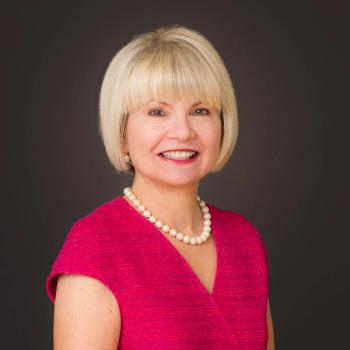
Mary Mayhew, president and CEO of the Florida Hospital Association, says states will face more difficulty in financing their Medicaid programs, and that could lead to reductions in services and fewer Americans having coverage.
In an interview with Chief Healthcare Executive, she says she’s frustrated by the portrayal of how states are using provider funds, which she says play a vital role in sustaining Medicaid programs. Mayhew appeared in
“I'm very concerned about the language, the narrative characterizing provider taxes, which have been around since the 1980s, as money laundering,” Mayhew says. “These mechanisms to help fund state Medicaid programs are absolutely vital to preserving access to ob-gyn services, labor and delivery services, inpatient psychiatric care, and yet it has been under constant attack.”
Mayhew brings substantial experience with Medicaid programs. She served as deputy administrator and director of the federal Medicaid & CHIP Programs. Mayhew also served as Maine’s Commissioner of the Department of Health & Human Services for more than six years.
She says CMS has done a disservice and “mischaracterized” its depiction of states and their financing of Medicaid programs.
“There are some changes in HR 1 that will have a financial impact on Florida as they ratchet down what states can receive under a supplemental payment program,” Mayhew says. “I'm frankly even more concerned about the continued narrative out of CMS against provider taxes and against supplemental payment programs. I think that really threatens the future stability of state Medicaid programs.”
Lack of predictability
Under the HR 1 package, states that expanded Medicaid are facing new caps on provider taxes that phase starting in 2028 through 2032. In states that didn’t previously expand Medicaid, provider taxes are locked in at the rates set in July 2025. And states can’t impose any new provider taxes under HR 1.
States are also facing new work requirements that take effect beginning in 2027. The Trump administration
Mayhew warns that hospitals will face growing financial pressures as they are facing the likelihood of caring for more people with no ability to pay. Like other healthcare leaders, she says Medicaid rates haven’t fully covered the cost of care. She notes that labor and delivery hospitals are reimbursed at 47 cents for every dollar of care
“You don't make that up in volume.That’s just not sustainable,” Mayhew says.
And she says the uncertainty over Medicaid funding is coming amidst other factors placing pressure on hospitals.
“Labor costs for Florida hospitals over the last three years have increased 27%,” Mayhew says. “Just think about the impact of the supply chain between the tariffs, the likelihood that inflation is going to not only persist but increase. So the cost pressures on hospitals are significant. So all of these factors are jeopardizing the ability to plan for the future and to have predictability.”
Florida’s hospitals are also at or near capacity, and some of those facilities are aging. The state’s population continues to grow, including some who are coming to the state to retire, Mayhew notes.
Mayhew says some hospital CEOs she has spoken to see the need to expand facilities but are anxious about undertaking such projects with financial challenges rising and an unpredictable environment.
“That takes years to plan to raise the funding and to execute, but the waters are so turbulent right now,” she says.
Hospital leaders have warned that Medicaid reductions
Mayhew says she’s puzzled to see less action from policymakers to deal with an aging population that is going to need more healthcare services, and more people needing treatment for diabetes, cancer, and cardiovascular disease.
“We're having the wrong conversations in Washington, DC, right now,” Mayhew says.
Monitoring eligibility
Other healthcare advocates have pushed against the cuts and changes coming to Medicaid programs, even as federal officials have called for more attention on primary care and prevention programs to keep people out of the hospital.
“You can't say you want to do more primary care and cut a trillion dollars out of the Medicaid program,” Benjamin says.
Billie Jean Mounts, chief revenue officer at Bon Secours Mercy Health, says the health system is going to have to make extra efforts to help patients navigate new Medicaid work requirements. In a panel discussion at
“Now, it’s becoming more and more complicated, monitoring that patient-payment status when they're not in the hospital … following up with their redeterminations and doing more community-based outreach,” Mounts said.
Some lawmakers in Congress have been pointing fingers at hospitals and called on them to reduce prices and offer more transparency on prices.
Mayhew says she understands the affordability of the healthcare system is a legitimate concern for patients. But she says she’s dismayed by lawmakers blaming hospitals while policy decisions are making it harder for patients to get care and for hospitals to serve their communities.
“I worry that if we don't appreciate what we have, recognize its significance and importance, and then understand what we need to build on, we're going to lose it,” Mayhew says. “And we are seeing that in states across the country that have chipped away and chipped away with short-sighted policy decisions, where you end up with more hospitals operating in the red than not.”
Hospitals are also facing the likelihood of seeing more uninsured patients with
In Florida, Mayhew says 750,000 to 1 million residents could lose coverage without the tax credits. And she says that could mean more people without insurance coming to hospital emergency departments to get care.
Mayhew says policymakers aren’t tackling the bigger problems that lead to patients ending up in hospitals, and cuts to Medicaid exacerbate the problem.
“If more and more individuals are depending upon the emergency department, or if fewer and fewer individuals can get access to a skilled nursing facility bed or to appropriate home-based care, they're going to get readmitted to the hospital,” Mayhew says. “So all of this preventable health care utilization is actually where time, energy, and resources should be spent in Washington, D.C.”