

Health Systems
Latest News
Advertisement
Latest Videos

Shorts
0:43
The Roundtable: The mission to do the right thing
2 months ago
by
Chief Healthcare Executive Staff
0:32
Third parties are the biggest cybersecurity risk for hospitals
3 months ago
by
Ron Southwick
1:03
Healthcare leadership in 2026 is at a crossroads: The Roundtable
3 months ago
by
Chief Healthcare Executive Staff
0:34
Hospitals need an energy strategy
3 months ago
by
Ron Southwick
0:44
Looking to resolve differences? Don't question motives.
3 months ago
by
Ron Southwick
0:39
Teams must understand the 'why'
3 months ago
by
Ron Southwick
0:48
Treasury management reaches the hospital boardroom
3 months ago
by
Ron Southwick
0:59
Redefining the 'H': The future of American hospitals
3 months ago
by
Ron Southwick
0:33
Hospitals must practice security drills
4 months ago
by
Ron Southwick
0:51
Hospitals can't afford to do nothing with AI
4 months ago
by
Ron Southwick

























Advertisement
More News
Paul Hiltz, CEO of Naples, and Dr. Bryan Kelly, CEO of HSS, talk about collaborating on an orthopedic hospital in Florida, expanding services, and the benefits of teaming up without merging.
Lifepoint Health names a new hospital president, and others take new roles.

The health system has developed a network of thousands of smart rooms and is adding more. Dr. Valerie McKinnis of AdventHealth talks about the effort to transform patient care.
The two health systems said they are looking to form a joint venture involving eight hospitals and a host of clinics in Colorado. They hope to complete the transaction by early 2027.

The number of deals in the first six months of the year has nearly matched the transactions seen in all of 2025. Analysts expect more mergers and acquisitions in the months ahead.

The number of deals is much higher than last year, and some trends in the transactions are worth noting.

Top leaders talk about the mounting challenges of serving patients while dealing with insufficient reimbursements. They’re also preparing for looming Medicaid cuts.
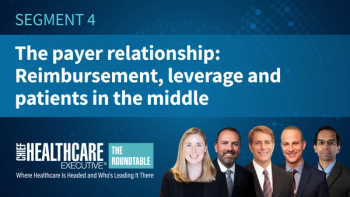
In the latest video from our roundtable, healthcare leaders talk about the impact of insufficient reimbursements. They're posing more headaches for hospitals and affecting patient care, the panel says.
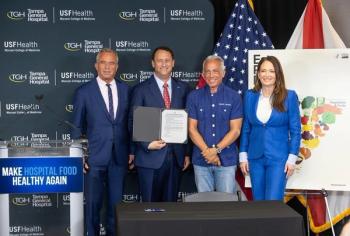
Health Secretary Robert F. Kennedy Jr. has pushed hospitals to serve better food. Tampa General’s food menu was revamped by celebrity chef Geoffrey Zakarian.

Many Americans have dropped coverage, and hospitals have warned they will see more uninsured patients.

The Florida health system has partnered with Reimagine Care to connect with patients and hopefully curb unnecessary emergency department visits and admissions.
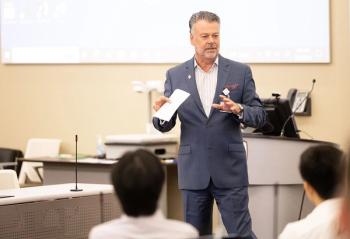
Dr. David Battinelli, dean of the Zucker School of Medicine and Northwell Health’s physician-in-chief, talks about rethinking medical education, engaging students, and AI.
The health system is using virtual nurses to support nurses delivering care on the floor. Julie Tuel of CommonSpirit talks about the strong early returns and lessons for other health systems.
Baxter Lee, president of Clearwater, talks about cyberattacks in healthcare, how attackers are using AI, and risks from third parties. He spoke with us in the latest episode of Data Book, a podcast from Chief Healthcare Executive.
Dignity Health appoints a leader to oversee two hospitals, and others take on new roles.
The Ralph H. Johnson VA Health System earned the American Hospital Association’s Quest for Quality Prize. Scott Isaacks, the system’s CEO, talked with us about innovating to serve veterans.
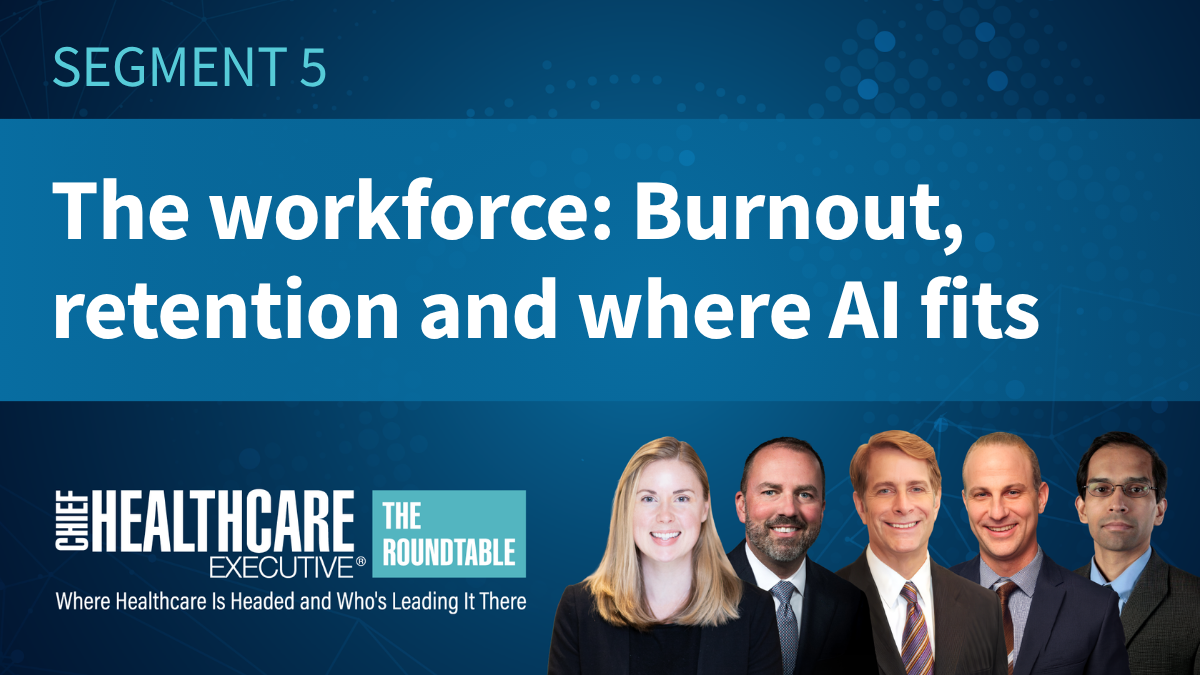
The Chief Healthcare Executive Roundtable: Wrestling with costs, change, and the need for innovation
We held a panel discussion featuring some of the nation’s top healthcare leaders to talk about the pressing issues in the industry and how they are tackling them.

With 2026 as a genuine crossroads for healthcare leadership, our panel talks about the issues at the top of their minds.
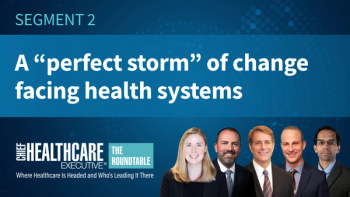
In the second video from our roundtable, the panel discusses delivering more care outside of the hospital, the emerging opportunities for AI, and the need for thoughtful strategies.

In the third video in our series, our panel talks about the need to lower the cost of care for patients, and growing pressures on their operating margins.
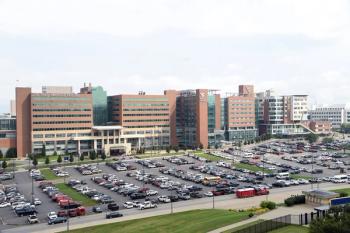
The West Virginia University Health System is seeing encouraging results. Dr. David Rich of WVU talks about the results and shares insights for other systems.

Robert F. Kennedy Jr. and Dr. Mehmet Oz are asking hospitals to take the pledge, but also referred to compliance to maintain Medicare funding.

Valley Children’s Healthcare’s solar array mimics its mascot, George the Giraffe. Todd Suntrapak, the longtime CEO, talks with us about the system’s commitment to sustainability.
Sky Lakes Medical Center receives the American Hospital Association’s Foster G. McGaw Prize. Three other health systems were recognized as finalists.

Dr. Benjamin Schwartz and Patricia Prelock share keys to success from the two institutions and how they’re aiming to improve care in Arizona and the Southwest.
Advertisement
Advertisement