Several groups say that AI is a valuable tool, but warn physician expertise is essential. They push back against efforts to pit doctors against technology.
He talks with us about breakthroughs in precision medicine, his enthusiasm for AI, and why genomics discoveries can and should be for everybody.
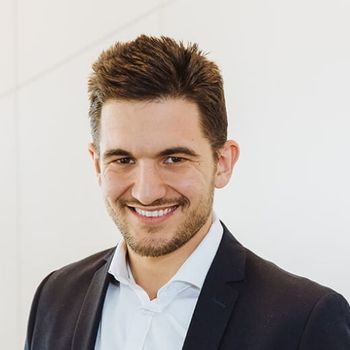
Chicago - Dr. Carlo Bifulco sees enormous hope in genomics research leading to breakthroughs in medicine.
“Genomics research is fundamental for patient care,” Bifulco says.
“I do believe, at this stage, it is becoming a sine qua non for treating patients, to the point that in certain situations, not having genomic information is getting very close to malpractice,” he adds. “So it's becoming fundamental in oncology, but I think it's fundamental actually, across the whole spectrum of patient care.”
Bifulco is the medical director of cancer genomics and precision oncology at the Providence Cancer Institute. He spoke with Chief Healthcare Executive® at the Fairmont Hotel in Chicago, while he was in the city for the Becker’s Healthcare 16th Annual Meeting.
In the interview, Bifulco talked about genomics research and cancer, the potential for AI to accelerate progress, and making discoveries in genomics available to all patients.
“Providence has a very diverse kind of population of patients being served,” he says. “We serve rural areas, we serve big cities. We have academic centers. We have situations where care is very different from academic centers. And our goal is really to provide genomics as a foundation for healthcare across that spectrum, which required a scale, but also required the ability to adapt to that landscape, which is really reflective of real world healthcare in the U.S.”
Genomics and patient care
Genomics research offers insights on patients’ potential responses to therapies and future outcomes, Bifulco says. And while he sees applications for genomics across all of healthcare, he says the sweet spot is in oncology, with the potential to offer patients better treatments.
As the director of precision medicine at the Providence Cancer Institute, Bifulco says the goal is for genomics “to be integrated as much as possible in patient care.”
Bifulco touts the value of partnering with oncologists at Providence.
“Having the oncologist as a partner, as a driver of precision medicine has been essential for us,” Bifulco says. “They see patients every day. They realize what the pain points are. They realize what is essential from a clinical delivery point of view, and having an alignment with them has been really what has enabled the program to succeed so far.”
Providence has been doing research on artificial intelligence in genomics and across cancer care for years, and Bifulco expresses palpable enthusiasm for the prospect of AI accelerating progress in genomics and spatial biology.
“We believe that it's going to drive future patient care, and also have some efforts which are really focused on the delivery of precision medicine,” Bifulco says.
“If I look at the future, I feel that AI is going to be the engine of change, the driver of change in healthcare and for genomics is going to be a game changer,” he adds.
Looking ahead, Bifulco sees genomics as being an essential component of patients’ electronic health records.
“I do believe that in the future, you will actually see whole genome sequencing become part of the medical record of a patient,” he says.
Discovery for everybody
At Providence, the aim is to deliver work in genomics that can be done at scale, and Bifulco says that is part of the health system’s mission.
“We don't want to do elite genomics, or genomics only for the worried well, but we really want to scale this up for everybody,” Bifulco says.
“Medicine should impact everybody, should impact people who are disadvantaged, who have socioeconomic kind of challenges,” he adds. “And that's one of the big goals of the healthcare system. I think it is written in the DNA, sorry for the pun, of Providence Health. So scale has always been one of our main objectives.”
The biggest challenge is not really operational, he says. He thinks the technology has reached the point where more work can be done at scale for larger populations.
But he says the challenge can be the alignment of different stakeholders who may be institutionally aligned but have a focus that doesn’t see the big picture, including the holistic view of the patient.
“There are some challenges,” he says. “Technology is not one of the challenges.”
But Bifulco says he is “extremely optimistic” about the future of medicine. He thinks AI is going to be a catalyst for changes in biology. He notes progress has been made in immuno-oncology, with significant increases in the survival rates of melanoma patients.
Bifulco is anxious for bigger strides in cancer research and treatment.
“I do feel that there's way more than we can do, and I think it's going to accelerate with AI,” he says.
(Nicole Jussen interviewed Dr. Carlo Bifulco in Chicago.)