Value-based care, still 'coming any year now'
Why the long-promised shift still has not arrived.
Episodes in this series

In our latest video from the Chief Healthcare Executive Roundtable, the panel discusses the merits of value-based care.
They also discussed some of the factors that have impeded more widespread adoption of the model.
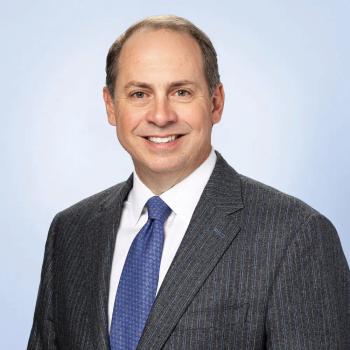
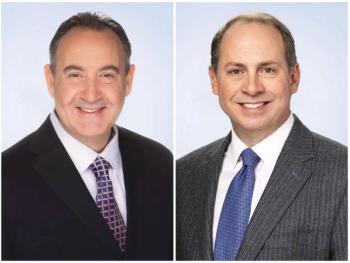
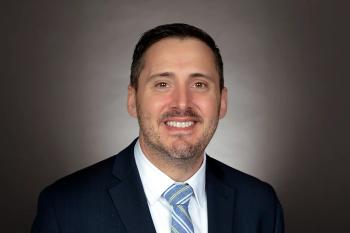
These top healthcare leaders participated in our roundtable.
- Robert Garrett, CEO, Hackensack Meridian Health
- Benjamin P. Levy, M.D., clinical director of medical oncology, Johns Hopkins Sidney Kimmel Cancer Center
- Kevin Beiner, chief operating officer, Northwell Health
- Deepak L. Bhatt, M.D., M.P.H., M.B.A, director, Mount Sinai Fuster Heart Hospital, Icahn School of Medicine
- Stephanie Wierwille, moderator; EVP, strategy and innovation, BPD
Here is the transcript from the conversation. To check out other videos from the conversation, visit
Stephanie Wierwille
“That's great, thank you for sharing that. I'm looking at the clock, so I want to transition to our last meaty topic. We've covered a lot of ground, from workforce to AI and transformation to the cost of care, policy shifts and reimbursement. One thing we haven't touched on is the transition to value-based care and how folks are navigating it. I'll say up front that value-based care has been seen as the coming era and the future of health care for a long time, and it's not been quite that simple. I'd love to hear, if your organization has made a substantial transition to value-based care and what's working, and if not, where you've seen it affect your organization.”
Kevin Beiner
“I'll speak for Northwell. No big substantive transition yet. Over the last five years or so we've started to build the tools to be prepared. No matter what happens with reimbursement, it helps us deliver better care and get patients where they need to be across the continuum. As the affordability discussion advances one way or another, providing value-based care is doing more with less, or doing high quality with less. So no big numbers yet for us on the scoreboard, and we're treading lightly.”
Deepak Bhatt, M.D.
“I think you framed the question nicely. Value-based care seems like it's coming any year now, and it has for the past several years. There's a lot of talk about it. I remember when I was on the board of trustees for the American College of Cardiology, we spent a lot of time talking about how value-based care was right around the corner and the profession needed to prepare and adapt for it, but it doesn't seem to really come on a large scale.
“I say this as someone who actually believes in value-based care; I think it's a really good paradigm, especially to promote prevention, not just cardiovascular prevention but cancer prevention and overall health and wellness. But it's a challenge in the U.S., if I'm being candid, to transition from what is still largely a fee-based system, one that largely rewards procedural care, to one that is value-based. There's a lot of intrinsic good to it. The real challenge is how we, as health care systems and as a nation, pivot to that strategy without completely disrupting the current systems of delivering care.”
Robert Garrett
“I was just going to say that was well said. I think it has to come as a transition, because there are so many headwinds coming at us right now. At Hackensack Meridian we have a similar story to Northwell's. We've certainly dabbled in the Medicare Shared Savings Program, which produced significant savings for both physicians and the health system, and we've participated in joint replacement value-based care initiatives, which significantly saved dollars.
“But if you look at the total stream of revenue, most of it is still traditional fee-for-service. So it has to be a factor as we come to the table and talk about affordability. The problem is that the incentives have not been aligned between provider and insurer, especially on the downside risk side. We've seen some good outcomes on upside-only, but when you get to the downside, that's where the rubber hits the road, and there has to be a true balance in risk-sharing between provider and insurer. I'd love to see that as part of our affordability discussion, and figure out how we find that right balance on downside risk.”
Benjamin Levy, M.D.
“I'd just add, we did this a little bit when I was in New York 10 years ago, and I agree it seems like it's coming every year, and has for the past five years. It's so hard to define value, and standardizing metrics to measure value and patient experience, not only within one discipline but across all specialties, is not an easy task. There's a lot of work cut out for this endeavor. It's not something we can't overcome, but we certainly need to reevaluate how we're going to define value.”