

The telehealth giant says its new acquisition will help it greatly expand offerings across the care continuum.
The telehealth giant says its new acquisition will help it greatly expand offerings across the care continuum.

Learning to handle issues around an aging populace and a reduced health care workforce.

The cable and media giant will launch a pilot project with Independence Health to bring personalized health content and guidance to patients.
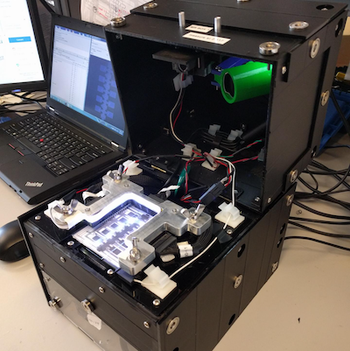
How the device, created with a “hacker mentality,” analyzes resistance to vaccine-preventable conditions like measles.

SOPHiA Genetics, a Swiss health-tech company, is celebrating a diagnostics milestone and a $1.4 billion windfall for AI overseas.

The funding will support the study of ST-400 as a cell therapy candidate for people with transfusion-dependent beta-thalassemia.

Amazon, Google, Apple, and other tech giants are trying to shake up healthcare. This week on Data Book, the story of Amazon and the future of medicine.

On a number of patient safety and quality metrics, the agency's health centers outperformed commercial, Medicare, and Medicaid HMOs.
Commissioner Scott Gottlieb, MD, also said his agency will reveal how it plans to review medical devices with more than 1 function.

Algorithms and bots are already in hospitals—and they’re doing more than you think.

The agency's former Chief Information Officer, who resigned last week, doesn't think the VA's leadership turnover will jeopardize its Cerner plans.

A cybersecurity expert describes how to close the longstanding holes that enabled the cyberattacks.

The apps have a greater effect when paired with clinician intervention, but the authors of a new study say that kind of defeats the purpose.
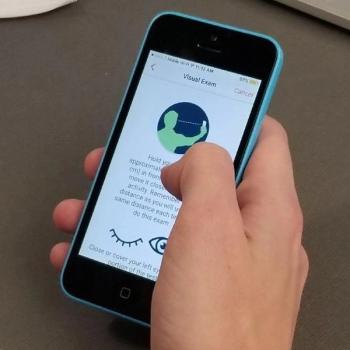
In addition to visual acuity tests, the pharma maker's new app also asks participants to complete surveys and authorize use of their iPhone's step-counting function.

One of the experts who first discovered the hacker group says the attacks look like corporate espionage, not cyber warfare.

The technology appears capable of safeguarding sensitive patient data, but it has yet to make a big footprint outside the cryptocurrency community.

Aspire Universal hopes the money will “re-engineer” the start-up process for companies focused on medical devices and therapies.

You'll never guess which Rochester, Minnesota-based network made the list.

Amidst rumors that the insurer itself could be bought by a retail giant, Humana is again joining with 2 financial firms to expand its palliative holdings.
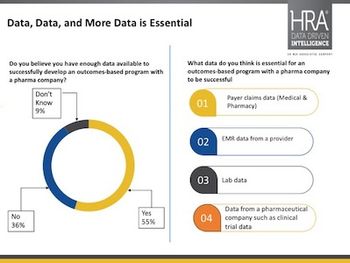
Original HRA® research suggests insurers are searching for diverse data to take this step toward value-based care.

It isn't enough to just garner hundreds of value-based recommendations: They need to be credibly disseminated and implemented.

A new study suggests the technology can lead to dramatically better clinical outcomes.

But a new report describes how employers can use digital health to achieve better employee health and financial outcomes.

With its EHR modernization efforts in limbo, the agency's top IT boss has stepped aside.
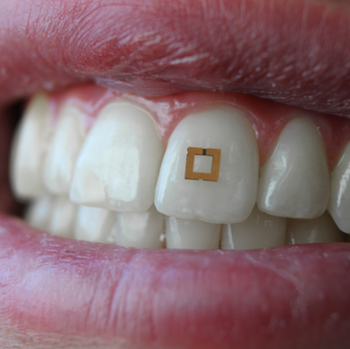
Scientists have developed a tiny sensor that can track certain chemicals and nutrients. But the potential uses of the sensor extend beyond diet.

On this episode of Data Book: Not every doctor and health system is embracing healthcare’s tech evolution. How can medicine convince them to adapt?

Despite widespread adoption of the technology, health systems and clinicians are still trying to find best practices.

New research showed that interruptions drastically increase a nurse's mental workload during EMR documentation.

The healthcare industry’s consolidation drag race will have a referee after all.

Original research suggests that clinicians want their organizations to better embrace tech surrounding the therapy.