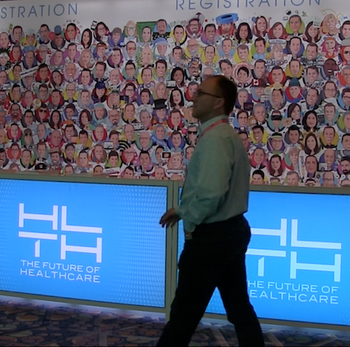
More than 3500 attendees joined a host of high-profile speakers for the audacious event.
More than 3500 attendees joined a host of high-profile speakers for the audacious event.
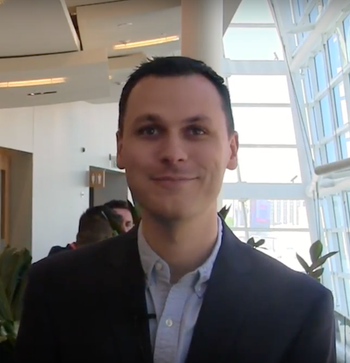
And to celebrate, the founders made a human pyramid.
How the competition, hosted by Booz Allen Hamilton and Kaggle, could change nuclei detection.

A new study suggests the tech deftly complements cognitive behavioral therapy.
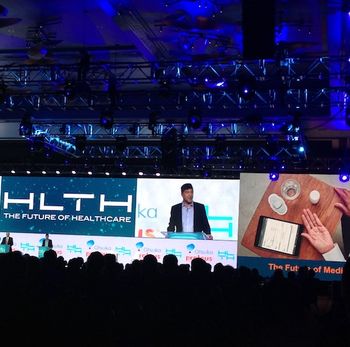
Two of the men behind the invention argued that it could break the drug development cost curve.
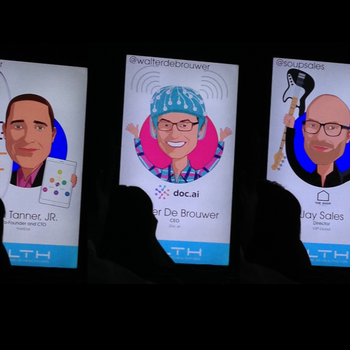
"It’s a combination of 20- or 30-year-old technologies that allow systems to interoperate...I don’t want to hear anyone asking if this is mature technology."
Andy Slavitt is joining forces with 2 healthcare business experts to form Town Hall Ventures.

During an interview at HLTH, CEO Robin Smith said his company had no interest in deciding who else could see a consumer's genetic info.

How Intel and the Broad Institute of MIT and Harvard are trying to speed up genomic analyses.

Experts are trying to bring the public-private interoperability effort to your community.
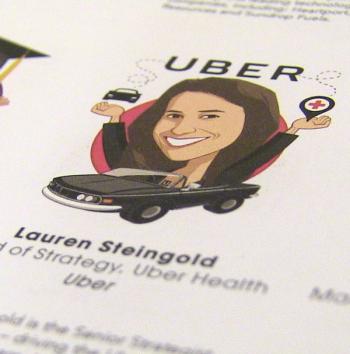
The woman who once swore off the healthcare industry deftly navigated questions about her company’s zealous charge into the space.
Why the software could help health systems and patients better manage diabetes and cancer.
Does the new meeting have what it takes to break the mold?

A national analytics structure is important for healthcare, but it requires 4 capabilities to succeed.

There's more patient data out there than ever, but big data can create big problems.

From big data’s role in solving coming healthcare problems to Comcast’s new partnership, these stories resonated with our readers.

Following a major cognitive event like a stroke, it’s key that patients do limb exercises that replicate daily tasks in order to regain physical competence

The EHR vendor nabbed the patient engagement company for $60 million, according to an SEC filing.

A new kind of healthcare hacker has been invading networks for years. Can it be stopped?

It’s a big number, and a big asterisk, but OCR-reported breaches have easily crossed the 1 million mark for 2018.

Why data could make the difference in providing effective, value-driven care in sub-Saharan Africa.

"This would be a different conversation had this VA Secretary been in place at the end of the first quarter," the company's president said.
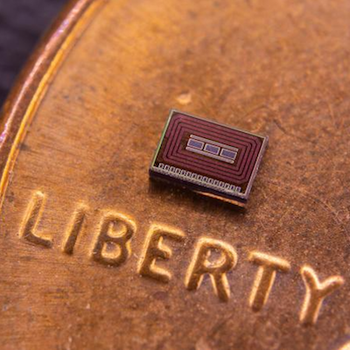
Can this data-driven chip transform addiction recovery?

At the ARVO meeting in Hawaii, Australian researchers presented impressive findings from a massive dataset.

A researcher who got nearly $1 million to study mHealth for substance abuse explains why it's essential to deploy the apps in primary care.

Some healthcare organizations leverage data to combat addiction, but the practice must expand, argues Surescripts.

Robin AI has rebranded itself as Suki, and big names are getting behind its vision for a physician voice assistant.
“There has to be a radical transformation in value delivered,” Health 2047's CEO said.

Researchers found that the data they generate correlated closely with cancer-related quality of life scores.
Genomics has attracted heavy investment in recent years. Will it ever end?