
The digital health conference showcased the latest tech and tools, but enthusiasm is also mixed with anxiety about mounting financial pressures.

The chief operating officer says the ‘silver tsunami’ needs more attention, and AI will help the shift from fee-for-service models.
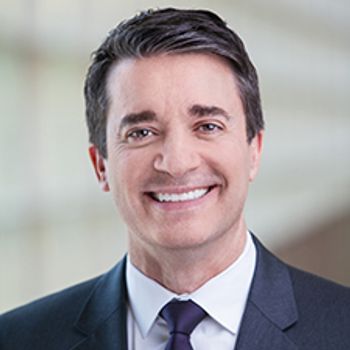
Las Vegas - It’s time for bigger conversations about the aging American population, Dr. Darryl Elmouchi says.
Elmouchi, the chief operating officer of Providence, spoke with Chief Healthcare Executive® at the HLTH conference this week about the need to focus more on keeping Americans healthy, the driving idea of value-based care. He says the aging population gives him some anxiety.
“I have to say, this is the thing that kind of keeps me up at night most, and I think we don't talk about it as a society as much,” Elmouchi says.
The last of the Baby Boom generation will be 65 years old before the end of the decade, and the first Baby Boomers are now 80 years old.
Elmouchi says more older Americans mean health systems are going to see a big increase in the number of patients needing care, and they will need a growing number of health services as they age.
With that uptick of aging Americans, Elmouchi sees moving to value-based care as a necessity.
“Older people, as you know, need more care, and it's not necessarily elective surgical care that right now pays the bills,” Elmouchi says. “It's medical care. It's pneumonia. It's cancer. It's things that happen where people get hospitalized. They're really sick.”
The aging population places more cost pressures on hospitals.
“We're not going to have enough money to pay for it the way the system works,” Elmouchi says. “So I think we, as a society, have to talk about it and really change the way we deliver care. Value-based care is probably that way.”
Fewer patients are going to have commercial insurance, he says. Hospitals and health systems are going to see more patients on Medicare, and healthcare have long complained that Medicare payments are inadequate.
“If you think about health care the way it's funded now, governmental payers, primarily Medicare, for almost everyone pay less than the cost of delivering that care,” Elmouchi says. “So where does that come up? Commercial insurance subsidizes that cost. As we have more and more people aging out, rolling off the commercial rolls, going into governmental programs, we're going to have a big problem just paying for healthcare.”
Elmouchi says he is encouraged that the Centers for Medicare & Medicaid Services have taken steps to improve incentives for moving to value-based care.
“CMS is going to keep on pushing, and I think that's a good thing,” he says. “And to be honest, there's a couple of reasons for it. Number one is what they say goes, and so it'll cause widespread adoption, which I think is very good.
“Number two is they have the longitudinal care of populations. It's really hard in a commercial world where someone can be insured one year by this payer, insured next year by the other. When you think of value-based care, while a lot of it is in the near term, a lot more of it is: I'm going to do something today that's going to prevent a problem in five years. And commercial payers have a tough time managing that. So I think it's a great thing.”
Elmouchi says he hopes to see more adoption of value-based care, but he says, “It has to be the right adoption, and there's no one model that works forever.”
Providence, which operates 51 hospitals and 1,000 clinics across several states, has focused on value-based care.
Still, Elmouchi says it's not an easy model for health systems.
“It requires a lot of expertise, a lot of good data and time, and you have to be able to experiment and get pilots going and make them work,” he says. “And if you just jump into a value-based arrangement without having all your ducks in a row, you could really financially get harmed in a pretty significant way, and that's made a lot of people skittish. So you have to be able to dedicate the resources to it.”
Value-based care also requires health systems to have good data to make it work.
“It's all about data, so you can understand the insights about what might cause harm for an individual patient, and then find a way to nudge them, help them do something to help make them better and prevent them from having problems in the future. And that data is in a million disparate ways, depending on within a health system, private practice physicians, other health systems, you name it. And you have to find a way to get that. And it's really hard,” he says.
Emouchi says he’s optimistic that AI is going to be an invaluable asset in transitioning to value-based care.
When asked if AI will help with the shift, he says, “It has to.”
“At the end of the day, there almost is too much data, and it's so disaggregated,” Elmouchi says. “If AI can help us get that data together, really look at it the proper way, and give the right nudges, it might be the secret. I don't think it's going to be the only solution, but it'll definitely be a solution.”