The leader of a 1,200-provider academic physician group talked with us about the seams of care, AI in the contact center and keeping physicians busy with the right patients.
He talked with us about keeping patients healthy, the potential and limitations of AI, and why the physician's voice is critical for change.
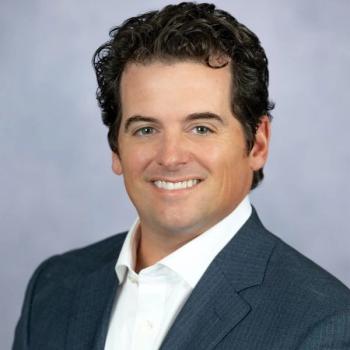
Chicago - Dr. Nolan Chang sees a variety of forces driving the shift to value-based care.
Chang, executive vice president of strategy, corporate development and finance with the Permanente Federation, part of Kaiser Permanente, says financial headwinds are driving the transition away from the traditional fee-for-service model.
Changes in Medicaid programs, which could see millions of Americans losing coverage in the coming years, will require a different approach, he says. Many of those patients are going to seek care in emergency rooms. Health systems are going to have to focus on helping their communities avoid more serious illnesses.
“For the first time in a very long time, probably in my career, we're going to see more uninsured Americans than ever before,” Chang says. “So how are those folks going to get care?”
“I think there will be a shift more towards value-based care and how do we keep people healthy. I think the challenge will be how do you do it across different systems, because these patients will likely move from delivery system to delivery system. I think this is something as a healthcare industry we need to tackle holistically,” he says.
Chang sat down with Chief Healthcare Executive® in Chicago while he was in town for the Becker's CEO + CFO Roundtable.
He also talked about his enthusiasm for AI, even as he cautioned that AI is a tool and not a solution for the industry’s woes. He also outlined a vision of using AI to help doctors forge better connections with patients, rather than a vehicle designed to have doctors seeing vast amounts of patients.
“For me, it's really about how do we use artificial intelligence or technology to make the interactions that we're having with patients more meaningful, and that for me adds value, because we are a value-based system,” he says.
This is one of a series of interviews with C-suite leaders. Look for more in the coming days.
Here is a transcript of our conversation with Dr. Chang.
Q: We'd love to hear your perspective about your session on the new era for value-based care. It's a concept that's been talked about for a long time, but what's changing with value-based care?
Chang: “So my reflection on how my panel went with value-based care: it was a great discussion that really highlighted what's happening in the marketplace broadly. So we had folks from a health plan perspective, delivery system, and Kaiser Permanente, which is very integrated.
“And so in those regards, it was tough to hear about all the things that they're having to do to be able to show the care that they're delivering from a health plan perspective, all the data that the payers and regulators are wanting from the delivery system, trying to cobble up different tools to be able to take care of patients. But that's the reality of what we're dealing with today.
“When we talk about value-based care, it really is what is that value proposition, and we know that these are financially challenging times. On top of being really clinically challenging as well, all that superimposed. When we talk about value-based care in Kaiser Permanente, it really is about longitudinal value-based care. Our patients stay with us for a long time. That relationship is critically important.
“So the conversations as a primary care physician that I get to have with my patients to establish a trust, but also an understanding of how I'm going to help them achieve their goals. I have to tell them scary things like, ‘Hey, you've got cancer,’ or ‘You've got diabetes.’ And trust is eroded right now. So a lot of what we're trying to do is reestablish that trust.
“And so in our organization, it's a lot about how do we use the tools that are available to us, whether it be virtual care and meeting our patients where they're at, or even artificial intelligence, which can sound scary, so we dub it augmented intelligence, to reestablish a relationship with all the regulatory requirements and having to look at a computer. My patients oftentimes wonder what it is that I'm doing because I'm not looking at them. But with artificial intelligence as a scribe, I'm able to sit knee to knee with them, look them in the eye, look at their body language to see how they're receiving the information that I'm delivering. That reestablishes trust, reestablishes the relationships, allows us to bridge that.
“But in the marketplace, also having to do that with the payer and all the regulators, it's a challenging time in healthcare for sure. But I believe value is ultimately what's going to drive the success and improve the health of Americans in general.”
Q: What successes are you seeing with the Permanente Medical Groups in delivering a more patient-centered approach to care, and how do you make sure that the physicians are leading those changes?
Chang: “So the successes that I'm seeing in the Permanente Medical Groups as we drive value-based care and being physician-led, it's a fantastic question. So for us, it really is being the voice of the patient. If we focus too much on margins, which is critically important, don't get me wrong, it's a part of the equation. But we have to be able to balance that with what we're seeing in the marketplace.
“What we're dealing with today is not the same thing that we were dealing with six years ago before the pandemic. Patients genuinely are sicker, but there's also different disease processes that we're dealing with. We're dealing with a lot of behavioral health issues, depression and anxiety. We're dealing with issues around delayed care. Even when you talk about vaccine skepticism, we're seeing diseases that we haven't seen in decades in this country.
“So the problem has subsequently shifted, and we need physicians at the forefront, being able to articulate what they're seeing day in, day out, whether it be in the hospital or in the clinic setting, but also the conversations that they're having with the patients, saying this is where we're needing to engage, superimposed on top of that the clinical conditions that we're beginning to understand from a population level.
“So we need different tools to be able to solve those problems, and so for me, artificial intelligence is not a solution; it is a tool. So, what? How are you applying it towards your clinical care delivery model, your business model? What are you solving for? And for us, if it is truly on value, then it's not, ‘Hey, how do I overturn a prior authorization, or how do I make sure a claim gets paid?’ When you're saying, how do I make a connection with the patient so that they understand what it is they're facing, and they understand what it is that I'm trying to accomplish — that for me leads to better outcomes.
“And so, in our organization, not having to deal with prior authorizations, like I said, when you're an integrated system where the health plan, hospital, and medical groups are aligned, it's a beautiful thing. But we do need to make sure that we have the physician voice there, because otherwise, the conversation becomes too one-sided.”
Q: Millions of Americans are expected to lose Medicaid coverage in the coming years. Is that going to force more health systems to move to value-based care?
Chang: “So, with millions of Americans losing coverage through Medicaid and other government lines of business, will it force people to move more towards value-based care? I do believe so, because for the first time in a very long time, probably in my career, we're going to see more uninsured Americans than ever before. So how are those folks going to get care?
“I mean, it's unfortunate, but I don't want to see a time when they're having to go back to the ERs for their primary care, for their care to become even more disjointed, because we know that that's not the best place to receive care. We know that that worsens outcomes and drives up overall costs. But the fee-for-service transactional world is not going to win either, because if all of a sudden you have uninsured patients, seeing more of them, doing more procedures doesn't actually help your bottom line.
“So I think there will be a shift more towards value-based care and how do we keep people healthy. I think the challenge will be how do you do it across different systems, because these patients will likely move from delivery system to delivery system. I think this is something as a healthcare industry we need to tackle holistically, and that's for me the dream state, right? Because when we're able to do that, then we really are focusing on the patients, and we're not worried about, you know, transitions of care. It's, how do we develop our infrastructure to be able to make sure that we're keeping them all healthy.”
Q: Where does AI fit into all of this? You just said as a resource, but how can AI realize the potential of value-based care?
Chang: “I think, honestly, we have to have an understanding of where AI is in its maturity and the impacts it's going to have. It's going to be global for sure, but when we talk about healthcare … I was on a panel once and they said, like, how would you describe chronologically an age artificial intelligence? And they said it's probably that really, really smart 13-year-old that's really annoying, that just keeps spitting out things that may not be entirely true or have context.
“So for me, I think right now it may be causing more noise than it is actually solutions, because people are trying to understand how to apply it. But once again, I think in understanding how our patients are surrounded in this world, how our business is trying to adopt this, but also how is it impacting clinical care, I think it's going to be important to be able to solve for those things.
“We are an evidence-based organization. Quality is our north star, but do we have enough studies to understand if you have this intervention with AI, what does it subsequently mean? Probably not. So I think it's important for us to have guiding principles. What is it that we're going to ask it to do? And so our patients using artificial intelligence oftentimes will come into our visit saying, ‘I automatically know what the problem is. I just need you to order these functional tests,’ or you name it. Or they'll even argue with our health plan colleagues: ‘This is what I should be paying, because, you know, AI tells me that this is what I should be seeing.’
“And so for me it's taking the time to listen to that and understand it, but then reconnecting with what the underlying problem is, because oftentimes when my patients come in armed with that information, there's an underlying anxiety that they're having, and so listening to them but getting to that bottom line is going to be critically important.
“But as a system, leveraging and understanding how it does help us break down barriers to healthcare — there continues to be a lot of inefficiencies in healthcare, and I think our tools are rapidly changing, so if we can use that and understand the velocity of change and stay in front of that and say this is what we're aiming for, I think that's when we'll begin to reach a steady state with AI. But I do think it's a few years away.”
Q: Some healthcare leaders are talking about using AI to help doctors see more patients. Given the challenges some patients have in reaching doctors, is that the way to go, or does that reduce the opportunity for AI to improve care and the work experience for doctors?
Chang: “Yeah, I've heard a lot about people wanting to use AI to have doctors see more patients, and you peel back that onion, that probably speaks to their business model. When the doctors are seeing more patients, they make more revenue, and that is that transactional fee-for-service world. How do I get more encounters in so I can have more billable hours, and you name it.
“For me, it's really about how do we use artificial intelligence or technology to make the interactions that we're having with patients more meaningful, and that for me adds value, because we are a value-based system. I was having a conversation, once again, on a panel, and the folks that were before us, they were talking about, it's going to be great with AI, your primary care physician is going to be able to have a panel of 10,000 patients. And so they were asking us whether AI is hype or hope, and everybody on the panel said hope, and I said hype, and they're like, ‘Nolan, why did you say that?’ I was like, ‘Did you not just hear the panel before us?’ And so I said, "Who in the room is a patient?" And everybody laughed and raised their hand. "Okay, so raise your hand if you're excited that your primary care physician is now going to have a panel of 10,000 patients.’ And that excited nobody.
“People want more meaningful interactions. They don't want more interactions just for the sake of having interactions. And so, while I understand why people want AI to help primary care physicians see more patients, I think we need to be able to flip that script and say, what are the challenges that the systems are creating, and is it truly adding value?
Q: Some physicians and nurses are apprehensive about the growing use of AI. How do you address those concerns?
Chang: “A lot of people are apprehensive about the growing use of AI, including physicians and the care team as a whole. There's a lot of exhaustion that continues in healthcare, because for the physicians and the care teams, they haven't had a chance to get respite or rest. They haven't had a chance to hang it up. You're talking about people — it wasn't too long ago, for our physicians, where they were sleeping in the garage in a tent because they didn't want to expose their family members to what was an unknown entity at that time. So those folks are still very tired.
“And so, when we ask them, like, ‘Hey, artificial intelligence is going to be a change,’ that change inherently is a threat. And so, how do we recognize and acknowledge and hear them and say, you have brought your best, and how can we support you even better? So if we take a bit of the fear out of it, and once again, in our organization we talk about artificial intelligence, artificial being scary, and so how do we talk about it being augmented intelligence? How are we engaging them in the solution? Then I think that helps reduce the fear, because a lot of the fear is the uncertainty. They want to know what is it, what is the impact going to be for them.
“And so even for our patients, it can be scary. Does this mean my doctor is going to spend less time with me? Am I going to be more of a widget to them? Am I going to lose that personal connection? So hearing all the different pain points and understanding who we are, we're a relationship, people-based organization. If we have strong relationships with our patients, they stay with us for a longer period of time, and then we can align our goals of keeping them healthy over decades, not just over years or even quarters. And I think that helps reduce the fear about what is it that we're trying to accomplish.
“We're not trying to replace people. We're trying to make their interactions more meaningful. We're trying to augment the impact that they have. So at the end of their career, they can say that they did something special. Not only did they take care of patients when they needed them, but they were able to actually introduce technology in a meaningful way that added value.”
Q: What are lessons that you'd offer others who are moving to value-based care? How do you make it work?
Chang: “For us, how do we make value-based care work, and lessons that I would advise others on? Right now, for me, value-based care — because the value proposition is changing. So, when we're talking to employers and payers, if you're worried about what the next quarterly report is going to be, it's hard to say, like, how do I prevent cancer? How do I prevent stroke, heart disease, and diabetes in a young employee population?
“But I think there is a broader mission that's for employers and also healthcare delivery systems. As an employer, who do you want to be? What kind of people do you want to attract? Do you want to attract transactional employees, or people that really believe in the mission of an organization? So I have a lot of hope for the next generation. If anything, I feel like they're going to be even more mission-driven in what they want to accomplish. And so for the employers, I think that's going to be important.
“And then for the other delivery systems, how do we make sure that they see that as well? We are in an inflection point in the country and in healthcare as a whole. And so, who do we want to be? We're the most expensive healthcare delivery system in the world by far, and our outcomes are nowhere near where they should be. And why is that? Yes, we can blame the system, but we also have to recognize that we all own part of it.
“I do not believe a purely fee-for-service transactional world is going to get us there. It has its place in the marketplace. I'm not saying everybody should be value-based, but if we're not focused on the greater good, then speaking as a physician, I don't think we're honoring the oath that we took when we adopted the profession. And so, in that inflection, how do we all lead and say, if patients are healthier, why is that the right thing to do? And then that translates into how we develop our contracts, our interactions, relationships, especially in disaggregated systems, to be able to deliver on outcomes.”
Q: What are the key takeaways from the conference for you, and what have you heard that's enlightened you, surprised, or delighted you?
Chang: “So the key takeaways for me from the conference, and once again, I think these are uncertain, volatile times. But what delights me about all of that is that there's never been a more important time to lead.
“And so, when we talk about all the different challenges, whether regulatory or from a technological standpoint, I do worry, because I see artificial intelligence really being used from the health plan side to say which claims should I be denying, and from the delivery system side saying, like, how do I avoid denials or how do I get claims approved? And so in the meantime, none of that focus is saying, like, how do I keep the patient at the center and improve outcomes. So tech companies will likely make a good amount of money, care might suffer in the short term, and the patient experience might suffer, and that's not what the country needs.
“They're asking us for better outcomes, lower costs, more focused healthcare. And so for me, the exciting part is that we're having the conversations. So in the discussions I've had, whether it be on panels or in one-on-one interactions, I see much more maturity in understanding the challenge, whether you're a health plan, a delivery system, or a physician group, and that gives me hope that if we can solve for the problems — so the conversations are beginning to converge.
“There's been too much divergence. I'm beginning to see some convergence, and hopefully through that, we'll drive what we're asking the tech companies to do, that we'll have more informed conversations with the regulators. We have an understanding that, yes, healthcare is worse. The disease burden is higher. But then we can collectively map what the roadmap on the way out looks like, so that we can partner more effectively.’
Q: That's great. Is there anything that we haven't talked about or addressed that you'd like to share?
Chang: “For me, once again, I think healthcare is a noble profession as a physician. These are scary, uncertain times. But in scary and uncertain times, I think what we can do is make the unknown known. People are looking for leadership, and so I encourage all the executives that are out there: create a compelling vision that people want to follow, one that's tied with keeping patients at the center of all of this, and then we will lead through this uncertainty, and we'll end up in a better place when we come out of it.”