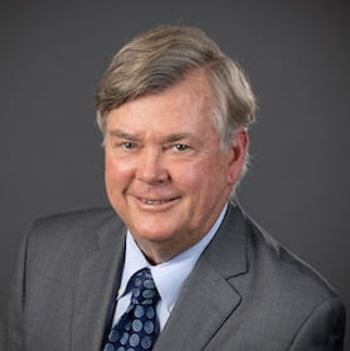
Erik Wexler
President and CEO, Providence
- At Providence since: 2016
- Previous Providence roles: chief operating officer; president of operations and strategy, South Division; regional chief executive, Providence Southern California
- Before Providence: chief executive of Tenet Healthcare’s Northeast Region, plus leadership roles at Vanguard Health Systems and LifeBridge Health
- Education: bachelor’s degree in sociology and an MBA from the University of Hartford
- Catholic health system in seven states
- 51 hospitals and about 1,000 clinics
- Headquarters in Renton, Wash., with system offices in Irvine, Calif.
“And then the third piece of this was opening up access to our communities where the service is really desperately needed, and at the same time renegotiating our commercial contracts and remaining steadfast that we're going to get paid what we rightly deserve for the care that we provide.”
“We decided to just kind of pull the Band-Aid off … and apply courage and have discipline.”
Q: Health systems are bracing for more financial headwinds in the coming years with Medicaid cuts and changes in the way states finance Medicaid programs. Can you talk about the steps that you're taking to deal with the Medicaid changes?
Wexler: “Yeah, these Medicaid changes, among other things, supply chain costs, pharmaceutical costs, I mean, it's really what I call a polycrisis. And so for all the things that we've worked on from 2025 through the end of what soon will be 2026, we've had five straight quarters of profitability. We're soon going to be announcing another positive quarter.
“For the go-forward, now as we go into 2027 and HR1 hits, we are seeing many people that were on Medicaid that had the advantage of the ACA falling into this donut hole of not having coverage, and they become self-pay, which is incredibly difficult to deal with, not only for preventive care but when something catastrophic happens.
“So the things that we worked on from 2025 through now are going to help us in 2027. Though we are beginning another set of focused and disciplined plans to really continue to bring our costs down and expand access to where it's most needed. So I think there'll be additional courageous decisions that have to be made, but it will set us on a course for sustainability.”
Q: Providence is a Catholic system. Given the mounting financial pressures, how are you working to maintain access, especially for those who are vulnerable?
Wexler: “As a Catholic healthcare system, we commit ourselves to provide care for those who are poor and vulnerable. And so if you look at our payer mix, we have a very high Medicaid and, of course, Medicare government payer mix. But we will remain steadfast to those who need care.
“And so, as we make courageous decisions on where to remove duplicate services, and even remove some of our hospitals from the health system, where we know they'll be in other thriving hands, … We work diligently not to create a health desert.
“And what's really special about being in Catholic healthcare is we use a discernment process. We call it an ethical discernment process. So when it comes to major decisions, we don't do things shooting from the hip. And I've done that in other places before I got into Catholic healthcare. Sometimes it turned out okay, and sometimes not so much. But with us, we bring in stakeholders, multidisciplinary stakeholders, to think about what are the pros and cons and the direction that we should take. And I think that makes us a little different from others out there, and allows us to make the right decisions at the right time.”
“As we make courageous decisions on where to remove duplicate services, and even remove some of our hospitals … we work diligently not to create a health desert.”
Q: We continue to see more care delivered outside the hospital. Can you talk about Providence's efforts to offer more outpatient options?
Wexler: “Well, this is important when we talk about care outside of the hospital. That applies very much to those who live in rural communities, because sometimes they can't get to a hospital. There's no public transportation; they have no means of getting there. And so there are many ways of delivering that care.
“One of the ways that we've been doing this over the years, but have expanded, is to put more primary care physicians and family practitioners into communities, especially those rural communities. But at the same time, we're taking advantage of virtual technology so that we can connect with people. Look, I had my cardiology visit with my cardiologist. I get an annual checkup from him. My follow-up was done virtually with him. It was one of the best visits I've had with my cardiologist since I've been with him. And so this type of technology can work to expand what we're doing.
“Now, as we look at issues that we could face from site neutrality, which is going to force patients to be seen outside of our hospitals, that is a very threatening prospect, because we need those services inside of our hospitals to provide 24/7 care. That said, we will expand our ambulatory surgery network, and we're going to especially lean into diagnostic ambulatory services.”
Q: Providence made the difficult decision to close most of its health insurance lines of business in 2027. Can you talk about what led to that decision and what's being done to help health plan members navigate this change?
Erik Wexler: “Well, one of the advantages of being in the payer environment — we made the difficult decision to close our small health plan. But in that payer environment, when you have scale, and over the years, there have been many mergers, those organizations have become enormous, and so they're able to bring their administrative costs down and spread that across all of the members that they serve. And to be really effective in the commercial payer space, you need to have about 3 to 5 million members. Our health plan had about 800,000 members, and a big portion of those members were also our own caregivers, about 120,000 people.
“So yes, it was a difficult decision to close the plan. But what we found was, with our administrative expenses so high, the cost of our plan was also high for membership. Now, that is difficult because a lot of those members loved having an integrated network of the commercial payer environment along with the delivery system, and so it could potentially create fragmentation. But we're working very hard to make sure that doesn't happen with our commercial payer partners.”
Q: Providence serves patients in rural communities in several states. Is Providence going to get some assistance from the Rural Health Transformation Program?
Wexler: “The Rural Healthcare Transformation Program is fortunately helping rural hospitals around the country. I wish it was much more money than was allocated, but there were aspects of this that were very helpful. And one of the aspects is that the states get to determine where that funding goes, along with HHS.
“And so for us, we've been able to get grants across our seven states. Some of those are helping with infrastructure. Portions of it are helping with expanding virtual technology and bringing primary care into rural communities that don't have good access to it. So we're quite excited about what we've been able to achieve. We hope there's more coming.”
Q: What are the different approaches you're seeing in different states using the rural health transformation funds?
Wexler: “Rural transformation funds are being used in many ways. Some of those relate directly to infrastructure, where HVAC systems and generator systems are at end of life, and that rural hospital doesn't have the money to be able to pay for a new system, and so that puts healthcare at risk in those communities.
“Likewise, the ability to use those funds to do something innovative to extend care. So some of that may be in the virtual space. Some of that, in the work that we're doing, is extending clinical trials into rural communities, where people that live far away from big academic medical centers and have cancer or other types of very significant disease don't get access to those clinical trials, which can help them, frankly, be cured of that disease. So I think this is a real positive. I still wish there were more of those rural healthcare funds coming our way.”
Q: How has Providence expanded the use of AI over the past year, and how are you incorporating the use of AI in patient care?
Wexler: “Well, the use of AI is one of those places where I know we have worries about it in this world right now, but healthcare is a place where it can be used for something very significantly positive. And for us, we use an ethical, multidisciplinary process to determine what artificial intelligence we will deploy. And so we've been careful about deploying agents, although we are using agentic technology and large language models to advance the care that we deliver.
“And frankly, the first aspect of this was to focus on removing administrative burden, because if we can remove administrative burden from our clinicians and our frontline caregivers, then they'll be able to spend more time with the patients that they serve, and frankly, with their own families, which is very important for people to renew and restore, so that they can do the important work that they do.
“The other piece of this is how we use artificial intelligence for things like what we call GigaPath. GigaPath is a partnership between Providence, the University of Washington and Microsoft, and what it's doing is using artificial intelligence to do specimen diagnostics. Typical laboratory diagnostics can be quick, and some can be very lengthy. And so for certain aspects of cancer, like pancreatic cancer, it can take time to get those results if they are done by the traditional means. In this GigaPath model that we're using, we're able to get results within minutes, and that relieves the patient and the family from the frustration of waiting and allows us to get on that care course.”
Q: You've been CEO for nearly two years. What have you learned about Providence and about yourself in that time?
Wexler: “So, what have I learned about Providence and myself in the two years of being the CEO? Well, I would say, as I travel around our health system, I have learned, and it wasn't as if I didn't know it before, because I've been here for 10 years, but I have learned even more about the commitment of our caregivers to the healthcare that they provide. That they are really deeply heart, mind and soul connected to the care that we offer to our communities, and frankly to each other, and it's super inspiring.
“I think for myself, what I've learned is this is an incredible organization to be a part of, and being a piece of how we drive it forward is, for me, very inspiring. And so what I try to do is be grounded in what I, as a caregiver, can do in the organization and in its leadership aspects. It's demonstrably important to how I connect with those that are delivering care out there, and that is some of the most inspiring part of my work.”
Q: Final question: What's something you're especially excited about as we head into 2027?
Wexler: “Well, I'm excited about probably more than anything right now — not only the incredible work that we've done to stabilize our organization. You know, this is the first time in a decade that when we look at our shared metrics across the organization, at nine months through the year, we are at the outstanding level for every one of those quadruple aim goals. And that is something that sets us up for incredible success in 2027, because what it means is we're providing better care to those that we serve. Our turnover rates are, you know, lower than they've ever been, and frankly, better than most institutions in the United States.
“But I would say one of the things that really excites me is how we can take artificial intelligence and use it for good. How we take that and deliver care to people in a way that allows them to get preventive care, so that they don't get sick. How we can remove that administrative burden, so that the people doing the work really feel renewed, and frankly, bring back the joy of the work that we've all committed ourselves to.”
(Jennifer Dye conducted the interview in Chicago. Ron Southwick and Austin Littrell contributed.)