
The digital health conference showcased the latest tech and tools, but enthusiasm is also mixed with anxiety about mounting financial pressures.
The chief marketing officer of UChicago Medicine talked with us about the biggest barriers to access, patients’ personal AI agents and why referrals matter more than rankings.
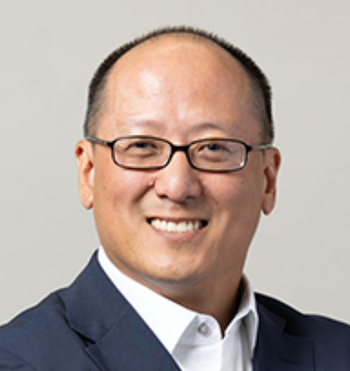
Chicago - Patients who have been referred for a lab test or a specialist visit are “literally raising their hands,” says Andrew Chang, the chief marketing officer of UChicago Medicine.
“You don't really have too many opportunities from a marketing standpoint to find people who are willing to use you,” he says.
UChicago Medicine is using AI to keep those referrals inside the system by following up with patients and making scheduling easier, Chang says. It's one of more than 40 AI projects the academic health system has live or about to deploy.
Chang
Chang spoke with Chief Healthcare Executive® while he was in Chicago for the Becker's CEO + CFO Roundtable earlier this month. He talked about why coordination is the biggest barrier to access at academic medical centers, how patients' personal AI agents are changing the way they look for care and why UChicago Medicine is expanding its ambulatory network.
“If we were to reinvent how referrals are done, I'm pretty sure that we would not require faxes to be sent,” Chang says. “We would not even think about a fax.”
This is one of a series of interviews with leaders at the Becker’s conference. Look for more in the coming days.
Here is a transcript of our conversation with Andrew Chang.
Q: Your Becker's panel looks at how academic medical centers (AMCs) are working to reach more patients. What are the biggest barriers to access today, and where are AMCs making the most progress?
Chang: “The biggest barriers to access, especially for AMCs, are pretty complicated. It's not just one solution; it's several. A lot of different pieces have to be working in tandem. Just like an automobile has a lot of different moving parts that all have to work exactly in sync for everything to run smoothly, healthcare systems are no different.
“One example could be simple scheduling template management. Another could be scheduling vacation time. Another could be the technology that's being used in the access centers, and so on. So it's hard to say that there's one specific barrier. But if you look at everything all at once, I would say that it's the coordination of all of those activities, which needs to happen at the same time, with everyone on the same page. And if you have a more complex health system, it's even harder to do. So that is where I would say the biggest barrier is to improving access for an AMC.”
Q: As chief marketing officer, how do you see marketing's role in improving access, beyond building awareness, to actually help patients get care?
Chang: “Marketing does a lot more than build awareness and brand perception. Our job is to really help drive growth, or, as I've heard in the past, be a catalyst for growth. If marketing didn't exist, what would change? I really believe that marketing needs to show what it would do and how it would get results.
“A lot of that is related to access, because a lot of times we are capturing the demand and trying to engage with the community to come to our website or our access center or what have you. There are so many different channels popping up with AI lately, so it's making sure that the information we're presenting to the different LLMs, or to Google, or to the general public is accurate and updated.
“Second is: Is everything working toward a defined destination, not just the access center but beyond the access center? Are people getting the answers they're looking for? Are people seeing the providers they actually want to see in a timely manner? Are people following up on those appointments and going to the referrals they're getting from their primary care? So it's really looking at the entire journey from a marketing standpoint, making sure that every step of the way, marketing is able to make the experience as seamless as possible, and that we're tracking it in a way that makes a difference in the way patients are accessing their own health.
“It goes beyond getting someone to pick up that first phone call. It's truly the entire experience. That's how [patients] look at access, and so that's how we look at access, too.”
Q: Patients increasingly expect to search, compare and schedule care the way they do everything else online. How are you meeting those expectations?
Chang: “People are using their own personal AI agents now at a rapid clip, and it will become the norm in a few years. There are dozens of personal AI agents hitting the market. If you combine that with the fact that the number one conversation people are having with AI is about healthcare, it is inevitable that there's going to be a collision. It is our job to make sure that patients are getting the care they need, and that also includes getting the information they need about their own health, whether it's connected directly into an EHR or connected to an app or a wearable.
“Patients expect to have access to their own health. It's something that we strongly believe in at UChicago Medicine, and we have been working toward it in what we call our omnichannel patient engagement strategy. The gist of it is, you own your own health, and we should never get in the way of patients getting their own health data, health information or access.
“So we are very aggressive, and I would say progressive, in the way that we're thinking about how we use AI to identify areas of friction. And by identifying those areas of friction, how do we enable our AI tools to eliminate them? It will make our employees' lives easier, our doctors' lives easier and, most importantly, our patients' lives a lot easier.
“Who knows what the future is going to hold, even in one year. But we do know that AI is getting deeply, deeply personal, and people are using AI for so many other tasks today. Healthcare is absolutely going to be one of the top ones, and we have to make sure that we're ahead of the curve as much as we can be, in a safe and secure way.”
“You own your own health, and we should never get in the way of patients getting their own health data, health information or access.”
Q: Many patients have closer, more convenient options than an academic medical center. How do you make the case for an AMC, and when is it the right choice?
Chang: “Patients have a lot of different options when it comes to care, and the first place they think of isn't usually a hospital. They think of their urgent care or virtual care provider or their primary care provider. Our job from a marketing standpoint, especially from an AMC standpoint, is to really help patients understand that every acuity level, every stage of their health, can be seen at an AMC. And heaven forbid, if things do get serious, AMCs are the place where the most innovative and research-driven techniques are invented and studied. So patients will feel a lot more comfortable knowing that should things ever go wrong, they are going to be seen by the best physicians in their community, and that tends to be at AMCs.
“But to get to that point, we have to make sure that access to care is convenient and easy, and that includes physical locations. So how do we create an ambulatory strategy where our physicians, whether they're faculty or part of our medical group, are easily accessible and convenient to where people work or live, so that we're not forcing people to drive to our campus every single time, no matter what the issue is?
“So we're expanding really quickly and really broadly in our ambulatory network right now, and the results have been paying off quite a bit. Our growth trajectory and our margins have been extremely strong. It just goes to show that people really want easy, convenient access, and we're giving people what they've been asking for.”
Q: How are you using data and AI to understand patients and guide outreach, and how do you measure what's working?
Chang: “UChicago Medicine is using AI in every facet of the healthcare journey: patient, nurse, provider. We have been very aggressive in thinking of new ways that AI can help our faculty and our patients, and in trying new things. We were one of the first health systems to go live with our omnichannel patient engagement strategy, which enables AI agents to interact directly with patients to answer basic, simple questions and handle simple scheduling, whether it's confirming an appointment, canceling an appointment or an existing patient trying to schedule an appointment with their primary care provider.
“That's just one of over 40 AI projects that we have right now that are either live or about to be deployed. I think the benefits are limitless. What we're looking at is every process. How do we use AI to reinvent a process, not just add AI onto a process? How do we create basically a zero-based workflow? If we were to reinvent how referrals are done, I'm pretty sure that we would not require faxes to be sent. We would not even think about a fax. But the way healthcare has traditionally thought about it is, how do we automate the fax?
“So we're pushing ourselves really hard to figure out the most efficient way for everyone to finally get the healthcare they deserve, especially in our South Side communities, where we are pretty aggressive in trying to find more and more solutions, especially when it comes to health equity. We think technology is a big part of that answer, especially AI.
“But it also comes down to having the right people and the right processes on the bus. So it's actually not just an AI change. We think about it in terms of how we're changing the entire culture of UChicago Medicine. How do we get change management teams on board? How do we understand the way patients are approaching AI? How do we understand the way our staff, faculty and nurses are thinking about AI? Instead of trying to force AI on everyone, it's really more about how we use AI to help an individual's job, a team, the entire organization, what have you.
“So there's a myriad of ways we're looking at it. One of the reasons I'm here is the way we approach healthcare overall and how it needs to change. This is the time for healthcare to really change because of AI, and UChicago Medicine has been very, very loud and aggressive about that. It makes me really proud to be employed here.”
“How do we use AI to reinvent a process, not just add AI onto a process?”
Q: As your network expands, how are you using AI to strengthen referrals and keep care within your system?
Chang: “Another way that we are using AI is to help keep our referrals in the system, closing the loop when patients are referred, whether it's for an imaging study, a lab or another physician. That means following up with the patient, and also making it easy from a scheduling standpoint and a logistics standpoint. Referrals are getting a lot more attention today, but for a long time they were almost not talked about. They're so crucial, especially to the margin of a health system.
“We've done a lot of studies that show how important referrals are. It's not the advertising. It's not the rankings or the scores that you might be really proud of, and should be proud of. It's the word of mouth. It's the referrals from people they trust, and that includes their family, friends and physicians. Those are the things that really help make a difference and drive volume and growth.
“We just don't talk often enough about the referral process and how difficult we make it for physicians, referral coordinators, nurses, patients and caregivers, and how hard it is to get patients seen by the right physician. That's something we've also been working a lot on: How do we improve the referral process using AI, and how do we make sure that no patient ever falls through the cracks and that every patient is seen in a timely manner?
“From a marketing standpoint, it is a huge target from an ROI aspect, because patients are literally raising their hands and saying, ‘Yes, I will get my lab done. I will see Doctor X or Y.’ You don't really have too many opportunities from a marketing standpoint to find people who are willing to use you, and so there should be no excuse. We should do whatever we can to make it as easy as possible for those patients to come see us. We've been pretty progressive, creative and innovative in the way that we're using AI for referrals as well, every step of the way.”
“It's not the rankings or the scores that you might be really proud of, and should be proud of. It's the word of mouth.”
Q: Health systems face outside pressures, from policy to payer dynamics. How are you positioning UChicago Medicine to navigate those headwinds?
Chang: “There are a lot of headwinds that every health system is facing, whether they're coming from the government or from the payers and pharmacies, you name it. Every sector in the world is feeling some kind of pressure from a related industry, and we're no different.
“I would say that UChicago Medicine has honestly been coming from a position of strength. We've been really, really well managed from a financial standpoint, and we've had some ambitious growth targets that we've actually been able to hit, and we intend on doing that again as part of our strategic plan. We're trying to do it in a way that is more self-sustainable, where we're not as dependent on others to help determine our success.
“That's where things like AI will come into play: How do we create processes where we're not as dependent on third parties, especially when those third parties are maybe not working in our favor? To me, that is absolutely possible in today's day and age. Public media is facing the same thing. Airlines are facing the same thing. There are so many industries going through this right now, and as big as healthcare is, we're not immune to those changes.
“So I think we've got a really strong plan to move forward and to continue our growth despite what may happen, to face any externality head-on, and to show that UChicago Medicine has been changing the way that healthcare is done, with the results to prove it.”
(Jennifer Dye conducted the interview in Chicago. Chris Mazzolini and Austin Littrell contributed.)