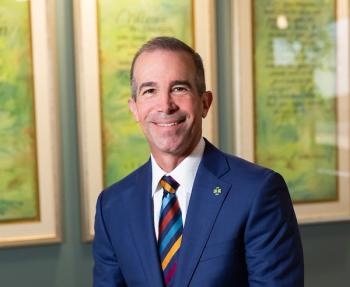
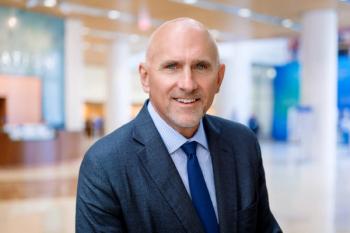
Dr. Matthew R. Callstrom has been selected as the next leader of the system. He succeeds Dr. Gianrico Farrugia.

Dr. Myechia Minter-Jordan came to the conference to push for technology aimed at helping seniors live better.
Las Vegas - At a conference dominated by AI, it may be surprising to find AARP.
HLTH offers a showcase of the latest digital health tools. A decent number of attendees wandering the showroom may not have been born in the 20th century.
Even
In a breakfast with members of the media Tuesday, Minter-Jordan says there are enormous opportunities for investments to help Americans 50 and over live longer and live better.
“Aging is everybody’s business,” she says.
An internist, Minter-Jordan argues that healthcare products aimed at aging Americans can be very big business.
“So healthcare is not just about our physical health, but it's about our mental health and well-being,” she says. “It's also about our financial health, all the things that impact how long we live. And so as we think about why we're here and why we're in this space, it's to ensure that the tools and solutions and resources that we bring to the 125 million individuals over the age of 50 that we represent, have options for addressing all of those issues.”
AARP remains focused on core concerns such as protecting Medicare and Social Security, lowering the cost of prescription drugs, and
“Within each of those issue areas, there's such an opportunity for there to be technology and innovation,” Minter-Jordan says. “And our goal is to cultivate that and bring those resources to the people who need them the most.”
Minter-Jordan says that there needs to be more attention and investment in devising tools aimed at helping older Americans live independently and live better.
She also says that the healthcare industry needs to be giving more attention to the aging population that will have more healthcare needs.
“As we think about approaching these longer lives, we're thinking about it at all levels, not only from a policy standpoint, but from the standpoint of what are the innovation and tools and resources that we need to be able to navigate these longer lives,” she says.
AARP has formed
AARP brought more than 20 startups to HLTH. The companies have designed products for women’s health, brain health, and mobility, says Andy Miller, senior vice president of AARP’s Innovation Group.
“We have to be at the table,” Miller says. “We have to help all of these companies, big and small, understand the 50-plus, understand how they should be building products and services and offers that they have, so that they'll resonate, so that we all age well.”
Most Americans over the age of 50 don’t believe tech products are designed with them in mind, Miller says.
Too often, he says companies labor under false impressions that seniors are befuddled by technology.
“That is unequivocally false,” Miller says.
Part of AARP’s focus on startups stems from the fact that they can be nimble and develop novel solutions.
“Large organizations sometimes take a while to pivot to create new things to go into new markets,” Miller says. “I will say what's interesting is the disconnect you're seeing today with startups and the speed at which they can go versus some of the large organizations, and it's 100% driven by AI.”
AARP is pushing for new tech solutions because people are generally living longer.
But Minter-Jordan says these longer lifespans include several years of poor health.
“Given the demographics that are changing not only within our country but globally, we know that now 50 is pretty much halfway there,” she says. “As we think about our lives and our lifespan, we also know that as we're living longer, we're not necessarily living healthier years, and there's a gap of about 12.5 years between how long we live and how many of those years are actually healthy. And so our goal is to close that gap.”
“We're all excited about living longer, but those years for many of us are not healthy years, and so there's such an opportunity for us to tap into what are the things that will help close that gap,” Minter-Jordan says.
She says there needs to be more emphasis on developing tools that can help people make connections,
“As we get older, it's harder to make friends, it's harder to find community, and there are tools and resources that we can get into when we talk about some of the companies that we're working with that help to close that gap by addressing some of the issues around loneliness and really providing opportunities for them to get better connection,” Minter-Jordan says.
Such areas include physical therapy, wellness and community resources.
“It's a really important opportunity for companies and entrepreneurs to think about: if I can close that gap, then I can bring value to the consumers who are driving this economy in the country today,” she says.
Health systems are starting to focus more on meeting the needs of an aging population. The last of the Baby Boom generation will be 65 before the end of the decade. The first of the Boomers turned 80 this year. As of 2024, there were 67 million members of the Baby Boom generation, or roughly one-fifth of America’s population, according to
More healthcare leaders are
Minter-Jordan says that AARP is hoping to spur more investments and energy on developing better healthcare tools for older Americans.
“I mean, that's the state of urgency that we are engaging right now, to lift up the longevity economy and the fact of our demographics, and creating urgency around that,” she says.
Minter-Jordan says AARP came to HLTH “to bring visibility into this issue that is only going to continue to increase.”
“And so there should be more urgency around this, around changing policy, really thinking differently about the healthcare system, and to ensure that it's producing the outcomes that it should to improve the health of the older and aging population,” she says.
AARP remains focused on core concerns such as protecting Medicare and Social Security, as well as
“Within each of those issue areas, there's such an opportunity for there to be technology and innovation,” Minter-Jordan says. “And our goal is to cultivate that and bring those resources to the people who need them the most.”