

News|Articles|July 29, 2026
How hospitals can build community programs to last
Author(s)Ron Southwick
Key Takeaways
- The American Hospital Association selected Sky Lakes as the 2026 Foster G. McGaw Prize recipient for sustained community service and measurable local impact.
- Over 50 partnerships support multi-sector interventions, including the farmer-led Klamath Grown co-op that transitioned from hospital-started support to independent financial sustainability.
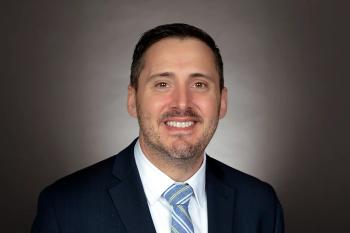
Sky Lakes Medical Center in Oregon won the American Hospital Association’s top prize for community service. David Cauble, CEO of Sky Lakes, talks about the keys to making those programs succeed.
Advertisement
Even though it’s not a large health system, Sky Lakes Medical Center in Oregon has developed several strong programs to address unmet needs in its communities.
Sky Lakes operates a wellness center, and the medical center has undertaken programs to offer access to healthy food, job training and improved parks and trails. This month, the American Hospital Association
David Cauble, president and CEO of Sky Lakes Medical Center, spoke with Chief Healthcare Executive® in a recent interview for
Sky Lakes is an independent health system with a 176-bed hospital and a host of clinics. Cauble says the medical center is committed to working on big problems, including poverty, that have a direct impact on the health of communities. He also says the system is working with community partners to ensure those efforts are sustainable.
“One of the great things about this type of work, because it is so community-oriented, is we've got a great team, and their jobs, quite frankly, are in many ways more fun than the rest of us are having, because they're out involved in the community,” Cauble says.
“They're having an opportunity to engage and bring things to the community and ask the community, ‘What do you need? And let's find a way to work on that together,’” he adds. “So we're fortunate. We've got a great team. It's not a big team, but we've made the investment in the staff that's helping us work on these projects and partner with the community to come up with ways to make a difference.”
Tackling hunger and poverty
Sky Lakes has partnerships with over 50 different community organizations.
Cauble points to the work with local farmers that has now evolved into a self-sustaining program.
“We became very involved with some of the local farmers, and they were trying to start a farmers co-op where they could bring their products to the community at reduced cost, with better fresh produce and fresh resources,” Cauble says. “So we helped get that started, but that has now transitioned to where it's known as Klamath Grown. They've transitioned to where they're now their own entity.
“They're self-sustaining,” he adds. “We helped get it started, we continue to support them in other ways, but financially now they're operating on their own.”
Sky Lakes is also working with area schools to help prepare students for healthcare careers, which is also designed to address some of the medical center’s workforce shortages.
The health system has space on its campus for courses and partners with a community college on a program that provides college credits for those taking the classes. Students can pursue certification as a medical assistant or nursing assistant and can get full-time jobs at the medical center. The hope is that some may pursue careers in nursing or other healthcare professions.
“We're getting students now that never had an interest, never even thought of a career in healthcare, and now they're exploring that and they're finding success,” Cauble says. “And the graduation rate for the students that are enrolling in the career technical education program is significantly higher than the general population as well.”
“So even if they never finish and go on to become a nursing leader or something of that nature … at least they have a college or high school education now, which opens the door for them to go into a college degree or trade school or whatever direction they choose to go,” he says.
Cauble says the program is helping build a better pipeline of healthcare workers, but he says it’s also having a real impact on the community.
He says the program is “helping to end generational poverty.”
‘A long-term commitment’
When asked about his advice for other health systems looking to build or expand community programs, Cauble points to the need for a long-term investment. Sky Lakes began the program now known as “Healthy Klamath” in 2012.
“So for 14 years now, we've been meeting with the community and engaging with them, and that shows that level of commitment. It's not a once-and-done,” Cauble says.
Cauble says the investments aren’t easy in a financially challenging environment, but he says they’re necessary to tackle the social factors that impact community health.
“We're not going to change the health of our community and be able to be sustainable for the long term if we're not trying to get to some of the root causes of what's driving the utilization, the cost, in our healthcare system,” Cauble says.
“So we just sort of take the position that we've got to go first,” he adds. “We've got to be the ones, at least in our community, to lead that effort. So I would encourage anybody that's looking at this: it's a long-term commitment. You can't just expect to do it for a year and then think, ‘Oh well, that didn't work, let's go on to something else.’”
Cauble stresses the importance of engaging community members and getting their guidance on the big problems and the strategies to address them. He says health systems must connect with community partners “with intentionality.”
Critically, health systems need to listen to community leaders and residents.
“Listening is so important, because if we ask, the community will tell us what they think they need,” Cauble says. “But if we listen to them and say, ‘Well, we heard you say this, but what we really think is you need this,’ well, that erodes that level of trust. So at least in our case, it's the long-term commitment and truly listening.”
When Sky Lakes began work on building an ADA-accessible playground, Cauble said the system interviewed students and parents.
“We went into the elementary schools and talked to the kids, we talked to their parents, and then we built that park, not what we maybe thought we would have done,” he says. “We actually talked to the kids and let them help design it. So there's a level of trust that gets built when you do those sorts of things.”
Advertisement
Related Content
Advertisement




























Advertisement
Advertisement