The health system says it’s building a hospital and expanding virtual care to meet rising needs in Charlotte and beyond.
He spoke with us about plans to invest nearly $600 million in the Minnesota system, upgrading facilities and the alignment between the organizations.
Even after a number of mergers and acquisitions in recent years, Sanford Health continues to grow.
On Sept. 1,
With the transaction completed, Sanford Health, based in Sioux Falls, South Dakota, now operates 60 hospitals in the upper Midwest. Sanford Health also has committed to investing $600 million to upgrade North Memorial’s facilities.
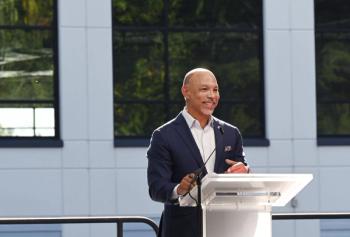
“It became very clear to us right away that these were two organizations that really saw their mission to serve the most vulnerable populations as nonprofit hospitals and health systems as a complete alignment,” Gassen says.
With the merger with North Memorial, Gassen says they’ve formed “Minnesota's first fully integrated urban and rural health system.”
North Memorial serves some densely populated urban and suburban communities.
“At Sanford Health, the nation's largest rural healthcare provider, we brought in that perspective,” Gassen says. “We know what it's like to serve those sparsely populated, geographically isolated communities like we've been serving for several decades in Western Minnesota.”
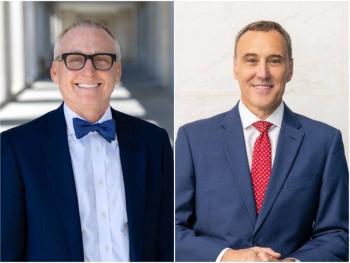
Gassen credits Trevor Sawallish, chief executive officer of North Memorial Health, and the North Memorial board for its vision and shared values. With the merger, Sawallish now leads the Twin Cities region of Sanford Health.
After the initial meeting with North Memorial’s board to discuss merging, Gassen says there was an immediate comfort level, saying it could felt familiar as a typical meeting at Sanford Health.
“There was so much cultural alignment, it just felt so natural as we were talking about some of the challenges and the headwinds, but then also talking about how we think we can best address those and be able to persevere through them,” he says.
Sanford has pledged to invest about $500 million to expand North Memorial’s Maple Grove Hospital, with plans to add emergency, inpatient and surgical capacity.
Sanford will also invest $100 million to modernize Robbinsdale Hospital, addressing overdue maintenance needs. The health system has pledged to maintain core services at Robbinsdale for 10 years; those services include emergency care, the intensive care unit, and labor and delivery services.
“North Memorial has been a great health system for a long time, doing incredible work,” Gassen says. “But as they've fallen on challenging times and coming at this with a smaller scale has made it difficult. They've had to make some hard decisions in the last few years, and really a strong credit to Trevor, to his leadership team, and his board for making a lot of hard decisions.”
Some of those hard decisions have entailed postponing work on North Memorial’s hospitals.
“Maple Grove has been at or beyond capacity right now for several years,” Gassen says. The hospital has delivered more babies than any other facility in Minnesota over the last couple of years, he adds.
“We're working on a process of doubling the size and the capacity in the Maple Grove facility,” Gassen says. “They've got a great plan that's been in place for a few years now, and so we're going to be able to make good on that and to begin to double that facility to be able to address those needs.”
He also talks about addressing the deferred capital investments in Robbinsdale.
Gassen says the goal is to ensure that “we're providing the right environment for world-class clinicians to practice, and most importantly, to best serve those patients.”
When Sanford Health merges or acquires another system, Gassen says that the approach is to keep local leaders in place. He stresses that those leaders are more familiar with the markets.
And he says that will be the case with the merger with North Memorial.
“Trevor Sawallish is going to be the market president and CEO,” Gassen says. “He is the face of Sanford Health in those communities, and it's not just a figurehead.
“This is somebody who's accountable for knowing the culture, for knowing and understanding the needs of that community, and then having the autonomy to make the decisions that are necessary to meet those needs, and then pairing that with the system resources that come alongside and say, ‘We've got some challenges that we need to address,’” he adds.
North Memorial’s leaders will also have the backing and resources of other hospitals presidents and CEOs across Sanford Health. He says Sawallish can collaborate with others to discuss challenges and potential remedies, including what has worked in other places.
With North Memorial’s financial pressures, the system hasn’t been able to afford some needed technological investments, including advantages with AI, Gassen says. But Sanford’s planning to help meet those needs.
“We want to make sure that Trevor has those at his disposal and that he's able to make those investments,” Gassen says.
Gassen says he is looking forward to investing more in the state of Minnesota.
“We believe it's going to be a great return measured by better outcomes for patients,” Gassen says.
Sanford Health’s acquisition of North Memorial follows an active period of mergers for the system. In 2025, Sanford completed
Gassen says there are no immediate plans for other mergers or acquisitions. “I'm not in any active conversations with anyone,” he says.
But he says Sanford has become a network of great community hospitals and physician groups that have learned from each other and become stronger. And he says he’s open to the idea of Sanford forming new partnerships in the future.
“We're always open to more expertise, to learning from others and being able to come together and coalesce around that mission to care, to comfort, and to cure,” Gassen says. “And so, I don't know who that might be, but I do think that we're going to have the opportunity to come together and grow with other partners in the future.”