
News|Articles|July 28, 2026
Changes: The hospital’s mission has gone beyond medicine
Author(s)Ron Southwick
Key Takeaways
- Upstream investment is positioned as a utilization-management lever, aiming to reduce avoidable ED visits and admissions by addressing social determinants that drive outcomes outside care delivery sites.
- A sustained, mission-embedded commitment—rather than episodic grant-funded programming—enables durable community interventions over multiple leadership tenures.
In the latest episode of our video series, we talk with David Cauble, CEO of Sky Lakes Medical Center in Oregon, which has received national recognition for its work to address community needs.
Advertisement
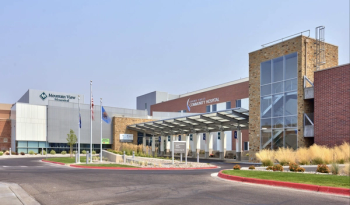
Sky Lakes Medical Center is delivering more than healthcare in southern Oregon.
The health system has launched programs to tackle food insecurity and improve area parks. Sky Lakes operates a wellness center for the community and also runs job training programs. This month, Sky Lakes Medical Center
In the latest episode of Changes, our new video series of conversations with healthcare leaders on the evolution of the healthcare industry, we spoke with David Cauble, president and CEO of Sky Lakes Medical Center. He talked about the work that his health system is doing to go beyond the delivery of healthcare. He says those efforts are aimed at preventing illness, reducing costs and improving community health.
“We really are focused on impacting the health of our populations outside of the walls of the hospital and outside of the walls of our clinics,” Cauble says.
It’s worth noting that Sky Lakes is an independent system with operating a 176-bed hospital and a host of clinics in southern Oregon and northern California.
Here are some excerpts from our conversation. And you can see the other episodes from our video series
Q: Let's talk about that work you're doing outside the hospital, because you and so many other health systems are increasingly doing more work beyond delivering just patient care. Is this a role that has changed somewhat for hospitals and health systems? Has that become part of the role of the hospital now, doing more than just caring for the patients that are coming into the emergency room and in the inpatient rooms?
A: “We think it is. There's lots of different studies that support the idea … I've seen as many as 80% of the things that we look at, social determinants of health, all the things that affect the health outcomes of our community, 80% or more occur outside of the walls of the hospital. And so, from Sky Lakes' perspective, we've been trying to figure out: how do we get into the community and have a different impact, and candidly, to reduce the number of patients that need to come into the emergency room or need to come into the hospital.
“So this is not a short-term effort on our part. It's been going on for years, well before my time as well. And just the efforts to engage the community, to partner with them, to look at things that we can do directly to impact the health and well-being of the community — it really is a part of our mission and vision. It's been baked into the organization and is very much our focus. So yeah, I do think it's changing, and it's not a recent change for us. But as we look to the future, I think it becomes all the more important that we really are focused on impacting the health of our populations outside of the walls of the hospital and outside of the walls of our clinics.”
Q: You're involved in so many different things. You're working to improve food insecurity. You're working to upgrade parks and trails. You're operating a wellness center, and training people for healthcare careers. I'm just wondering how you're able to do all of this when you're obviously not the largest healthcare organization in America — so how do you manage to sustain these types of efforts?
A: “Well, I think for us, and you touched on the key word, is ‘sustain'. There's a commitment on the part of the organization that goes back years, and so it's a community combined effort. It's not just Sky Lakes trying to put these things in place without community support, and I think that would be a distinguishing characteristic. As we talked to the McGaw Prize Award committee and others, that was one of the things that we emphasized, and they appreciated.
“So we've got a partnership of over 50 different community organizations that are involved on a regular basis. You mentioned food systems; we'll start there. We became very involved with some of the local farmers, and they were trying to start a farmers co-op where they could bring their products to the community at reduced cost with better fresh produce and fresh resources. So we helped get that started, but that has now transitioned to where it's known as Klamath Grown. They've transitioned to where they're now their own entity. They're self-sustaining, they're funded — we helped get it started, we continue to support them in other ways, but financially now they're operating on their own.
“So those types of efforts are what allow some of these things to be sustainable, and how we can manage our resources so that we're not trying to do everything, but we're engaging the community in that type of effort.”
Advertisement
Related Content
Advertisement








































Advertisement
Advertisement
Trending on Chief Healthcare Executive
1
Prisma Health plans to acquire Erlanger, invest $2B: Questions and answers
2
Chief Healthcare Executive Roundtable: The struggle to retain staff
3
The workforce: Burnout, retention and where AI fits
4
Six ways to augment payer, pharmacy benefit manager and drug manufacturer partnerships | Viewpoint
5