
Our panel looks at restoring funds to Medicaid, the potential for cuts and closures of health systems, and the Affordable Care Act.
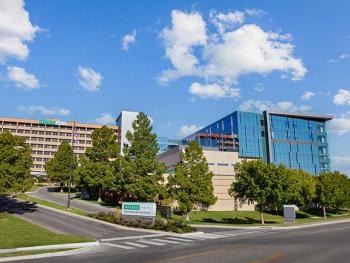
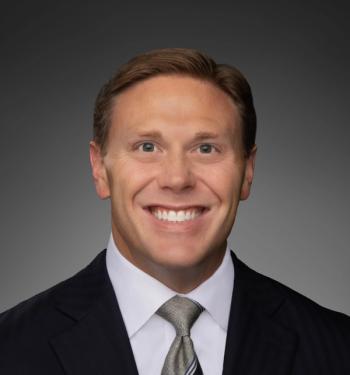
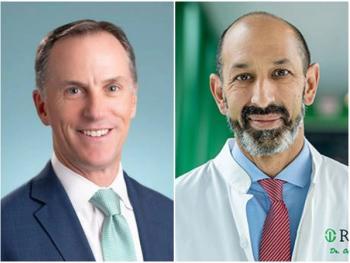
Rex Hoffman, MD, chief medical officer of Providence Holy Cross Medical Center in Los Angeles, talks about lessons he has learned.
San Francisco - The role of the chief medical officer of a hospital goes beyond the skills required of a top physician.
Dr. Rex Hoffman, MD, chief medical officer of Providence Holy Cross Medical Center in Los Angeles, talked about the lessons he has learned in a conversation at the
He has served as the chief medical officer for nearly eight years and possesses more than two decades of healthcare leadership experience. In our conversation, he discusses the qualities a chief medical officer needs today and how the job has changed.
Here are some excerpts from that conversation.
Q: What's something you know now as a CMO that you wish you had learned earlier?
A: "As physicians, we're trained to identify problems, look at the evidence, treat the problems and really put the patient first. These are all really important things. As a physician executive, though, what you need to do is bring different groups of people with competing priorities and incentives together to solve problems that are bigger than one person can handle. So it's really bringing the groups together.
“Some things I've learned: You've got to focus on relationships. You can't do everything. You also have to have a financial background or acumen to include in the conversation. The measure of leadership is really when you're not in the room — how do people respond to you and what you're asking of them?"
Q: How has the role of a chief medical officer changed over the years?
A: “Yeah, so it's really interesting. The CMO used to be a senior physician executive dealing specifically with medical staff affairs, but over time it's really evolved into an enterprise physician executive looking at strategy, looking at financial sustainability, looking at service line growth. This is all coming to play.
“And if we really do a chronological look at this, shortly after 1980, they were really involved in quality utilization review, accreditation, patient safety. Really, those were the four areas they focused on. Fast forward to 2000. Now they started looking at service line performance, started looking at organizational priorities, started looking at financial sustainability.
“And then we get to COVID, and it totally shifts, and we start looking at crisis management, capacity issues, infection prevention, staffing, things we didn't really look at before.
“And now currently, today, in the last few years, the chief medical officers have taken on a larger array of responsibilities, not just in the hospital, but trying to integrate it with medical group, ambulatory settings, and really looking at the entire enterprise rather than just the hospital, which was the case before. And each of these environments is really about navigating different components of those competing priorities in each of those spaces.”
(Lauren Gordon reported from San Francisco. Ron Southwick contributed.)
Read more