
The American Hospital Association is responding to claims from insurers accusing health systems of improperly coding.
The University of Pennsylvania professor and prolific author talks about a new paper that projects AI will be ready for some medical tasks by 2030. He says health systems must tackle tough questions now.
From Dr. Ezekiel Emanuel’s perspective, the refusal to accept the widening role of AI in patient care is more than denying the inevitable.
It’s delaying the important conversations about using AI in medicine, and figuring out how to pay for it, says Emanuel, the well-known author, professor and vice provost for global initiatives at the University of Pennsylvania
Emanuel co-authored a
The authors argue that AI is likely to outperform human doctors and will also do better than doctors aided by AI. They also project that autonomous AI “will likely be ready to be deployed for real-world cognitive medical tasks in some, maybe many, workflows by 2030.”
In an interview with Chief Healthcare Executive®, Emanuel, a frequent presence on cable news programs on health policy and ethics, says the paper is designed to galvanize more discussion about implementing AI in medicine, following the “astounding” progress of AI in the past few years.
“There's regulatory oversight,” Emanuel says. “When are they ready to be introduced and allowed to go into people? Second, there's liability issues. Who's going to be responsible when they make mistakes? Just like doctors, they're inevitably going to make mistakes. One should not be under the impression that they're foolproof.”
“The third thing is there's got to be a whole question about how we're going to pay for it,” Emanuel says. “Those things have to be resolved before we're going to get widespread implementation of AI, and at the moment, none of them are set up.”
Doctors in an AI era
The paper says that AI is already as good as, and possibly better, than doctors in gathering patient information. The authors argue that large language models are coming up with more accurate diagnoses than doctors, and autonomous AI is recommending sound treatments.
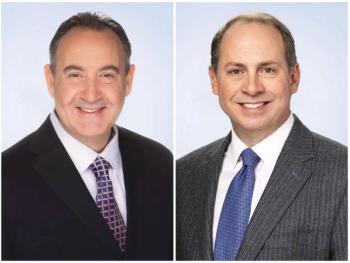
Two of the paper’s authors, billionaire venture capitalist Vinod Khosla and his son, Neal Khosla, are heavily engaged with AI. Vinod Khosla was an early investor of OpenAI; he’s also leading a group to buy the NFL’s Seattle Seahawks. Neal Khosla is CEO of Curai Health, a virtual primary care provider.
Neal Khosla
The vast majority of doctors are using AI, according to the American Medical Association.
Roughly four out of five doctors (81%) say they’re using AI in their work, in areas such as documenting conversations with patients, finding the latest research, and helping prepare patients to be discharged, according to a March 2026 AMA survey. The number of doctors using AI professionally has doubled since 2023, the AMA says.
Most physicians and healthcare leaders say they project AI will help doctors do a better job of caring for patients, either in reducing time on administrative tasks and also helping physicians stay current on new studies.
The AMA and Digital Medicine Society last week
“Physicians remain responsible for integrating clinical evidence, navigating uncertainty, balancing competing risks, and making decisions that reflect each patient's unique circumstances, preferences, and goals,” the framework says.
Needing more real-world data
In the JAMA piece, Emanuel and the other authors argue that AI is going to do better in handling some medical tasks than doctors, even those being assisted by AI.
“When AI alone is better at a task than humans alone, human-AI hybrids actually degrade performance compared with AI alone,” the authors wrote. “Thus, as AI improves, having humans in the loop will likely worsen patient care.”
Emanuel says that doctors are likely to make more mistakes in overruling AI recommendations.
“If AI is good 99.9% of the time and doctors are correcting AI, they can also introduce errors,” Emanuel says. “And that actually turns out to be, the better and better AI is, the more likely what docs do is going to be error-prone, rather than finding an AI mistake.”
Abe Baker-Butler, a research fellow at Penn and a co-author of the JAMA paper, says the paper is meant to be a wake-up call.
“Right now, the heads are in the sand,” Baker-Butler says. “And one of our goals of this paper is to get leaders of health systems to take their heads out of the sand and really critically evaluate the fact that there are going to be some tasks where AI alone is going to perform better than hybrids, and they need to reckon with and prepare for that reality.”
The paper cites scores of simulated cases. But as Eric Topol noted
The authors acknowledge that more studies of AI need to take place in the real world.
“We say one of the big problems is only a few of these studies have been done in real-life clinical situations, and AI needs to be tested, and what's inhibiting it … tends to be the fact that we don't have the regulatory-liability-reimbursement structure,” Emanuel says.
Deaths occur due to medical errors from physicians now. But Emanuel also concedes the public is going to be less accepting of deaths tied to AI errors.
“People tend to be a little more forgiving of death by human than death by machine,” he says.
Emanuel says there is a need for more data on medical errors and incorrect diagnoses from doctors.
“Part of the problem is we don't have a good handle, for example, on how frequently doctors don't diagnose patients properly. We know it's not zero. We know it's high, but we don't know exactly how high,” Emanuel says.
“We need to have those data for comparison, and that's one of the reasons we need to do those studies,” he says.
Developing strategy for AI
Emanuel says health systems need to be thinking deeply about how they should be using AI.
“You’ve got to be on top of it,” Emanuel says. “You’ve got to have a strategy for how you're going to integrate AI.”
He says that one of the reasons the authors produced the paper is to accelerate thinking and planning about AI in healthcare.
Emanuel says, “Until you accept that AI is going to do some of medicine, you don't get yourself to confronting questions like, How do we implement that? How do we train the staff? How do we work into workflow? What's the liability structure? How does payment happen?”
“You only get to these other questions once you recognize and accept that we're going to have autonomous clinical AI,” Emanuel says. “And that's part of the reason we wrote the paper.”
Emanuel says there are certainly areas where AI isn’t going to be able to replace humans. If hospitals suffer
But Emanuel says medical schools also are going to have to rethink how they are training doctors in an AI age.
“Until we recognize there are some things where the AI is just going to be better than a medical student no matter how well-trained, you know, we're not going to change medical education,” Emanuel says.
Emanuel sees more attention on the “psycho-social” aspects of practicing medicine, which he says in the past were less emphasized than science and medical knowledge. Now, he says empathy and connecting with patients are gaining more importance.
“That's a good thing, but that means medical training has to change dramatically to emphasize that also,” he says. “And so I think, medical schools have to get on the stick and rethink their priorities in terms of training students.”