The chief operating officer says the ‘silver tsunami’ needs more attention, and AI will help the shift from fee-for-service models.
The head of a telemedicine physician company talked with us about filling specialty gaps, avoiding unnecessary transfers and why access alone doesn't solve the problem.
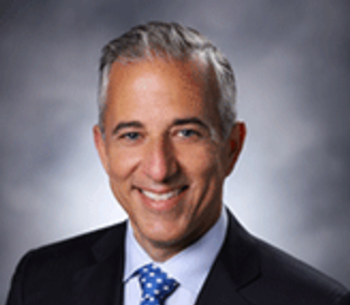
Chicago - When hospitals can't cover specialties around the clock, the problem usually gets described as a physician shortage. Jason Povio sees it differently.
“I don't really see the problem being physician shortage so much as an inability to consistently and reliably deliver access to a particular service line,” he says.
Povio is the CEO of Eagle Telemedicine, which provides virtual physicians to hospitals and health systems. He says virtual care can close that gap by giving hospitals specialty coverage at off hours, when there's no neurologist or cardiologist to call, so emergency physicians can keep more patients close to home instead of transferring them long distances.
“I often tell people that we're a force amplification of the care that already exists within a community,” Povio says. “We're not there to replace the care that those patients receive locally. We're there to augment it.”
Povio spoke with Chief Healthcare Executive® while he was in Chicago for the Becker's CEO + CFO Roundtable earlier this month. He talked about what it takes for hospital teams to accept virtual physicians as their own, how to measure whether a telemedicine program is working and what changes as programs grow across a health system.
He also stressed that opening the door is only the start. “Just creating access doesn't necessarily solve the problem,” he says. “… It's what happens after that door opens.”
This is one of a series of interviews with leaders at the Becker’s conference. Look for more in the coming days.
Here is a transcript of our conversation with Jason Povio.
Q: Hospitals across the country are struggling to cover specialties and staff physicians around the clock. Where do you see the biggest gaps right now, and how is telemedicine helping fill them?
Povio: “I think with the biggest gaps in healthcare, oftentimes people immediately default to a physician shortage, and I don't really see the problem being physician shortage so much as an inability to consistently and reliably deliver access to a particular service line. So the biggest gap is being able to develop programs that create access to specialty care and help keep care close to home.
“Telemedicine or virtual care plays a large role in that by developing programs that offer access to care at off hours, in the middle of the night, when there isn't a neurologist to call or a cardiologist to call for a patient who's entering the emergency department with a low-level chest pain. Oftentimes those patients are sent elsewhere, long distances, to seek that care. Virtual care can bridge that by creating access for facilities in those outlying areas, helping the emergency department make effective and timely care judgments and assessments to keep the patient local, and supporting the care the hospital provides with its daytime coverage.”
Q: As CEO of Eagle Telemedicine, how do you describe what your team does for hospitals and health systems?
Povio: “I think our primary mission is to develop collaborative partnerships in designing care programs that drive quality access to care. We're looking to really integrate into the hospital's ecosystem and become a long-term, sustainable, reliable solution for providing care to patients and communities.
“I often tell people that we're a force amplification of the care that already exists within a community. We're not there to replace the care that those patients receive locally. We're there to augment it. We're there to help create confidence for that emergency room physician that what they're assessing, and what they believe they can keep locally, they can care for. So we come alongside and support those physicians and those care teams to really deliver on their mission of caring for patients in their community.”
“We're not there to replace the care that those patients receive locally. We're there to augment it.”
Q: Access is often treated as the problem to solve. Where do coordination and ownership of the patient fit in?
Povio: “There are a lot of entry points in healthcare right now. Emergency departments have always been there. You've got ambulatory outpatient clinics, urgent care, virtual care. Access is just that: it's the entry point. Coordination is what happens after the patient enters through that entry point, and it's really critical to ensuring that the patient is fully cared for through the entire episode of care, whether that's in an inpatient or outpatient setting.
“I think that often gets lost. It's who owns patient care and drives it to completion once they've entered whatever door they may have entered. They might enter our door virtually, on screen. Then it's the coordination that happens after that with our physician and the local care team, to ensure that the appropriate care plan is engaged and that care proceeds through the episode of care, which may be a two-, three- or four-day length of stay. It's managed in an appropriate way for that patient to then successfully exit that episode of care and either seek continuous care in an outpatient setting or not.”
Q: Rural and community hospitals face some of the toughest staffing challenges. How can virtual care help them keep patients close to home?
Povio: “The staffing problem that seems to be exacerbated in rural or community-based hospitals is more a function of volume, and just not having the population to drive the need to recruit a full-time neurologist or cardiologist. There just aren't that many episodes of care. It's fractional, if you will. So virtual care really helps to avoid even the smaller numbers of transfers. Those patients are able to stay local and receive the quality care that they need, and family is able to visit, which is often a large component of a patient's healing process.
“From a facility perspective, oftentimes in smaller communities, those rural facilities are the largest employer. So their ability to deliver on their vision and mission, and also maintain themselves economically, helps support the community's ability to continue to thrive. When an unnecessary transfer takes place and the patient leaves, the revenue associated with that episode of care leaves with it. So oftentimes one of the largest benefits of a virtual care program is unnecessary transfer avoidance and keeping a patient's care local.
“And from a quick clinical or quality perspective, it also can support more timely diagnosis and the start of a treatment or care plan.”
Q: When a hospital brings in virtual physicians, what does it take to make them feel like part of the care team rather than an outside service?
Povio: “I appreciate this question. It's a strong passion of mine. It's very challenging as a service provider to hospitals and health systems, going in initially and being seen as the vendor. You're contracted. I very much desire, and it might even be aspirational, for hospitals to really treat our physicians as part of the medical team. Ultimately, they have to get med staff privileges, so they're by definition a part of the med staff team. But that's often very different than being accepted as one of us, and I think there are a couple of pillars that go a long way in helping to support that consistency and continuity.
“Our staffing model with pods helps to create a fit-for-purpose, small enough team of physicians to provide continuity in the service, so that the nurses and physicians get very comfortable with our physicians and their care practices and patterns, and build trust and build that relationship.
“Then there's integration, and not from an IT perspective, but integrating truly and holistically into the med staff, the workflows, the EMR and the care pathways that have been designed. We work really hard to do that. One of the number one questions we ask in our implementation process is, ‘Tell me how you do it today.’ There's often this default that it's going to be vastly different because it's virtual. Our response to that is, ‘So how do you do it today?’ Because we're looking to emulate what you do today, just through a virtual presence.
“And then I think the last pillar, which shouldn't be underappreciated, is accountability. We have a culture of accountability at Eagle: You say what you do, and do what you say. We measure it, we support the outcomes that our partners are driving toward, and we prove that through measurement systems and meetings with them on a monthly or quarterly basis to review that, so that we are truly a part of driving the outcomes they're working to accomplish. I think when you put those three things in place, it helps to break down those barriers and allows the local care staff to accept our physicians as one of their own.”
Q: How should health system leaders measure whether a telemedicine program is working, both for the patient and for the bottom line?
Povio: “Measurement is key. I'm an engineer, and I'm trained to start with: What is the problem? Do you have a fundamental definition of what the problem is, and is there alignment across the care team that that is indeed the problem and that's what we're working to solve? If you have that, it becomes very easy to understand what the critical measures of success are and how to work toward measuring those to ensure that we're achieving the outcomes.
“I enjoy these conversations with clients, when we get on what we call a discovery call and work to understand what their problem is. It might come across as something as simple as, ‘Our stroke coverage is not … I'm still transferring patients.’ But they have a stroke coverage model.
“When you dig a layer deeper, what you find in the data is that the stroke at 2 o'clock in the morning is being managed just fine. It's the patients being transferred the next day or the day after, because they don't have general neurology support, and the physicians who are there locally don't feel comfortable managing the patient post-stroke. So that specific episode of care was managed, but it's a general neurology support issue after the fact. The problem was initially articulated as stroke. So it's important to really define and understand what the problem is, so that we can co-collaborate with them on fit-for-purpose solutions to solve the actual problem.”
Q: What changes in a virtual care program as it scales across multiple hospitals?
Povio: “Oftentimes, at a more local level or a single facility, it's easier to garner buy-in, and you have local champions. Many times, the success of the program really hinges on how bought in they are, how leaned in they are, and it's wonderful to see. That's hard to replicate at scale. So you really need to rely on the operating model, and not the heroics of a few supporting a program, and make sure that you have a reliable, repeatable and robust model that can withstand the various cultures.
“Even within a system, there are nuances that need to be appreciated at each individual facility, and trust me, the caregivers at each of those facilities want those to be appreciated as well. So having a strong, stable operating model that can persist across the different cultures and the different environments is key. Every facility has different levels of resources. It might be something as simple as who brings the cart into the room. Here it's a nurse supervisor, and there it's a HUC [health unit coordinator]. Understanding those nuances and being able to plug and play different pieces into a workflow is, I think, one of the most critical elements to having something succeed at scale.”
“You really need to rely on the operating model, and not the heroics of a few supporting a program.”
Q: How do you see AI and other technology changing virtual care over the next few years?
Povio: “I see AI playing a tremendous role in driving care forward in a lot of different ways. For us specifically, we're staying in a particular lane. We're on a relentless pursuit to remove friction from the workflow of delivering care. Physicians unfortunately bear a tremendous administrative burden in delivering care. Seeing the patient is what brings them joy. It's a calling. It's why they're doing what they're doing. It is certainly not everything else that they have to do that surrounds the encounter.
“So we are relentless in assessing and reviewing everything they do outside of the explicit delivery of care, and finding ways to either automate it or remove it from the workflow, to help bring joy back to their practice, increase patient satisfaction and the experience of the episode of care, and improve the integrity of data capture and documentation. There are so many requirements within physician documentation that have nothing to do with patient care: insurance, billing and the like, quality measures. Anything we can do to eliminate that stuff is where we are truly focused.
“Because we're such a service-oriented organization, working to integrate into the health systems, as I've said, we're staying out of the clinical decision support lane. The larger institutions, and even the smaller ones that we support, will work on their own definition of best practice for care and protocols for care pathways, and we don't want to be a layer on top of that for them.”
Q: What advice would you give a health system CEO who's considering expanding virtual care?
Povio: “Understand what problem you're trying to solve. It can oftentimes feel like a Las Vegas buffet when you have a conversation. It's like, ‘Wow, you guys offer 20 specialties. Well, we could certainly use dermatology and endocrinology, and it'd be nice to have a rheumatologist.’ All of those are probably true. But what are the top problems you're trying to solve for your patients and your community?
“There are resources out there, like community needs assessments, that help you understand what your chronic disease prevalence is within your patient population, where there is leakage and what your community needs most. So really understand that first, and be solid about that, so you don't get distracted by all the other potential opportunities a particular organization could bring to you.
“And then I would implore them to look for a partner, not a vendor. There are a lot of organizations within our space, and in the last five years, I think the data suggests it's tripled in size. Look for an organization that's truly interested in co-collaborating on designing the solutions to meet the needs that you've defined. I think it's critical in driving ultimate success.”
Q: Is there anything else you’d like to talk about?
Povio: “I think we touched on it in a few questions. I would just amplify that just creating access doesn't necessarily solve the problem, and I would continue to amplify the need to coordinate care. It's what happens after that door opens. How is that patient cared for in the acute setting? How is that patient handed off for continuity of care? Because much of what we deal with, there's a chronic disease factor to it. So that patient is going to need a care plan. How are we working to manage adherence to that care plan, to avoid the unnecessary and continued acute episodes of care that bring them back to the ED?
“When you establish a virtual care program, as an example, how is that organization working alongside you to augment that coordination, rather than just being a point in time along that journey? I think it's very important to focus on that for patients and communities.”
(Jennifer Dye conducted the interview in Chicago. Chris Mazzolini and Austin Littrell contributed.)