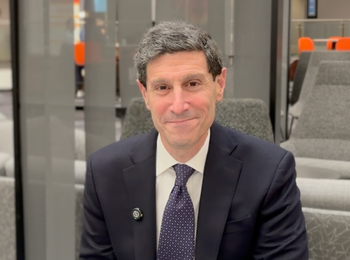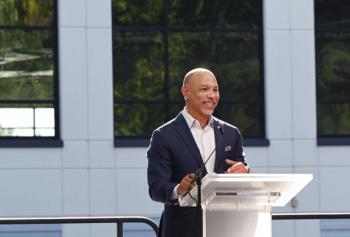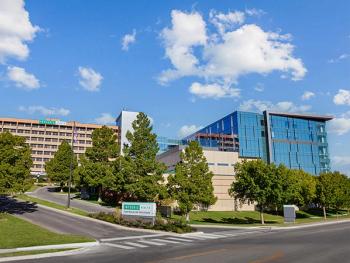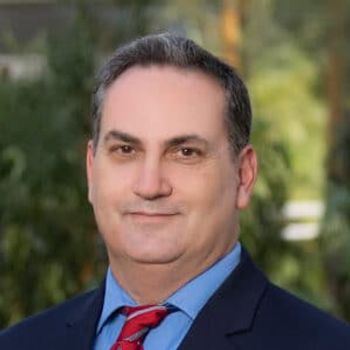
He spoke with us about plans to invest nearly $600 million in the Minnesota system, upgrading facilities and the alignment between the organizations.
He spoke with Chief Healthcare Executive® about its newest hospital, the acquisition of Cancer Treatment Centers, and putting patients first.
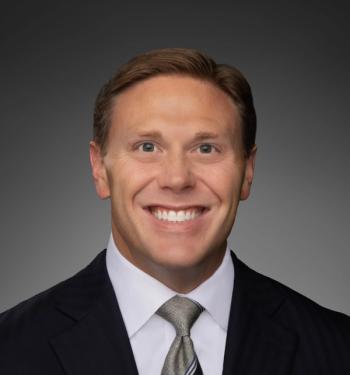
Generally, Robert Stone says he’s not a supporter of “growth for the sake of growth.”
Stone is the CEO of City of Hope, and the health system has grown substantially in recent years. He tells Chief Healthcare Executive® that the system has been aiming to do more than add to its footprint.
City of Hope focuses on cancer treatment and research, caring for 160,000 patients annually. The system has expanded its services from its campus in Duarte, California, serving much more of southern California.
The system
“We’ve expanded across the country,” Stone says. “So we're in five major metropolitan areas, and 86 million people live within a short drive to City of Hope.”
City of Hope is aiming to offer more cutting-edge treatment and research to more patients. He also says the growth of the system reflects the need to meet changes in the industry.
“We thought that the external health care environment was going to get more complex, not less complex,” he says. “And what it was going to require organizations like City of Hope to do would be to reexamine how they deliver care, to look at their care model.”
In a recent interview, Stone talked about the expansion of City of Hope, improving access to research, and the goal of putting the patient first.
‘Cancer is the competition’
Stone has been with City of Hope for 30 years, and he has served as CEO since 2014. He initially expected to be with the organization for three years.
“I've missed it by a little bit,” he says.
He’s seen big changes in the patients being treated at City of Hope, across the age spectrum.“We've seen cancer care being treated at a much earlier age, and we found options to treat patients who are much older,” he says.
Three decades ago, treatment options were much more limited to patients beyond their 60s. Now, he says, the system regularly treats patients in their 80s.
“Cancer now touches everyone, and it's in all age groups,” he says.
In December, City of Hope opened its new cancer specialty hospital in Orange County. The hospital is the centerpiece of a $1.5 billion investment on a 72-acre academic research campus in Irvine.
Stone says he is heartened by the community’s response to the new hospital.
“If you think about health care, it doesn't come around that often that you get to design a new campus from the ground up. So internally, there's been a big buildup of excitement for the hospital to open, but that's paled in comparison to how the community has embraced City of Hope being there,” he says.
“The response to the opening has just been overwhelming,” he adds. “We planned a cautious opening. We opened in December so that we could take time, and within a week, we had to open another floor and continue to grow because the demand was so high.”
Other health systems have operations in Orange County, but Stone says the system identified a need for expanded access to cancer care.
“Cancer is the competition, not other healthcare organizations,” Stone says. “And when you're fighting cancer, you need the most cutting edge treatment, and you need to be treated as an individual.”
“Patients want somebody who is an expert in what they have. They want access to the most cutting-edge clinical trial, and they want to be treated with dignity,” he says.
‘Bedside to bench’
Stone says he has seen other organizations expand aggressively, and sometimes, the results haven’t met expectations.
“I've seen too many of my colleagues I've spoken with in health care, who think the answer to the financial pressures organizations face, to access pressure, is to just get bigger,” he says. “And I think, as a fundamental principle, that just doesn't work over time.”
Still, City of Hope ultimately made the decision to buy Cancer Treatment Centers in a $390 million transaction. Stone says a key factor in the acquisition was to expand clinical trials.
“This created a network of cancer sites with different populations that allow us to expand clinical trials and allow us to enroll patients into clinical trials faster, so that we can learn from those trials and take it back into the lab and develop new treatments,” he says.
City of Hope takes a different approach than looking to bring discoveries from the laboratory bench to the patient’s bedside, Stone says.
“Think of it as bedside to bench,” he says. “We start with the patient and take those lessons to the research lab.”
With the addition of Cancer Treatment Centers, Stone says the system has had the opportunity to ensure care isn’t restricted to particular geographies, or having to replicate expertise at each site.
“We've spent the last four years building an infrastructure centered around our physicians and our support systems so that we can have trials available across the system,” Stone says. “We can have expertise through tumor boards and disease team structures, which is a new structure for us, so that expertise isn't bounded by geography.”
‘Patient at the center’
Patients battling cancer have enough on their mind. City of Hope strives to make it as easy as possible for patients to navigate.
Stone says the system starts with an idea that “sounds simple in theory, but it's hard in practice: Put the patient at the center.”
He cited a phone call he had with a patient a couple of years ago. The patient apologized for calling, but said she was told to see a specialist, but the first available appointment was in 14 weeks. She wanted to know if that was too long to wait.
He assured her that was indeed too long to get an appointment.
“Helping a patient navigate starts with getting them into the system, making it as easy as we can, getting them into the system as quickly as possible so that they can see an expert in their cancer,” Stone says.
Patients shouldn’t have to do the work of setting up appointments for the various doctors they’ll see in their cancer journey, such as medical oncologists, radiation oncologists, surgeons and genetic counselors.
Typically, he says, “The patient is responsible for making all of those appointments. Not at City of Hope. We do that for the patient, and we bring our care team together around what those patient needs are.”
City of Hope’s expansion has made it easier for more patients to get the care they need, he says. A patient at City of Hope in Atlanta can get access to top experts across the system.
“We can, from a technology standpoint, make sure you have the right doctor in Atlanta, but you have the benefit of the expertise in Orange County,” he says. “That's part of building an infrastructure around patients.”