
Several groups say that AI is a valuable tool, but warn physician expertise is essential. They push back against efforts to pit doctors against technology.

The last of the Baby Boomers are approaching retirement, and health systems must prepare for a bigger population of Americans who will need more care.
Los Angeles - The American population is getting older, and that’s going to place more stress on the health system.
By 2030, which is less than four years away, the last of the Baby Boom generation (those born between 1946 and 1964) will have reached retirement age. At the end of the decade,
Most people tend to need more healthcare services as they get older. Leaders at the ViVE conference this week talked about the need for the healthcare industry to prepare for an influx of more people who will need care.
Brad Reimer, chief information officer of Sanford Health, outlined the challenge ahead during a panel discussion at the ViVE conference this week.
“You think about the aging of America, the silver tsunami, chronic disease is going to go through the roof in terms of the population,” Reimer said.
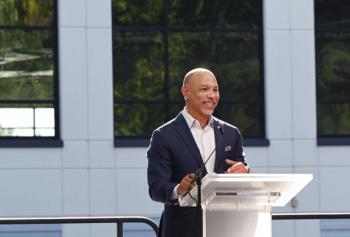
Myechia Minter-Jordan, MD, the CEO of AARP, put the growing wave of seniors in perspective in
“Every day, 10,000 people are turning 65,” she said.
‘We’ve got to be smarter’
Aaron Miri, executive vice president and chief digital & information officer of Baptist Health, says he thinks policymakers are beginning to recognize the gravity of the silver tsunami.
“We have to do a better job designing our systems, our care delivery systems, our IT systems to take care of that population,” Miri said.
Dr. Reshma Gupta, the chief of population health at the University of California, says the aging population will place more strain on hospitals and health systems. In an interview with Chief Healthcare Executive® at ViVE, she noted that those above 65 are on Medicare, which typically doesn’t pay hospitals as much as commercial insurance.
“That's the population that's growing,” Gupta said. “And so it pushes us to say we've got to be smarter, because we have to be able to figure out how to deliver care with good quality.”
Gupta suggests the need to find more ways to provide quality care in patients’ homes, particularly for older patients who are having more mobility issues.
“It's not everybody coming in for every visit. It's not requiring folks to have to have the clinical care team collect all the measures of everything,” Gupta said.
Looking at more vulnerable seniors, Gupta says she’d like to see health systems and providers think of providing care for older Americans in their own homes, and envisioning care beyond those fortunate enough to own single-family homes. She says good approaches would include considerations for those living in subsidized housing, and using technology to detect when patients have falls.
Partnerships and AI
Reimer points to the need to gather more data to help support older patients and maintain good health as long as possible.
“You want that full longitudinal record to be able to treat those patients in the best way,” Reimer said.
He also cited the need to “push that healthy living, and proactive health maintenance … to make sure that we can keep people healthy in the best way that we can. And you do that best when you have access to full data.”
Digital health leaders are going to play an important role to help serve an older population. And AI will be a key tool, Reimer says.
But he says providers will need both AI tools and good data to help track patients over time.
“AI is data-hungry, but it's got to be quality data. It's got to be that full data set that we can trust, and we're going to need a mechanism to be able to get that right data at the right time into those AI models to be able to treat our patients in the best way,” Reimer says.
Developing digital solutions can help manage an aging population, leaders agree, but Miri also said it will require thinking about those in rural communities.
“Right now you have the silver tsunami occurring in rural America, that may not have broadband connectivity, that may not have access to food and have food insecurities and other issues going on, but it's up to us to take care of it,” he said.
Pallavi Ranade-Kharkar, director of research informatics and genomics at Intermountain Health, stressed the need for partnerships to help serve a growing population of seniors. During the panel discussion at ViVE, she talked about working with groups to tackle social determinants affecting health, including nutrition.
Ranade-Kharkar also talked about finding partners to help “lower the digital divide to training for our aging populations.”
“Moving care upstream, moving health upstream, has a lot of a huge return on investment that I think we need to do more work on,” she said. “Some places are doing it really well, but I think together, we can move this forward in a very effective manner,” she said.
More doctors are retiring
With more of the American population reaching or approaching retirement age, the health system could see more patients even as there are fewer people to treat them.
More doctors and nurses are also approaching the age when they may be ready to stop working, or at least stop practicing on a full-time basis.
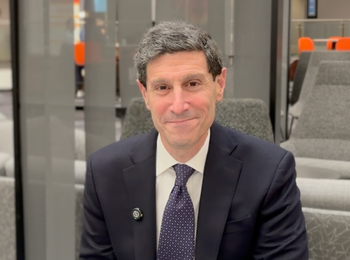
Shawn Martin, CEO of the American Academy of Family Physicians, told Chief Healthcare Executive® in
“From a macro-policy position, I think we as a country should be really worried about it,” Martin says. “I mean, there's a lot of physicians that are reaching that age where, even if they don't retire, they're going to reduce their overall contributions in clinical care, and that will have capacity impacts and access impacts on many communities.”
Martin also said it’s critical to get more doctors to pursue careers in family medicine.
“That pace has got to pick up,” Martin said. “We've got to get more.”
Nearly one in five doctors were 65 or older in 2023, according to
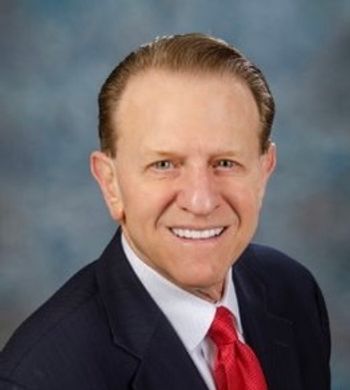
Kevin Holloran, senior director and sector leader of the nonprofit healthcare group at Fitch Ratings, has long been warning that the last of the Baby Boomers reaching retirement age marks an important milestone.
And he says health systems need to be ready.
“I think the one that I've been touting … for several years now is the aging, the graying of America,” Holloran said