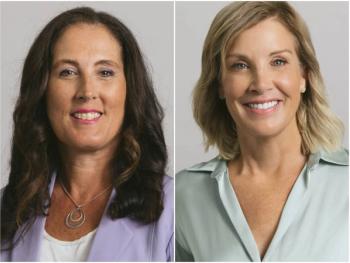

He spoke with us about plans to invest nearly $600 million in the Minnesota system, upgrading facilities and the alignment between the organizations.

The organization’s AgeTech Collaborative works to boost startups and is also partnering with the HLTH conference. AARP’s Andy Miller talks with us about the growing longevity economy.
The COVID-19 pandemic led to big changes in healthcare, and it also spurred the emergence of startups launching products aimed at seniors.
Andy Miller, AARP’s senior vice president of innovation and product development, says the pandemic proved to be an “accelerant” of digital tech products. In recent years,
AARP’s AgeTech Collaborative has aimed to help new companies who are designing products for older Americans.
The company is bringing startups, investors and large companies together with the goal of developing new “age tech” solutions for those 50 and over to help them age in place.
As Miller says, “The ultimate goal is: How do we spark innovation in industry? How do we connect dots such that we bring more products and solutions to market to help us all age better?”
AARP recently announced a partnership with
“There was a natural alignment with the two organizations, and you know, just one conversation led to another,” Miller tells Chief Healthcare Executive®. “And we thought there was a really interesting opportunity to come together and do something that's, you know, a little bigger, a little more inspiring, a little more engaging for the folks that are coming, and so that's what led to this collaboration.”
The longevity economy
AARP launched the AgeTech Collaborative in 2019 with a handful of startups.
“We were thinking about, how can we help them scale, and at the same time we were seeing the fragmentation and the challenges that big companies and investors were seeing in trying to scout or discover startups,” Miller says. “And so we sort of planted the stake in the ground and said, ‘Why don't we create an ecosystem?’ And so that was the beginning of it.”
Since then, AARP has expanded to include more than 220 startups, with dozens being added each year. Overall, more than 700 companies, including established firms, belong to the collaborative. AARP’s AgeTech Collaborative has brought startups to the annual CES Show, ViVE and other conferences.
“The intent is to build the world's largest age tech ecosystem,” Miller says.
Startups that have worked with the collaborative have raised more than $1 billion in investment funding,
It isn’t hard to see why companies would be interested in technology aimed at older Americans. Every day, 10,000 Americans turn 65 years old. By the end of the decade, the last of the Baby Boom generation will have reached retirement age. Healthcare leaders have increasingly talked about the
In 2024, adults 50 and over generated $12.5 trillion, or 43% of the U.S. gross domestic product,
“All of these large organizations and the venture capital community sort of woke up and said, ‘Wow, we need to be targeting these folks. This longevity economy thing is real, and it's big dollars,’” Miller says.
“The large companies want to come find the startups, and then hopefully create some collaborations or partnerships,” Miller says. “And the ultimate goal is, ‘How do we spark innovation in industry? How do we connect dots such that we bring more products and solutions to market to help us all age better?’”
Appetite for AI
Not surprisingly, many AgeTech startups are devising AI solutions, and companies are hungry for such tools.
Miller says the real power of AI can be from pulling data from other solutions to give a better picture into a patient, including more insights into the patient’s life at home.
“What does a physician or clinician say all the time? What's it like at home, right? And that's really hard for a family caregiver or the person themselves to create an adequate picture of what's happening at home,” Miller says. “But if we had a data layer that was connecting dots of all these fragmented solutions, we could use AI to create a really good picture of exactly what is happening in the home, and that data becomes unbelievably valuable to the clinician.”
“That’s a real hot area in the use of AI,” he says.
‘De-risking’ startups
Startups looking to be selected to join the AgeTech Collaborative go through an extensive vetting process.
“We make sure that your business is sound, that it meets our requirements, and then you go through an eight-week program with us, so all of that is before anyone in the collaborative sees a startup,” Miller says. “So by default we're probably the closest thing that can be to de-risking an introduction to a startup, and that saves large companies and investors a tremendous amount of time, and sort of getting to meet these companies and feeling good about them.”
Miller says it will be difficult narrowing down the startups to a list of 20 to take to HLTH, but he says the goal is to find companies with the right products for health companies attending the conference.
“It becomes challenging to make sure we have the right companies at the right event with us, but we do our best,” he says. “It is a tough thing.”
Miller says one of the goals of the AgeTech Collaborative is to help understand what healthcare companies are looking for in digital solutions. And that’s not a small consideration.
Healthcare leaders, doctors, and nurses often express a similar complaint at health tech conferences. They regularly get pitches from vendors for products that aren’t targeted to any of their real problems or
“In essence, we've built a two-sided marketplace, and we're getting lots of feedback from both sides of the marketplace,” Miller says.
“And it's really, really important for us to get that feedback from the large organizations or the investor community, because that helps us as we're working with the startups,” he continues. “We're helping make sure that they're honing their message, that their solution is on point with what these companies are looking for.”