
Certain trendy technologies dominated the conversation, but good-old analytics still have the power to impress.
Certain trendy technologies dominated the conversation, but good-old analytics still have the power to impress.
Why one venture capitalist is becoming frustrated with startups that push technology over problem-solving.
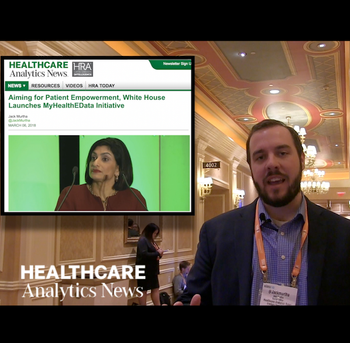
Our senior editor, Jack Murtha, runs down the biggest stories we've caught so far at HIMSS 2018.
Healthcare attorney Matt Fisher tells a cautionary tale about a health system that built its own EHR access monitoring tool.
"We have doctors doing life-and-death stuff every day and we've turned them into secretaries."
At HIMSS 2018, Lee Shapiro of 7wire Ventures describes how an investment in a patient engagement app somehow yielded a vegan restaurant finder.
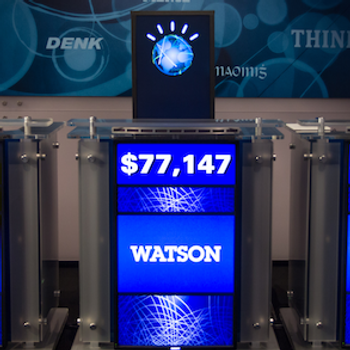
The woman who oversaw MD Anderson's controversial IBM Watson collaboration may know a thing or two about AI and expectations.
While disparate information can be linked back together, it is dependent on what the manufacturer is willing to pay.
If the patient is truly to be paramount, “I think a lot of effort still needs to be done,” John Giannouris said.
John Giannouris knows that the pharmaceutical industry is changing.
“There's a wonderful opportunity for computational biologists and people with computer science backgrounds to have an impact on experimental immunology."
Genomic research, according to Miraldi, is a big data problem, and one that can continually offer insight and inspiration.
"You want to understand very quickly where it is going and what value it brings to you,” he said.
Healthcare messaging used to be controlled in a hierarchical, top-down manner. The internet changed that.
Omri Shor sees 3 main forces in the healthcare industry colliding to create a “perfect storm” for better patient engagement technologies.
“If we give them ownership, it will help engagement [and] improve outcomes, because now they can get better care."
"This is duplicate work, and frankly we can't afford it on either end anymore."

“Overall, at the general population level, I've been actually surprised as to how well people understand it."
"We don't know how much of the care the patients get out of our system. How complete is our predictive ability?
"Really, technologists aren't going to be able to figure out what's going to work best for patients,” he said.
Predictive analytics are powerful, they’re everywhere, and they can be meaningless if not designed with a purpose.
“Billions and billions of dollars are spent on just measuring quality that could be used for actually delivering care.”
"We're trying to get a hold of them," he said. "In the meantime, we measure compliance with process."
Why healthcare companies need to trade their "mom-and-pop," experience-based instincts for a data- and outcome-driven attitude.
“One of the best parts about being a part of this industry right now is we have data. We have tons of data,” social strategy creator Dawn Lacallade says.
"We provide valuable services, patients provide more data...then we can better personalize and improve those services."
Allowing physicians to not hate their technology seems attainable, if healthcare wants to achieve it
"It's a bittersweet relationship that you have with VistA," the VA doctor said, indicating that there were pros and cons to the original EHR system.
"We need to act and feel like a colleague of the physician. That means culture, that means language, and that means design…"
Despite the “buzzword” status of interoperability, it is the most important pursuit for the healthcare technology community in coming years.