

Sponsored Content
Sponsored Content
ECRI placed artificial intelligence high on its ranking of trouble spots. Marcus Schabacker, president and CEO of ECRI, explains his concerns.

Harlan Levine of City of Hope talks about the need to improve outcomes and access for patients in underserved communities.

Industry analysts talk about some of the potential dangers in the not-too-distant future.
Sponsored Content
In a spirited conversation, he talks about the ways health systems, hospitals and leaders can find greater efficiencies and profitability.

The president and CEO of the American Hospital Association, Pollack urges health system executives to focus on caregivers and build connections with lawmakers.

AAFP's survey of physicians using Suki, an AI Assistant for Documentation, showed 72% reduction in documentation time, 20% increase in practice satisfaction, and level of burnout reduced by 17% in 30 days. AAFP calls AI Assistants for Documentation an "Essential Innovation." See full report.


He outlines steps hospital leaders should take to ensure that cybersecurity is a top priority throughout the organization.

In our special report, experts tell Chief Healthcare Executive that health systems should avoid paying if possible and focus on improving their defenses.
Hundreds of hospitals and healthcare organizations have suffered cyberattacks. Cagle stresses the importance of the engagement of top leaders and understanding vulnerabilities.
Patients with Medicare and Medicaid were far more likely to have complications than those with private insurance.

The longtime head of the New York hospital system says leaders should constantly raise the bar.
He talks about how machine learning improved patient care and the hospital's financial performance, and offers a few tips for health systems.

The HIMSS 2023 Conference is bringing tens of thousands of people to Chicago, and here are a few suggestions on learning, dining, and one mistake to avoid.
The head of Deloitte’s Health Equity Institute offers guidance on closing gaps in health outcomes in underserved communities.

One of the nation's leading experts on home hospital programs talks about how they can help close health disparities.
As more health systems are offering acute care at home, doctors say they are seeing good results and high patient satisfaction.

Health systems need to think about delivering care outside of the hospital.
Gathering and having access to an enormous amount of data isn’t the most important thing; using that data at the time of need to influence care choices is crucial, said Jim Adams, chief innovation officer, AllianceRx Walgreens Prime.

While telehealth is traditionally defined as between a patient and their provider, the use of telehealth to connect providers has been important, said Heather Bonome, PharmD, director, pharmacy URAC.

Using and analyzing data for some subpopulations is still in the early stages and there remain a lot of questions around what is the right data to collect, said George Van Antwerp, MBA, managing director, Deloitte Consulting.

Information security is changing so fast, healthcare systems need to work on shorter strategies so they can pivot to what’s current, said Jesse Fasolo, PhD student, director, technology infrastructure & cybersecurity, information security officer, St. Joseph's Health.

The possibility of hospitals and health systems being hit by both COVID-19 and flu hospitalizations makes it crucial people get vaccinated against both, said Leslie Kantor, PhD, MPH, chair and professor of the Department of Urban-Global Public Health, Rutgers School of Public Health.
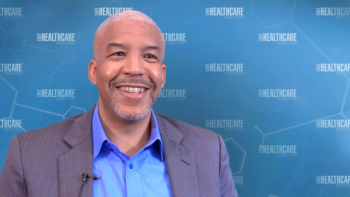
Telehealth isn't the only enduring technology that was implemented during the COVID-19 pandemic; artificial intelligence (AI) was being used more than ever across Moffitt Cancer Center, said Edmondo Robinson, MD, MBA, MS, FACP, senior vice president and chief digital officer at Moffitt Cancer Center.
Hospitals and health systems are largely not equipped to handle all the patient data they could receive and turn it into actionable information, explained Edmondo Robinson, MD, MBA, MS, FACP, senior vice president and chief digital officer at Moffitt Cancer Center.

Craig Newman, the chief strategy officer at HealthChannels for ScribeAmerica, discusses how technology can be used to help reduce the amount of time and energy providers spend doing administrative tasks.
Craig Newman, the chief strategy officer at HealthChannels for ScribeAmerica, discusses the amount of time that physicians, nurses, and scribes spend on administrative work and how the pandemic has exacerbated the need for things to change.
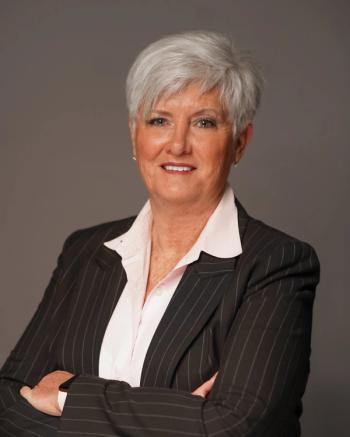
The fifth installment of Turning Points, a Chief Healthcare Executive™ video series in which retiring CEOs reflect on changes they've witnessed throughout their career and discuss the future of healthcare for aspiring healthcare professionals.

Hilary Babcock, MD, MPH, infectious disease specialist at Washington University and BJC Healthcare in St. Louis, Missouri, discusses the COVID-19 vaccine and other vaccine mandates in healthcare settings.