




































Issuing phone calls to marginalized patients increases COVID-19 vaccination likelihood.

Louisiana Health Officer Shutters Nursing Homes That Sent Patients to Warehouse, Where 7 Died
Issuing phone calls to marginalized patients increases COVID-19 vaccination likelihood.

Physicians must embrace the digital era of healthcare to improve the patient experience.

Pandemic fuels burnout, stress, and thoughts of leaving the workforce.

Blair Childs, senior vice president of public affairs at Premier, explains how the Improving Seniors’ Timely Access to Care Act could revolutionize how prior authorizations are conducted and how machine learning technologies can help health systems adapt if it is signed into law.
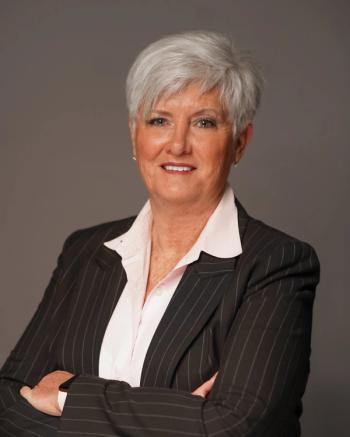
The fifth installment of Turning Points, a Chief Healthcare Executive™ video series in which retiring CEOs reflect on changes they've witnessed throughout their career and discuss the future of healthcare for aspiring healthcare professionals.

In the fourth installment of the Chief Healthcare Executive™ video series Turning Points, the retiring leader of Alabama's largest academic health system discusses the need for healthcare equity and the mission to improve the health of everyone in the state.

To date, the focus of RPM has been on the technology itself and its increasing ease of use. The conversation now needs to shift to creating a patient-centric healthcare experience enabled by RPM technology.
Kate Cordell and Ken Knecht, cofounders of Opeeka, discuss their company’s Person-Centered Intelligence Solution and how it can help children and their families manage and coordinate their mental health concerns as well as the benefits the tool can have on health systems.

The nation’s leading specialty hospital company plans to expand its rehabilitation services.
Purchasing the real estate you already occupy, or even a new space or building, could be a great opportunity to impact your future finances and significantly build your net worth.

A survey revealed that 84% of nursing homes experienced a loss of revenue brought on by fewer post-acute patients coming from the hospital.

Tech-enabled support could help avoid health complications for seniors, improve the patient experience and reduce costs.
Tanvi Abbhi and Nora Zetsche, MD, cofounders of Veta Health, discuss the company’s remote patient monitoring (RPM) platform and how RPM can be used to personalize and improve healthcare for patients with chronic diseases.

One study author noted that access to mental health care was already limited before the pandemic, and now demand is increasing.

The order directs the Justice Department and the FTC to examine guidelines on hospital mergers to ensure that patients are not harmed.

For those who take regular prescriptions for a chronic condition—which many seniors do—the savings at Costco escalated.
Peter Urbanowicz, managing director and co-head of Alvarez and Marsal’s Healthcare Industry Group, discusses the FDA’s new focus in addressing supply chain and device shortages posed by the COVID-19 pandemic and what hospitals should be doing in the meantime to adjust.

Consumer sentiments show the demand for contactless experiences that are also digital and convenient has been on the rise for years, and 2020 might be the year where the importance of this rising demand was fully realized.
Sundar Kamak, global head of manufacturing at Ivalua, discusses the COVID-19 pandemic’s effect on healthcare supply chains and how technology can help alleviate those issues.

During the pandemic, any health service that could go virtual, did. In the last 12 months, demand for virtual care has risen sharply, but shifting to a centralized virtual care hub is not easy pivot for many traditional health providers.
Kaveh Safavi, MD, JD, global health lead of Accenture Health, discusses how the pandemic influenced the speed at which healthcare organizations adopted new technologies and how this adoption is impacting patient care.

In an era when patient communication channels have moved online, how can providers ensure that digital health and behavior modification tools drive healthcare engagement in a way that promotes meaningful, long-lasting, and positive outcomes?

Following authorization from the CMS, the healthcare survey specialist will create methods to gauge patient experience.
According to Pew Research, 96% of Americans own a cell phone and 81% have a smartphone, which are the devices they use to communicate and access information on a daily basis.

The company hit the restart button in 2012 when it saw an opportunity to address the affordability gap in healthcare, as costs began started to shift from the payer to the consumer.