




























If health systems can buy in and enable patients to access their health records, the long-term benefits could be substantial.

If health systems can buy in and enable patients to access their health records, the long-term benefits could be substantial.

The Integrated Health Model Initiative aspires to improve data practices to strengthen care.
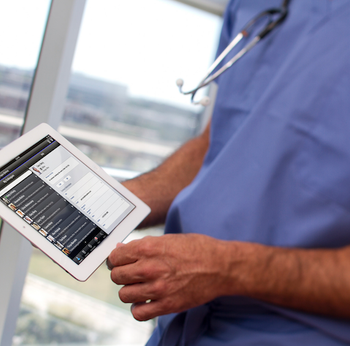
A study found ophthalmologists spent 3.7 hours per day in the system.

Why the trade group wants integration, standardization, and participation from all stakeholders.
"We're trying to get a hold of them," he said. "In the meantime, we measure compliance with process."
Why healthcare companies need to trade their "mom-and-pop," experience-based instincts for a data- and outcome-driven attitude.

Less than 30 percent of hospitals got where they needed to be in 2015. But why?

Allowing physicians to not hate their technology seems attainable, if healthcare wants to achieve it

"It's a bittersweet relationship that you have with VistA," the VA doctor said, indicating that there were pros and cons to the original EHR system.

"We need to act and feel like a colleague of the physician. That means culture, that means language, and that means design…"

Despite the “buzzword” status of interoperability, it is the most important pursuit for the healthcare technology community in coming years.

"It's not that physicians aren't eager to innovate," said Amit Phull, MD: it's that often the tech they are given was made without their input.

Why it might be smart for some healthcare companies to build their own data warehouses.

They waste time and money. Can electronic health records help?

In a panel at the Mayo Clinic Center for Innovation's Transform conference, healthcare leaders went so far as to call current systems "crude" and "corrosive."
"Your IT vision needs to relate to your business: who you want to be and how you want to perform. It’s always in service to that, not just an independent pursuit of gadgetry."
The leading medical institution announced two partnerships to make its insight more accessible.

Pager CEO Walter Jin spoke to Healthcare Analytics News about the goals of the partnership and his company's AI integration.

Florida hospitals are offering free telehealth, but concerns about interoperability abound in the state with the US's largest elderly population.

"We gave clinicians suboptimal cars, didn’t build roads, and then blamed them for not driving,” the authors said of the transition’s nearsightedness.

One of the co-authors of NEJM article on inflated machine learning expectations spoke to HCA News about what inspired his commentary.

The company poses PicSafe, launched today, as an antidote to unsafe image sharing between doctors.

The company's suite of technologies is designed to cut out paperwork and increase participation in clinical trials.

“The process for ordering a non-emergency ambulance and discharging a patient has essentially been stuck in the 1970’s," the company's founder and CEO said.
“These technologies are here today, these types of apps are in market...think big, start small, and act fast.”