

































The study showed that Watson could produce actionable clinical data in 10 minutes that would ordinarily take humans 160 hours.

The study showed that Watson could produce actionable clinical data in 10 minutes that would ordinarily take humans 160 hours.
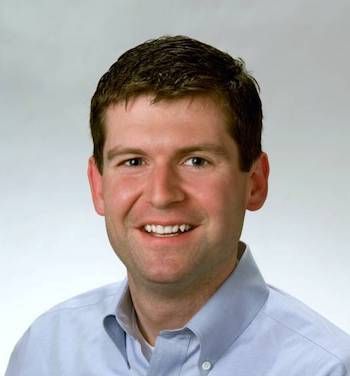
In Part 2 of the interview, Bradley speaks to what makes analytics in healthcare unique, the breadth and integrity of provider data, and how better financial interactions with patients may improve their perception of healthcare providers

The University of Aberdeen has received nearly $10 million to use AI to determine the human behaviors that lead to attacks, and how to modify them.
“All of the goodwill that’s been accumulated when we have the patient in our care, that’s thrown out the window because we haven’t maintained the patient experience in the financial relationship we have with the patient.”

"Two years ago people were still saying 'well, let’s see what happens to these programs.' Now, everyone is saying that it isn’t a question of 'if', it’s 'at what pace?'"
"Sometimes serendipity smiles." Dr. Drouin, in the first part of our interview, spoke to the needs his company aims to fill, the pursuit of value-based care, and the process of leaving a career and getting a startup off the ground.
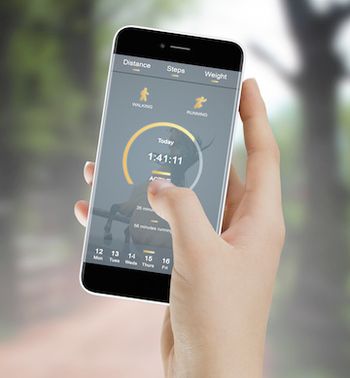
“Big data is not just about big numbers, but also the patterns that can explain important health trends,” says the NIH's Grace Peng. A new Stanford study used some huge data to track obesity.
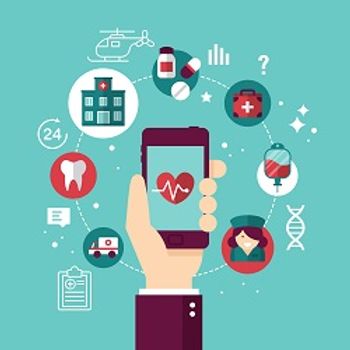
Many healthcare product companies continue to downplay the potential impact that investments in data analytics could have on their business.

"Whether such artificial-intelligence systems are ‘smarter’ than human practitioners makes for a stimulating debate—but is largely irrelevant," they write.
Can drug manufacturers use colossal swaths of data to deliver new pharmaceuticals more efficiently and cost-effectively? And if so, will those savings some day make their way to the patients?
"We are pitting the enthusiasm of the futurists...against the public health perspective that says ‘be careful what you screen for,’” the prominent genomicist says.
The FDA, GINA, and variants of unknown significance all muddy the waters of genomic research and data storage.
Certainly, Walton believes greatly in the potential of genomics to change medicine at its core, but the obstacles preceding that shift are numerous and substantial, he argued.
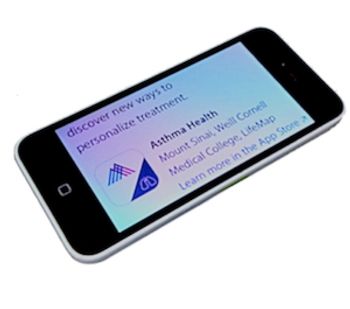
A wide reach and vast accesibility allowed the researchers to see nationwide data and detect trends, but the program suffered from the same natural enthusiasm decay that any mobile app does.

IBM has announced the next step for Watson Health: a value-based care management solution. The new system, built on the Watson supercomputing artificial intelligence backbone, will combine, analyze, and make predictions based on data in electronic health records, hospital administrative and clinical databases, claims data, and other sources.

The University of Texas Southwestern launched a comprehensive and successful Accountable Care Organization with significant savings using the help of data analytics and a series of customized dashboards and reports to elicit physician engagement and buy-in

John Gallagher, Senior Innovation Consultant at Simpler Consulting, offers potential complications that could doom population health efforts: "The business of care delivery must change."

Goldberg sat down with Healthcare Analytics News to discuss the platform’s goal of delivering real-world data to oncology departments in order to expedite transitions to value-based models and provide attuned patient care.

“Good doctoring is pattern recognition,” Tracey Evans says, “so to have all this data here and not use it is ridiculous."

One of the most challenging aspects of treating asthma is identifying the endotypes that underlie the condition.

With words like “crisis” and “epidemic” increasingly murmured after “opioid,” the maker of the famous, and perhaps notorious, opioid joins the effort to curb abuse.

Dan Konzen, campus chair for the College of Information Systems and Technology at the University of Phoenix speaks on four essential aspects of security to keep in mind.

Until recently, few studies had estimated the prevalence of noninfectious uveitis by inflammation location, presence of systemic conditions, sex, age, or severity.
The IBM computer program remains a support tool for physicians and cannot replace the “human touch” needed to act upon the many factors of patient engagement.

Boston-based Berg Health is attempting to do away with a traditional form of scientific inquiry in an attempt to find better answers.