
Health systems are accelerating clinical uses of AI, but leaders stress the need for safegauards.
Dr. Jonathan Perlin, the commission’s CEO, and Dr. James Merlino, his successor, see enormous potential in improving patient safety.
The Joint Commission evaluates hospitals to ensure they are complying with standards to patients, and the commission’s leaders say they are optimistic about AI’s potential to improve safety and quality.
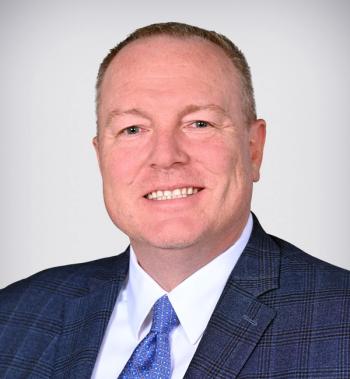
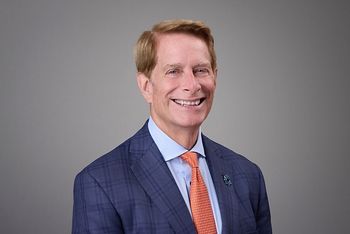
Dr. Jonathan Perlin, president and CEO of The Joint Commission, and Dr. James Merlino, the commission’s chief operating officer, talked with Chief Healthcare Executive® in a joint interview last week. The commission announced that
In the conversation, they talked about the commission’s role in helping hospitals and health systems use AI appropriately. The commission has released guidelines on
“We're not the technology experts, but we're pretty good at governance and policy,” Perlin says.
Both say they are enthusiastic about AI’s potential to transform patient care.
“We see AI as one of the mechanisms to provide failsafes for some of the things that we still haven't made as much progress on, in terms of really assuring good handoffs, avoiding avoidable errors or harm,” Perlin says.
Merlino also says the commission has a role in offering guidance in the use of AI, even as the technology evolves rapidly.
“The promise is amazing and incredible, and we should be hopeful about that,” Merlino says. “But we have to provide information so that organizations are thinking about the risk, and mitigating the risk, so that people don't get hurt.”
Here is the transcript of the segment of our conversation pertaining to AI.
Q: Obviously, AI is transforming healthcare. What's the Joint Commission's role in helping ensure the appropriate use of AI in healthcare?
Dr. Jonathan Perlin: “AI is the defining technology for the century ahead. We're already seeing how it can play a role positively in advancing healthcare. When you think of that progression from failure modes to success modes to thinking about both together, there's still a pregnant question out there: Can patients get safe and effective, compassionate care without the need for an advocate?
“We see AI as one of the mechanisms to provide failsafes for some of the things that we still haven't made as much progress on, in terms of really assuring good handoffs, avoiding avoidable errors or harm. And we think there's an important opportunity, because on the one hand, we want to make sure there are guardrails so that there are appropriate uses of AI. On the other, we want to make sure that there's not overly constraining regulation. We're talking about applications, not a sort of big AI. We're talking about the use in the health care environment.
“In my experience, in my past health system, we used a form of AI, machine learning, to accelerate the detection of sepsis. And on top of what was already measured as benchmark performance, the application of that algorithm saved 8,000 lives over five years. We need these quantum leaps in performance.
“So we introduced something called the Responsible Use of AI in Healthcare certification, which looks at a number of vehicles for addressing the governance of AI in health care settings. We're not the technology experts, but we're pretty good at governance and policy, and we want to make sure that those facilities that have fewer resources, and even those facilities that have more resources, have a common set of principles that can serve as the guardrails, on the one hand, to help mitigate against bad things happening, and on the other, to provide a context where we demonstrate our own field-driven, responsible use of AI.
“The principles are on our website, but fundamentally, it's that there is a governance process in health care organizations for the use of AI, that there's appropriate data security, that there are privacy guarantees, that there's transparency for patients, that there's ongoing monitoring, that there is a mechanism for education, that there's a vehicle for reporting any safety events, and that there's periodic evaluation.
“And we believe that with the use of those sets of principles, organizations can use AI to get past what have been some of the barriers to the levels of performance that you or I, Jim, or any of our family or friends would want for all of their families, friends and communities.”
Dr. James Merlino: “I would add that we can't get in front of AI. It's moving so rapidly. It is the promise of the future, particularly in health care, but in every industry, for that matter.
“And what John said about context is really important. We're running alongside, bringing information to the field that will help organizations understand where the risk is, right? And that's the basis behind the guidelines, because we know what can harm patients, and we know what organizations should put in place to help them protect their patients, and also protect their organizations. That's where we can be the most helpful.
“When you think about the promise of AI, if we were to pass out note cards and say, ‘What do we think AI is going to look like in five years or 10 years?’, and we wrote our answers down, our answers would probably all be different, but none of us would be wrong. But what we're incapable of thinking about is the potential of what AI brings in 10 years that we just can't imagine, right?
“Think of the cell phone 25, 30 years ago. It was the size of a shoebox, and all it did was make phone calls. And now we're carrying a computer that is 50,000 times more powerful than the Atari 74. So the promise is amazing and incredible, and we should be hopeful about that. But we have to provide information so that organizations are thinking about the risk, and mitigating the risk, so that people don't get hurt.”