Opinion|Videos|August 24, 2026

The health system's new role: Community care and 'the source of truth'

In this latest video from the Roundtable, the panel discusses delivering more care outside the hospital and tackling misinformation.

The Chief Healthcare Executive Roundtable examines the evolving role of health systems.
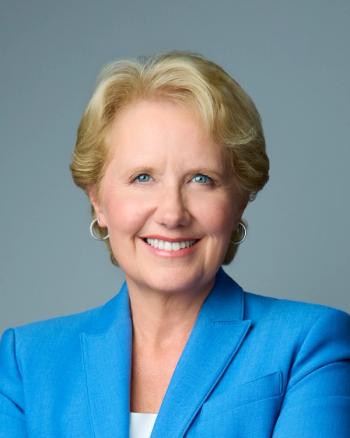
In this latest video from the Roundtable, the panel discusses delivering more care outside the hospital and focusing more on prevention. Leaders also talk about taking a bigger role in delivering trusted and accurate medical information in a time of misinformation.

These top leaders participated in our roundtable.

  • Robert Garrett, CEO of Hackensack Meridian Health
  • Benjamin P. Levy, MD, clinical director of medical oncology, Johns Hopkins Sidney Kimmel Cancer Center
  • Kevin Beiner, chief operating officer of Northwell Health
  • Deepak L. Bhatt, MD, M.P.H., M.B.A, director, Mount Sinai Fuster Heart Hospital, Icahn School of Medicine
  • Stephanie Wierwille, moderator; EVP, strategy and innovation, BPD

Here is the transcript from this segment. You can see all of the videos from our series on the Roundtable page.

Transcript

Stephanie Wierwille

I'm looking at the clock, and we're coming close to time, so I'll throw in one big-picture question and then we'll do a quick rapid fire and wrap. Given everything we've discussed, all the shifts from AI to value-based care to workforce, do any of you have predictions, visions or hot takes about the changing role of the health system? We've talked about AI changing how consumers find care, the trust narrative, and what's possible in the workforce. Are any of you seeing a shift in the role of the health system, or are you seeing the opportunity to build on the foundation that exists?

Robert Garrett

“I've seen a shift in the role of the health system. As I said earlier, it was very hospital-centric just a few years ago, and I see it becoming much more community-based and home-based. I see it as part of our mission to improve the overall health status of the communities we serve, not just the folks coming into our hospitals, but those who aren't. How can we get care and improve access to them? So yes, I see the health system playing a much broader, more comprehensive role in communities. My last plea would be that if we're making that plunge, given all the financial constraints we've talked about, we need to find a way to incentivize health systems to do that. If we're really going to improve the health status of our country, which does lag behind some other Western countries, we need to make sure those incentives come to the health system and to individual providers to take on those tasks.”

Deepak Bhatt, M.D.

“That's a great answer. I'd just add that I think health care systems will remain places where people get big-ticket items, things like transplants and advanced complex care, but increasingly health care systems will be responsible for being the trusted source of medical information. There's a lot of misinformation out there. We talked about COVID and the pandemic, but we didn't actually address that the misinformation lives on, and I don't just mean about COVID. Even things like measles vaccination, or what is and isn't a healthy diet, and a lot of hawking of medical products, things like peptides right now. Health care systems have to take a much larger role in guiding that discussion as the source of truth, which is going to be increasingly challenging. A lot of people are just going to put something into ChatGPT or Gemini, and whatever gets spit out they may view as the truth.

“We talked earlier about the potential benefits of AI, and I'm a huge believer, but a lot of AI currently is just a matter of what goes in is what comes out. If the basis of the information fed into these large language models contains elements of misinformation, AI can actually help amplify that misinformation, which is going on in social media right now, sometimes by bad actors purposely getting it out there. Health care systems need to take a much larger role, and I predict they will, in being sources of the truth as far as medical information goes, not just for when you're sick, but for how you can stay healthy. This new thing, the GLP-1 agonists, terrific if you have diabetes or are very overweight, but the peptides, maybe that needs a little more research before you go do it yourself. Health care systems will evolve, as everything else is evolving, to fill this void of providing information in a way that healthy people will turn to and say, that's the source of health care truth.”

Stephanie Wierwille

“Does anyone disagree with that, or want to challenge whether that's possible, or is everyone on board with that prediction and vision?”

Kevin Beiner:

“On board.”


Latest CME