Opinion|Videos|July 13, 2026

The financial squeeze: Prevention, affordability and care beyond the hospital

In the third video in our series, our panel talks about the need to lower the cost of care for patients, and growing pressures on their operating margins.

Chief Healthcare Executive held a roundtable discussion with healthcare leaders talking about the most pressing problems in the industry, and how they are tackling those issues.

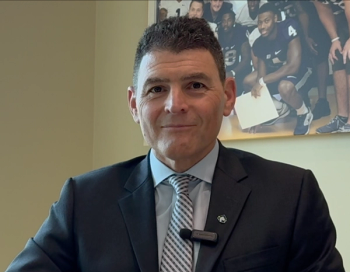
In this installment, the third in our series, our panel talks about the financial squeeze on health systems, affordability, and the need to focus more on prevention. They also talk about delivering more care beyond the hospital.

The participants:

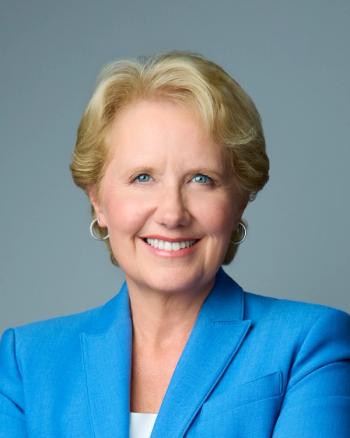
  • Robert Garrett, FACHE — CEO, Hackensack Meridian Health
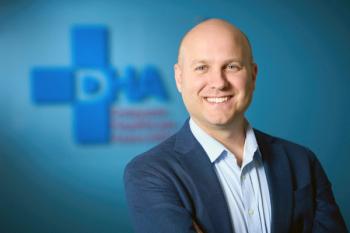
  • Benjamin P. Levy, M.D. — clinical director of medical oncology, Johns Hopkins Sidney Kimmel Cancer Center
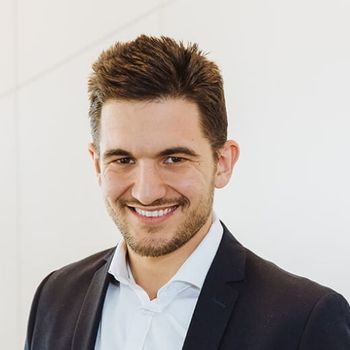
  • Deepak L. Bhatt, M.D., M.P.H., M.B.A. — director, Mount Sinai Fuster Heart Hospital, Icahn School of Medicine
  • Kevin Beiner — COO, Northwell Health
  • Stephanie Wierwille — moderator; EVP, strategy and innovation, BPD

Stephanie Wierwille

“You all brought up costs, so let's dig into our next topic: the financial squeeze the industry is facing. There are many factors, and we won't have time for all of them, but they include the cuts already mentioned, policy changes, reimbursement pressures, labor costs and payer friction. Dr. Bhatt, since you brought this up, I'll start with you. As you think about the factors causing this squeeze, which pressure are you most focused on right now? Is there one you see as an existential threat that leaders need to get ahead of yesterday?”

Deepak Bhatt, M.D.

“One thing that would improve outcomes and ultimately help reduce health care costs for everyone is to do a better job with prevention. Hospitals have historically focused on the sick patient coming into the emergency room, and many times we're optimized to provide care once a patient is in the system. The bigger challenge is reaching out to the community to keep people from getting sick, while acknowledging that a lot of health care revenue comes from people getting sick and needing high-ticket procedures. A lot of the net margin for many systems comes from high-ticket cardiovascular services and oncology infusions. Those are important, and we need to keep innovating there for people with actual diseases, but if we could at the same time pivot to focus more on prevention, that would reap enormous health benefits and help reduce costs.

“If we don't, a decade from now we'll be saying the same thing, that there's a healthcare crisis and an economic crisis. People have noted for decades that healthcare accounts for a large percentage of GDP, and that each time things are reaching a boiling point. This happened in the early '90s with the HMOs: talk of substantial reform, that this time it would be totally different, that costs would come under control while outcomes improved. It's very cyclical, and people living through it always think their time is the hardest, though past generations probably thought the same. So one thing we really could do differently is focus on societal-level preventive measures. The real challenge is figuring out reimbursement models for that, so it actually works in a system that's currently focused on caring for the sick and reimbursing for that care.”

Stephanie Wierwille

“I love that you're bringing up the tension with the incentive structure, because most folks got into this space to keep people from being sick, and yet the incentive structure is a challenge to that. Bob, you mentioned your passion for healthcare affordability, so building on what Dr. Bhatt is saying, what are the strategies, and what needs to be tackled, some of which may be broader than what a health system can do alone?

Robert Garrett

“Thank you, and I 100% agree with Dr. Bhatt on a focus on prevention. Traditionally health systems haven't done that, but what encourages me is that many systems today, including Hackensack Meridian, are taking a different approach. Study after study shows that 80% of one's health depends on social factors, the so-called social determinants of health. At Hackensack Meridian we screen every patient who comes into contact with a care site. We've actually screened over three and a half million people already, and then we refer them to various agencies and providers for help. It's not enough to screen; you have to intervene. Aside from unreliable transportation and people living in food deserts, the other issue that comes up all the time is behavioral health, or the lack of access to it.”

“When you think about the Medicaid cuts coming down the road, they're going to affect children disproportionately, and there's already inadequate reimbursement for children's mental health services. We're seeing it in our emergency rooms across New Jersey: children and adolescents waiting days, sometimes weeks, for beds when they're in a mental health crisis. The more we can focus on prevention and change the reimbursement system so that behavioral health is front and center, the more it will help with the affordability crisis. The other piece, as I said in my opening, is to bring all the stakeholders together. Let's admit we each own part of the problem, the providers, the insurers, the drug companies and the device makers. I've called for a healthcare affordability summit in New Jersey. We've gotten the attention of our governor and of other business leaders and state officials. We need to come to the table, each own a part of it, and come up with solutions, whether that's addressing behavioral health or getting insurers to reimburse for prevention and programs that address social determinants. There are tangible ways to bend that cost curve.”

Stephanie Wierwille — 22:57

“Wonderful, and I love the specific examples of what you're already doing: screenings, behavioral health, a healthcare affordability summit. I'll open it up to Dr. Levy or Kevin. Is there anything you'd add, maybe specific strategies you're already taking on, to solve this affordability challenge?

Benjamin Levy, M.D.

“Affordability hits us hardest on drug costs, specifically oral therapies for our patients, and addressing it requires the resources of the health system to usher these patients through. Our team of one that used to help patients get reimbursed for their drugs, a nurse and a financial advisor, has now become a five-person team. When you prescribe a drug and it's not covered, or it's covered but the co-pays are too high, we have a whole team that handles it. There are ways to solve this; it just takes more resources. I can't function without this surrounding group of folks who help patients receive the drug, get it paid for, talk to insurance companies and submit appeals. Those are things that have to be done right now. I hope the things Bob described can happen so we don't have to do this, but currently, living in the clinic two to three days a week, that's what we have to do.”

Kevin Beiner

“I'll add that innovation will be either an ingredient of the answer to the affordability challenge or a threat to our traditional business model. Think about the number of people who will use AI in their own healthcare journey. You go into MyChart, get your blood test, copy and paste it into a chatbot, and get an answer on what you should do next. There's a shifting preference in how patients like to consume healthcare, and if we're thoughtful and get ahead of it, we can be in that space and possibly move ourselves into lower-cost settings. If we don't do it, someone else will, and by someone else I don't mean the provider space. There are wearables many of us are using, and a lot of proactive wellness tools in people's hands that give them agency over their healthcare. You can go on an app and order a blood test or a scan, and without ever visiting one of our physician practices or hospitals, from the comfort of your office or couch, you're accessing healthcare. We all have to be thoughtful about our perspective on that and our role in it, because whether we're there or not, it's going to happen. I look at that, not to be overly optimistic, as an interesting pivot that technology, for the first time, allows us to be part of.”

Stephanie Wierwille

“Absolutely.”

Robert Garrett

“Stephanie, can I add one point on prevention, because it's such a key component of health care becoming more affordable. It starts at the beginning. At our medical school at Hackensack Meridian, part of the curriculum focuses on prevention. Every medical student, for their three or four years of medical education, teams up with two families in underserved communities and follows those families for those years. They understand firsthand why people aren't staying healthy, what the barriers are, and what those social factors are. What we've seen is that it makes for much more balanced physicians who focus on prevention as well as treatment. In real life, once they finish their residencies and get into practice, we're seeing a different type of medicine being practiced that does focus on prevention. You have to start at the beginning, at medical schools, nursing schools and allied health schools, to teach students the importance of prevention and how it can help individuals, families and entire communities.”

Stephanie Wierwille

“It really starts upstream, and I'm noticing a theme here of having to think outside the box of traditional strategies. What's also starting upstream, Kevin, to your point, is that as wearables provide more health data to consumers, and as people turn to AI for health information, the digital front door of the health system has moved, sometimes outside of our control. A lot is shifting upstream. Before we go on to the next section, on reimbursement pressures, I want to pause. Is there anything anyone else wants to add on affordability or prevention? I'm sensing a lot of energy around this topic.”

Deepak Bhatt, M.D.

“I'll make a comment about wearables, because it's the case now that maybe the majority of patients are coming in with some data about themselves. It's not just heart rate from a watch. Right now, for kicks, I'm wearing a continuous glucose monitor. I don't need to, but I thought it would be interesting, and it was very informative, just seeing what causes a sugar spike. More and more patients are going to come in with this kind of information, and it's up to us as health systems to figure out how to integrate it in a way that isn't just interesting or fun, but actually leads to improvement in their care, without causing excess anxiety. We don't want to provoke unnecessary tests and downstream complications or costs, but to use the data in a way that improves care and lets us tailor and personalize it to the individual, whether that's lifestyle advice or even drug therapy.”

Stephanie Wierwille

“Yes, and it leads us to ask what the role of the health system is moving forward. It's an expanded role than it has been in the past.”


Latest CME