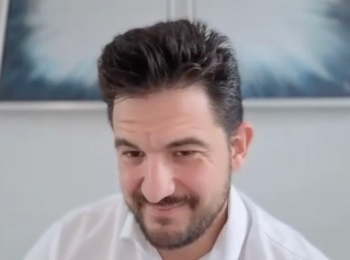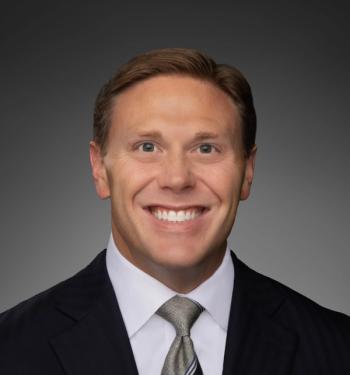
Several groups say that AI is a valuable tool, but warn physician expertise is essential. They push back against efforts to pit doctors against technology.
The West Virginia University Health System is seeing encouraging results. Dr. David Rich of WVU talks about the results and shares insights for other systems.
Once WVU Medicine began testing AI-powered conversation tools for doctors, the system didn’t take too long before deciding it was time to expand more broadly across the organization.
WVU Medicine, the brand name of the West Virginia University Health System, is using Abridge’s ambient documentation platform. This spring, WVU Medicine said it was expanding the AI tool across the health system.
The academic health system has grown substantially in recent years. WVU Medicine now operates 25 hospitals serving patients in West Virginia, Ohio, Pennsylvania, and Maryland.
Dr. David Rich, chief medical information officer at WVU Medicine, tells Chief Healthcare Executive® that he’s encouraged by the results the system is seeing with ambient documentation.
“We've seen reduction in time in documentation for the docs and advanced practice practitioners who are using it,” Rich says. “We've seen lots of feedback from the docs in terms of how they feel. Their burden has been lightened a little bit, whether it's the cognitive burden, or the time burden for creating documentation.”
At WVU Medicine, doctors are seeing a 20% reduction in time they are spending on patient notes. Doctors are still taking time to review the AI-generated summaries to check for accuracy.
Even so, the majority of WVU Medicine staff surveyed say ambient documentation is reducing their cognitive load. More than three-quarters of staff say they are finding higher job satisfaction and are able to give their patients more undivided attention.
Rich says he appreciates that the ambient documentation tools are also enabling doctors to have more natural conversations with patients, since they aren’t typing into a computer and looking away from their patients.
“I'm looking at the patient instead of at my notes or typing in the corner of a room on a computer,” Rich says. “So that's a benefit to the patient too. They've they've they feel more connected, and they feel like the doctors are more engaged in the visit.”
Rich says he has heard of WVU physicians who had been pondering retirement but decided they will continue working because the tools are reducing their stress levels.
“Some people have said, ‘Hey, this has extended my career …. I was thinking of getting out of medicine because I was kind of tired of the documentation burden,’” Rich says.
WVU Medicine is using Abridge’s platform in primary care, the emergency department, and in specialties. Rich says that the system is looking to also enable nurses to utilize ambient documentation.
With the time doctors are saving with ambient documentation, Rich says physicians can use that time to answer questions from patients, be more available for urgent calls, or add another patient appointment to their day. Doctors are being told they can use the time they are getting back as they see fit.
WVU Medicine is not telling doctors that they are expected to see more patients with that newfound time, and Rich says that’s an important consideration.
“We didn't put any obligations or expectations on docs that they would see more as a result of this,” Rich says. “We were very careful to not do that. We learned from some other health systems who approach this as well, saying, hey, that's really not your selling point. It's about making it easier for docs to do the work they're already doing.”
WVU Medicine is viewing ambient documentation as a retention tool.
“At a time when burnout is high, not just in medicine, but across multiple fields, you don't want to push people to work harder,” Rich says. “You want to work to retain people and extend their careers.”
Echoing the advice WVU Medicine received from others, Rich says that other health systems looking to use ambient documentation shouldn’t sell it as a tool to get doctors to see more patients.
He says hospitals should look at it as a tool to lighten the load for their doctors.
“I think that message resonated greatly with our docs and providers,” Rich says.
Rich is using the clinical documentation tools. Even in his leadership role, Rich spends half a day each week treating patients.
“That's important for me, because that keeps me grounded to what I trained to do all along, and it also keeps me as a user of the tools that I'm working collectively with our team to put out there,” he says.
Rich came to WVU Medicine in 2018 and marvels at the growth of the system in recent years. When he joined WVU, the system had 10 hospitals, and now the organization is operating 25 hospitals in four states.
“It's kind of what I came here to do, is help grow and help us have tools that just enable … great patient care across the system,” he says.