Our panel looks at restoring funds to Medicaid, the potential for cuts and closures of health systems, and the Affordable Care Act.
Students can take a course that gets them working in the kitchen and links food to overall health. Dr. Linda Shiue talks about the course and why nutrition is critical to medical education.
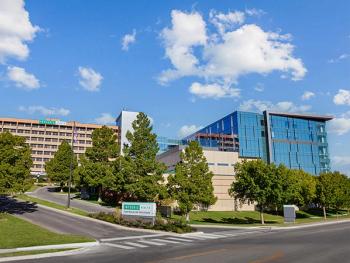
Students at the Kaiser Permanente Bernard J. Tyson School of Medicine are learning about more than anatomy and recognizing diseases.
The school also offers a culinary elective to help students understand the importance of nutrition and how food is linked to overall health.
Dr. Linda Shiue, director of culinary medicine and lifestyle medicine at Kaiser Permanente San Francisco, teaches the elective class. She tells Chief Healthcare Executive® that she relishes the chance to teach aspiring doctors about the value of food and how they can help their patients live better.
“It's absolutely crucial, and has been under-recognized as being absolutely crucial for taking care of a patient's health,” Shiue says.
She says food is actually the leading risk factor for premature death and preventable death. But medical schools haven’t given it sufficient attention, she says.
“Medical education traditionally does not mandate a certain number of training hours for nutrition, and there also is not consistency around that,” Shiue says.
“And yet people eat food at least three times a day,” she says. “And so it's both something which very directly affects people's health, and that, from the patient perspective, they have some control over ideally. And so it's really crucial, and I think that for a doctor to be out there in the world and not have a good understanding based on evidence around what nutrition is best for their patients’ health, really is a big, big, empty spot in their knowledge.”
Food as medicine
Dr. John L. Dalrymple, dean and CEO of the Kaiser Permanente Bernard J. Tyson School of Medicine, highlighted the importance of nutrition in the academic program in
“Certainly we know that the concept of food as medicine is something that's taking traction in many medical schools' curricula,” Dalrymple said. “We certainly have embraced that.”
The Association of American Medical Colleges
Health & Human Services Secretary
Shiue says she welcomes any encouragement to teach nutrition in medical schools and in residency, ideally in the practical teaching kitchen format.
“I would support anything that would help with that,” she says.
But she’s encouraged that progress in embracing nutrition in medical education is coming “much sooner than I actually ever expected.” She expects medical schools to be adopting nutrition and culinary programs over the next five to ten years.
“It's moving very quickly,” she says.
‘Hands-on cooking instruction’
Students who take the elective in nutrition are working in an actual kitchen. Shiue says the teaching kitchen is a critical component.
While most people have a good sense of what foods are healthy, she says there is a big gulf in the practical application of cooking and eating healthy foods in a way that is both enjoyable and sustainable. She says the kitchen helps bridge the gap.
“When we teach, for example, a medical student how to cook, it's a way for them to both actually promote their own health, and have that internal understanding of it that they can then authentically communicate with evidence to their patients,” Shiue says.
Students get instruction on nutrition over the four-week course, but they are also learning some basics in cooking.
“It includes a lot of hands-on cooking instruction,” she says. “So over the four weeks, they basically have the equivalent of four full days of hands-on cooking in the kitchen.”
Students come into the course with varying degrees of skill, but Shiue says the course provides instruction in cooking. But it’s also designed to use some canned goods that patients may be using in their everyday lives as well.
“They learn how to do scratch cooking also, but also how to use canned beans, because that is actually a very inexpensive, sustainable way for people to get some good nutrition with plant-based proteins into their diet,” Shiue says.
“But they learned everything from sauteing and stir-frying, making soups and salads to braising, making things with beans, including plant-based substitutes for things that they like to eat, like burgers. They learn how to make healthy breakfast, so they learn about whole grains, and they learn about how to cook fish. And so they learn a lot of different techniques, which is really like a mini-cooking school for them.”
Shiue, who has published a cookbook, went to culinary school and drew on her experience in crafting the curriculum.
“I really actually modeled their curriculum after the way we might learn in a very abbreviated culinary school format, with a very technique driven model of teaching,” she says.
Healthy diet, better outcomes
Students in the class are very enthusiastic about the program and understand the importance of good nutrition in keeping people healthy. She says they’re looking for more skills and deeper knowledge.
Shiue hopes to see a day when nutrition education is mandatory nationwide. And she thinks even some that may be skeptical about devoting more time in medical education to nutrition would be able to see the value.
“Surgeons, for example, … would understand from the surgical perspective, actually that proper nutrition is crucial in the success of healing from surgery,” Shiue says.
And she adds, “I'm meeting more and more surgeons who actually understand, ‘I have much better outcomes when they're eating right.’”
“Maybe some students before they know the importance of nutrition, may not have buy-in to this, but I think after they learn more about it, they all realize that it affects all of their specialties,” Shiue says.