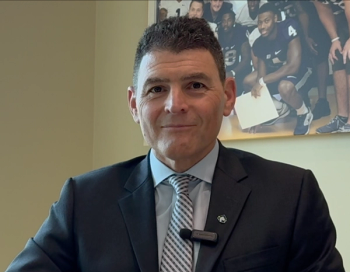

Dr. James Merlino, who takes over as CEO next year, talks about working in partnership to help hospitals improve.
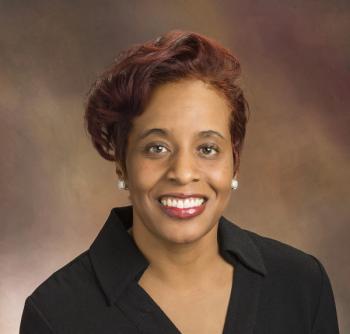
Claire Zangerle, CEO of the American Organization for Nursing Leadership, talks with us about Gen Z nurses, why hospitals need to work to retain them, and managing nurses across different generations.
At a time when hospitals and health systems are seeing more patients, health systems need to invest in retaining their young nurses.
Nurses from Gen Z (those born after 1996) make up the second-largest group in America’s nursing workforce, and it’s the only generation of nurses that’s growing, according to a
She tells Chief Healthcare Executive® that hospitals often struggle to keep these nurses after they have been on the job for a couple of years.
“I think it's important that we think about the return on the investment of keeping these younger nurses,” Zangerle says. “Maybe you have to invest in some strategies to keep them and the return on that investment in those strategies is reducing turnover costs.”
Younger nurses also bring different expectations to the nursing workforce, and health systems are going to have to understand those different goals and hopes. Nursing leaders also face the task of taking different strategies to managing Gen Z nurses.
The need to re-recruit
Gen Z nurses often stay in hospitals for 24 to 30 months, Zangerle says. Younger nurses may be in residency programs, or they may have to stay for a certain period as part of a sign-on bonus when they started with the health system.
After that initial period, hospitals can lose some of those Gen Z nurses. Those nurses have gained some experience and may be interested in newer or different opportunities.
“Once they start getting the lay of the land, their confidence goes up, and they start to feel more marketable outside of that particular organization or in that particular unit,” Zangerle says. “They start to want to test the waters and other places, and that's okay.”
But since hospitals have made a significant investment in those younger nurses, health systems should work to retain those nurses. Zangerle says hospitals need to engage nurses and offer them a path for different opportunities within the system.
“It really behooves leadership to think about, what are the focused retention strategies at that 24- to 30-month mark to kind of almost re-recruit and re-engage them, after they've gone through that initial onboarding and initial once they get their confidence,” Zangerle says. “Let's take their confidence to the next level at that same organization.”
Work-life balance
Veteran nurses typically accepted overtime or coming into the hospital on a day off as simply part of the job.
Gen Z nurses have a strong work ethic, but they also place a higher premium on having a life outside of work, Zangerle says.
“What we're learning is, and Gen Z's are really teaching us this, is that there are other ways to get the work done and still have that harmony and that balance in your life,” she says. “It's very important that they take meal breaks. It's not a badge of honor to not go to the bathroom for 12 hours or not eat for 12 hours.”
Gen Z nurses are looking at making nursing a sustainable career.
“They want to be in this career for a while,” Zangerle says. “They don't want it to break them because of things that you can control. You can control protecting your time off and actually taking PTO. You can control having a meal break or taking some time off the unit to breathe during a very long 12-hour shift.”
“It's pretty important that you do those things as a nurse leader for that particular generation, and they're demanding it,” Zangerle says.
Younger nurses are also bringing a different type of work ethic, and Zangerle says they are showing that nurses don’t live to work.
“You work so you can live,” she says. “And I think that's really important for us, and sometimes we're not listening to that lesson, and because we've paid our dues, it's time for them to pay their dues. Those days are over. And it's not just nursing, it's every profession in healthcare.”
Zangerle stresses that younger nurses are imparting important lessons that other nurses should heed and not dismiss.
“They're probably teaching us in the different generations the best way to tolerate and to function in this very difficult environment and still enjoy being a nurse,” she says. “And I often say, it's their world, and we're living in it, and we're learning a lot from them.”
‘They want to be seen’
Younger nurses, including those in Gen Z, want feedback from their managers.
“They want to be seen, more than just for their evaluation at their regular one year eval or their six-month check-in,” Zangerle says. “They want drive-bys. They want to see their nurse leader interacting with them in different ways, not just at staff meetings, but walking the floors, making rounds, those types of things. They want the nurse manager to know their name, and they want that nurse manager to understand what their goals are and understand what their strengths and weaknesses are.”
Nurse managers that are engaged with their younger nurses are more likely to see those nurses stay in the system.
But health systems also must help nurse managers by ensuring that they have a manageable number of nurses to oversee. If nurse managers are responsible for a group that’s too large, it’s difficult to have regular conversations with nurses.
“A nurse manager cannot have 150 direct reports, and in some cases that happens,” Zangerle says.
While Zangerle doesn’t offer a specific number for nurse managers, she says 40 to 60 nurses can be a “manageable number” for a nurse manager.
“It's still pretty high, but it's much more manageable than what we're seeing on some nursing units now,” she says.
Managing different generations
Nursing managers can face challenges in managing a staff that includes veteran nurses with decades of experience and younger nurses who are prioritizing work-life balance.
Zangerle says that can be challenging in dealing with nurses who never refused overtime and those who may not be an automatic yes when it comes to picking up additional shifts.
“For nurse leaders, that is the biggest conundrum right now, because you can have on one single shift, you can have five generations working at one time and managing the expectations and personalities with those five generations at one time,” she says. “It's a multi-generational workforce. It requires a lot of communication.”
Nurse leaders can help reduce the potential for problems by having conversations with all of their nurses about what they want and need. Zangerle suggests nurse leaders work to engage their nurses in creating a different culture that works for everyone.
“It comes down to communicating and keeping an open mind, and making sure you're balancing the expectations and the needs and fairness across the board,” Zangerle says.
Hospitals can improve their nurse retention and satisfaction by
While Zangerle says it creates logistical challenges for managers, nurses have shown they want flexible schedules.
“It's very important to all nurses of all generations,” she says.