
Health systems are accelerating clinical uses of AI, but leaders stress the need for safegauards.
Our panel of healthcare leaders talk about the need to build trust in the use of AI.
As hospitals and health systems are ramping up the use of AI, healthcare leaders say progress will be determined by how much people trust the technology.
The Chief Healthcare Executive Roundtable tackled the issue of trust in AI, and that’s the focus of the latest in our series of videos from the conversation.
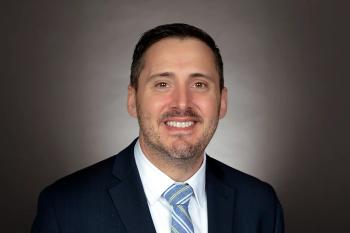
These top healthcare leaders participated in our roundtable.
Check out the video for a timely discussion on AI in healthcare. Here are some of the highlights.
‘Accelerated equation’
Beiner suggests the issue of trust in AI is coming to a head.
“I think trust is going to become a very accelerated equation, and that can be a good thing or not,” Beiner said. “The reason I say that is you're going to deal with a generation of people who are not just used to dealing with it but expect to deal with it, and the more the evidence suggests or proves that AI-partnered care is better care, it's not going to be a question of whether we trust it or want to be there. It's going to be that we have no choice but to be there.”
Garrett says doctors and nurses need to understand the capabilities and limitations of AI tools, and they’ll need to assess those solutions. Those caregivers will also need to be open about how those tools will be used.
“I think trust starts with transparency, and that's important when it comes to folks on the front lines, the physicians, nurses and others who may be using AI tools,” Garrett said. “It's also a factor in patients accepting these tools in their diagnosis and treatment. It's really important to involve people on the front lines right off the bat, making sure they understand what the AI tool can do and what its limitations are, and having them participate in the ultimate decision on whether to deploy it.”
Garrett suggests transparency in the technology is helping families gain trust in the tools.
Being open with patients
Levy said he is candid with patients when he is consulting AI tools to get information on the latest research.
“I'm very open with my patients,” Levy said. “There are times, and I've been doing nothing but lung cancer for 20 years, where I'll have cases where I'm unclear what to do, a rare gene, a unique clinical scenario. I'm very transparent with my patients and say, we're going to look at OpenEvidence here to see what comes up.”
Levy stresses he won’t use that as a final decision, but he says he strives to be more informed.
“I think it's important to be transparent that it's happening, and I hope that builds trust with the patient,” he says.
Bhatt said he’s encouraged by the potential of AI to spot conditions before they become life threatening. He points to AI tools that could detect calcium in lung scans or mammograms, which could be indications of greater risks of cardiovascular disease.
“We definitely need data on whether this screening actually improves outcomes or leads to excess cost without improving them, so there's a lot of work to be done, but I think it's a very exciting scientific frontier that has the potential to help a lot of patients,” Bhatt said.
You can see all of the videos from our series on
The videos are free to watch, but you will be asked to fill out some information to access them. Join the conversation.