Dr. Michael Kupferman talks about the $50 million gift from the Golisano Foundation and joining an alliance of children’s hospitals.
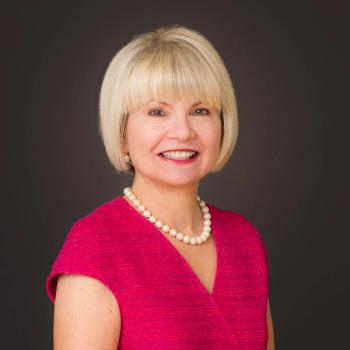
Dr. Angela Ellison of Children’s Hospital of Philadelphia talks about the journey, how doctors can thrive, and how hospitals can help.
Physicians are accustomed to treating patients with serious diseases, but it can be profoundly disorienting when they face their own illness.
Dr. Angela Ellison, an emergency medicine physician at Children’s Hospital of Physician, led a study examining the experiences of doctors who have experienced serious health challenges and returned to work.
Ellison tells Chief Healthcare Executive® that the study was driven by her own personal experience. She suffered a life-threatening illness, and she faced the upheaval of the other doctors who shared their stories in the study, published by
“One of the reasons that I decided to pursue this was because of my own experience with a life-threatening illness,” Ellison says. “And as a physician, what do I do when I'm looking for assistance? I reach out to other people, but also to the literature. And as we really took on this work, I realized that there really was not much out there.”
“So I was very happy to spearhead that,” she says.
Today, Ellison says she’s doing well with her health. The vice chair of the hospital’s pediatrics department and senior strategy officer for CHOP’s Center for Health Equity, Ellison will soon take on a new role. She’s slated to begin serving as the system's chief medical officer in November.
Ellison points to her own career journey as a sign of hope for other doctors who are coming back from illness or some other serious condition.
But she says it can be a difficult and overwhelming ordeal, and hospitals and health systems should understand how they can support doctors who have dealt with a serious illness and are looking to come back to work.
Ellison says there’s clearly a need for more research to examine the experience of doctors going through health challenges.
It’s an issue health systems are likely to be facing more often in the near future, with an aging physician workforce. More than 40% of America’s doctors are age 55 or older, according to
“I think that now is the time,” Ellison says.
“Part of my goal was to make the invisible visible, and, you know, part of this study was really to provide education, for the health systems, but also for other physicians to see that they aren't alone and that there is the opportunity for work to be done,” she says.
Twenty-two doctors participated in the qualitative study, and they ranged in age from 43 to 77. Some said they struggled with the loss of identity they were accustomed to having as physicians.
“You're experiencing that illness and, simultaneously, you're experiencing this identity crisis,” Ellison says. “And when you think about it, it makes sense. You spent your entire time as a healer, and although you interact every day with individuals who need care and who need healing, sometimes it's hard to see yourself in that position.”
Ellison says she was grateful to be treated with a doctor who showed her sensitivity at a time when she needed it.
“I remember my own physician saying to me, ‘Let us take care of you, because you've spent your entire life taking care of others,’” Ellison recalls. “And that really stuck with me. I don't remember much else about that day, but I do remember that.”
“And that's how I kind of feel about my fellow colleagues, whether they're physicians, nurses, healthcare workers in this field, is really we really need to take care of each other at these times,” she says.
But some doctors shared they didn’t receive that degree of empathy and consideration during their treatment.
“It was a little surprising, somewhat to the extent that many people had experienced that,” Ellison says.
Some found it difficult at times when physicians treated them more like a colleague and less like a patient, or assumed a level of knowledge because the patient was a doctor, even if the condition wasn’t necessarily related to their field.
“You just don't want to be the physician,” Ellison says. “You want the opportunity to be the patient, and sometimes that assumed knowledge that you have isn't even consistent. I mean, for example, I'm pediatrics. I did adult medicine in medical school. And so if I enter with an illness or a disease that really is not what I do every day, it's not fair to assume that I may understand.”
Some doctors also shared that they waited for some time even when they weren’t feeling well, partly because they were used to pushing through long days or because of a sense of duty.
“It comes from, once again, this deep desire to just help other people,” she says.
But she adds, “We do exist in a culture where it's very much about productivity … How many papers have you published? You're constantly being measured, and you're trying to live up to that, in addition to your own goals and aspirations that you have for yourself.”
“So when you find yourself in that position, for anyone, it's going to be difficult to come to terms with, and it's difficult for many people to ask for help in those situations,” Ellison says.
Ellison hopes that the study helps start more conversations at health systems about how they can support their doctors who are going through an illness and how they can support them as they resume their careers.
Health systems can help doctors by offering support and reaching out to their physicians to help them return to work when it’s time.
“I would also say for health systems to remember that these are stories of survivorship,” Ellison says, adding, “People just don't want to live, they really want to thrive. And how can we help them thrive?”
“Many of the physicians in the study talked about how they understood that they may not have the same skills they had prior to getting ill, that they weren't the same person that they were before then, but they had so much to offer,” she adds.
In some situations, doctors may not be able to return to the same role they once held. But at a time of
“We want to transition, but there's always the opportunity to transition upward,” Ellison says. “I like to inspire people that you can do things that may be different than what you started out to do, but it still can be great.”
Physicians who have overcome a serious illness may become better doctors, as a result of having been a patient. They will likely have even more empathy for patients, Ellison says.
They may also bring greater insights on the other aspects of the patient experience that are so important, including parking, paperwork, billing, and scheduling.
Even if a doctor delivers great care with empathy, a patient’s experience can be brightened - or ruined - by the interactions with other members or departments in the system.
“I see that as being one of the advantages for health systems to support these individuals, to support us because we will come back and make that system better,” Ellison says.
“Once you've gone to the other side, you can't unsee it, and you feel it,” she says. “You know the things that can unfortunately cause additional harm than what may have been intended. We know what supports and such may be needed in the system for patients.”
Ellison points to her own career and her upcoming transition to becoming the chief medical officer at Children’s Hospital of Philadelphia.
“There is an opportunity to continue your life and your career,” Ellison says. “It may not be what I envisioned, but it's turning out to be okay as I look forward.”