
The pace of mergers isn’t showing signs of slowing down, as health systems engage in more deals and bigger transactions.

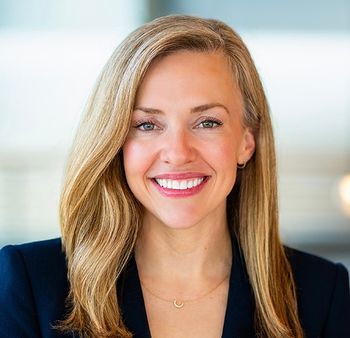
Perry spoke with Chief Healthcare Executive about Medicaid cuts, more Americans losing coverage, and the need to focus on keeping patients healthy.
For Banner Health, much of 2026 has been calm, but the system is bracing for more turbulence next year and beyond, Amy Perry says.
Perry, the president and chief executive officer of Banner Health, says the system is preparing to deal with cuts in Medicaid, more patients without insurance, and consequently, more patients coming to emergency departments to get care.
Some of the financial headwinds are already intensifying, Perry tells Chief Healthcare Executive®. She says the first half of 2026 was business as usual, but changes developed in the third quarter.
“What we have seen in terms of impact is an incredible number of people rolling off of any kind of insurance coverage,” Perry says.
“What we have started to see in the third quarter is huge increases in our emergency room visits, which we sort of knew would be expected, given that that is really sort of the only point of access that uninsured people have to healthcare,” she says. “We're talking double-digit variances over the prior year, and we see that growing into the fourth quarter. So we expect that trend to continue and to become more serious in 2027.”
Perry will participate in a panel discussion examining the market forces for health systems in 2027 at the HLTH conference in Las Vegas. The digital health conference runs Nov. 15-19 and expects to attract thousands of healthcare leaders. Perry’s panel takes place Nov. 16.
In an interview earlier this week, Perry talks about the challenges ahead for Banner Health, hospitals and health systems nationwide, the need to focus on keeping people healthy, and why health systems are going to have to work together.
“I'm so passionate about where we're at and where we're going, and hope that we can come up with a better solution,” she says.
Based in Phoenix, Arizona, Banner Health is one of America’s largest nonprofit health systems, operating 33 hospitals and more than 400 outpatient sites in six states. The system also operates health insurance plans.
Banner is the largest health provider in Arizona, and Perry says the state is already seeing more uninsured patients. In Arizona, 400,000 people have lost Medicaid coverage this year, while another 170,000 people
Starting in January, most healthy Medicaid recipients will have to verify that they are working 80 hours a month. Plus, Medicaid beneficiaries will have to prove eligibility every six months instead of just doing it once a year, a change which analysts warn could leave some slipping through the cracks.
States also face new restrictions in how they finance Medicaid programs, including projected losses in state directed payments for hospitals.
“The biggest issue that we're going to face next is the reduction in federal subsidy payments to the state of Arizona, and I think that's what everyone is concerned about across the country,” Perry says. “When I talk to my nonprofit health system colleagues, the impact of those state directed payments, those federally directed payments, the loss of them will create a chasm.”
Many nonprofit health systems see modest operating margins of 2% to 3% in the best of times, but those margins will face much more pressures with reductions in Medicaid funding.
When asked about the prospect of possibly reducing services or staff, as some systems have done in anticipation of reduced Medicaid support, Perry says the system hopes to avoid that scenario but acknowledges the possibilities.
Banner provides $1.2 billion annually in free care and services, but Perry is projecting losses in supplemental payments of as much as $850 million.
“So there's a math problem,” Perry says. “We are scrambling right now to try to improve our network, to make sure that we're doing as much as we can in the outpatient space, so we can reduce that acute care reliance and expense. But there is going to be a point in time where those economics cross, and we have to make reductions. I am going to do everything in our power to avoid that, and we are working really hard as a team.”
“This is not just Banner’s issue,” she says. “My nonprofit system colleagues, they're saying, ‘What do we do together?’”
Perry acknowledges the current system isn’t working.
But she adds, “We cannot, as a country, as a society, allow millions of people to get thrown to the side, and not be cared for.”
Banner is also expanding its health plan coverage, and is looking to keep people healthy so that they don’t need a hospital stay. Perry touts the importance of using premium dollars to invest in health and wellness.
“We're able to keep people out of the most expensive acute care spaces, and that differential makes such a significant difference than having to wait until somebody goes too long without healthcare,” Perry says.
She points to an incentive pilot offering small gift certificates to patients, which led to an increase in pediatric wellness visits.
But she says it’s time to get away from the fee-for-service model of simply treating people when they are sick, which perpetuates “this endless hamster wheel of utilization.”
“So the way Banner is looking at this upcoming and pending crisis is all about how do we either, through premium dollars, through managed care, through community agencies, community partnerships, how do we keep people well? In my opinion, it's the only sustainable way to change the healthcare cost curve,” Perry says.
Banner will also be using its network of clinics, urgent care sites and other outpatient locations to try and serve some patients and keep them out of the emergency room. She also says Banner’s emergency departments will try to refer patients to other points of care for daily needs, including clinics and Federally Qualified Health Centers.
“We definitely tried to create an outpatient environment for our patients in terms of improving access. I think that we need to encourage the use of those resources,” she says.
Perry recognizes the frustration Americans have with the system, especially as they face rising prices.
She says that patients with commercial insurance are subsidizing the system.
“A commercially insured patient covers the cost in Arizona of nine uninsured patients or government insured patients,” Perry says. “Commercial insurance is the only payer that covers the cost, so we can't continue to pile that responsibility onto our commercial patients.
“And so, because of that, we have to find new solutions to keeping more people well, so that we're using less resources and we're putting less pressure on the commercially insured,” she says.
She also bemoans the fact that health insurers are taking dollars out of the system to appease shareholders.
“I also want everyone to understand that if those dollars could find a way to stay in the healthcare system, instead of being moved to Wall Street, moved to shareholders, that that could have a dramatic impact on the hydraulics of healthcare,” Perry says. “So, again, I don't want to make this a for-profit, nonprofit issue, but I also need us to look at it as a country … how do we make the most out of the dollars that are going into healthcare, so that they can serve that public health interest as well?”
Perry says she thinks health systems nationwide are going to have to move toward a model of keeping their patient populations healthy instead of waiting until they need hospital beds.
“I do think that to make sustainable change, we really all need to lean into wellness and figure out ways that we can get reimbursed for that,” Perry says. “So I do think that if we continue as health systems to rely on revenue through sickness, we're not really solving this for the long term.”
She also says health systems are going to have to partner with other hospitals, clinics and community organizations.
Banner Health has joined with several other large systems, including AdventHealth, Ascension, Intermountain Health, and others on the
Increasingly, Perry says health systems and hospitals are going to have to work together as financial pressures intensify.
“If we can work together and reduce the expense, everybody wins,” Perry says.
“I think more and more as we try to come together to solve big problems, that makes us all better and more effective at serving our communities,” she explains. “That's what I would encourage: collaboration, partnership, and leaning into a different system that doesn't rely on acute care sickness. We need to look at what's ahead.”