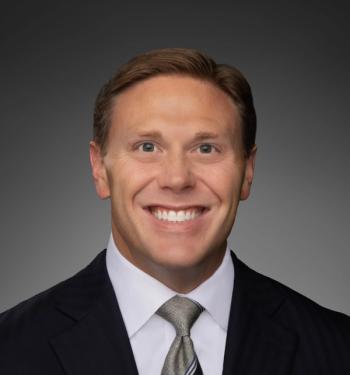
He spoke with us about plans to invest nearly $600 million in the Minnesota system, upgrading facilities and the alignment between the organizations.

The health system is using telehealth to deliver more care across the rural Midwest, saving time for money and patients. Dr. Dave Newman of Sanford Health talks with us about virtual care.
Los Angeles - With Sanford Health serving scores of remote communities across the Upper Midwest, virtual health capabilities are critical to ensuring access to care.
Five years ago, Denny Sanford donated $350 million to the health system to expand access to virtual care. The nation’s largest rural health system, Sanford Health’s sprawling footprint covers seven states: South Dakota, North Dakota, Minnesota, Wyoming, Iowa, Wisconsin and Michigan. Even though
Today, Sanford Health offers 80 types of specialty care virtually, including oncology and behavioral health.
Over the past five years, Sanford Health estimates its virtual care capabilities have reduced more than 60 million miles of travel. The system also estimates its virtual care options enabled patients to save an estimated $41 million in 2025, since patients didn’t need to take time off work or pay for transportation and meals. Sanford estimates each telehealth visit helps patients avoid an average round trip of 176 miles.
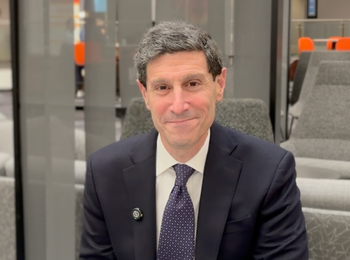
Dr. David Newman, chief medical officer of virtual care at Sanford Health, spoke at the ViVE digital health conference this week. In an interview with Chief Healthcare Executive®, Newman, a specialist in endocrinology, says that virtual care is essential in much of Sanford’s service area.
A resident of Fargo, North Dakota, Newman says, “Without virtual care, most of my patients wouldn't be able to see me in the winter. We don't measure miles in like, 10s or 20s. It's like hundreds of miles that a lot of patients have to drive to see their specialist.”
“If you are in an urban center, going to visit your doctor, typically, is like a two-hour experience,” Newman says. “In the Midwest, it can be a two-day experience. It can be several tanks of gas. It can be missing your kids' activities. It can be boarding your dog. It can be eating at restaurants that you don't want to eat at.”
The present, not the future
With the gift from Denny Sanford, the health system established a virtual care center, which connects specialists to clinics across the system. The center has allowed Sanford to assemble a top-notch operations team, enabling the system to offer so many types of specialty care via telehealth.
“We now have a team that can implement these virtual care systems,” Newman says. “It's great to have an idea, but if you don't have the change management, you can have the operations team, you're never gonna be able to scale.”
For the vast majority of Sanford Health’s doctors offering specialty care, virtual care is a fact of life.
“So we used to say telemedicine was the future. It's really the present now, and it's woven in almost every single subspecialties’ day-to-day,” Newman says.
Newman also points to the value of treating cancer patients virtually. Sanford recently launched a bone marrow transplant program in Fargo, which Newman says was driven by patients who asked for it because they didn’t want to have to drive to Minnesota’s Twin Cities for care.
Rather than a weeks-long stay in the hospital, patients are admitted for a short stay and then get treated virtually at home.
“You don't have to have hospital food for a month,” Newman says. “You can have the creature comforts at home, your risk of infection is still low, and you can get the same high quality care.”
Straight to the field
Sanford’s virtual care capabilities also help provide more services to farmers, especially during harvest time in big agricultural states like the Dakotas.
“To tell a farmer that they are going to come into a doctor's appointment during harvest is a no go,” Newman says.
He says he has telehealth appointments with farmers on their combines.
“I see farmers from the combines as they're plowing their fields,” Newman says. “We can do a virtual visit. They can take five minutes and I can refill their medications. I can update them on their labs, and it is very satisfying for them to not have to take time off of harvest.”
Sanford Health welcomed t
Sanford continued its virtual programs during the shutdown, even with delays in reimbursements. Newman says the extension of telehealth programs is “a huge deal.”
“We will continue there in rural America, because we firmly believe it is the best thing for patients,” Newman says. “But our ask would be, is that it is made permanent. We know that patients want this, we know that providers want this.”
The federal government’s new
“It also gives us a chance to think completely differently,” Newman says. “We know that healthcare has its challenges with reimbursement, with access and quality. So how do we blow the top off the programs we have now, to try something totally different?”