The leader of two rural hospitals talks with us about dealing with challenges, having a growth mindset, and novel ways to retain staff.
The system’s chief nursing executive and president of Intermountain Children’s Health talks about a new pediatric hospital in Las Vegas.
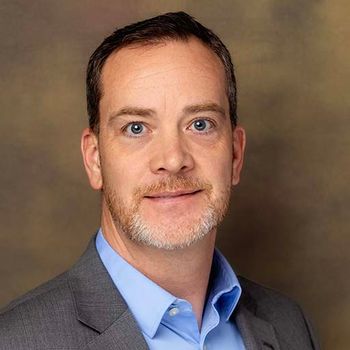
Chicago - Mandy Richards holds two vital leadership roles with Intermountain Health, one of the nation’s largest nonprofit health systems.
Richards serves as the president of Intermountain Children’s Health, and is overseeing the system’s efforts to expand care and access for pediatric patients and their families. Intermountain has just broken ground on a new children’s hospital in Las Vegas, the first freestanding children’s hospital in the state.
The system recently received
She also serves as the chief nurse executive for Intermountain Health, which operates 34 hospitals and 400 clinics in six states: Utah, Idaho, Nevada, Colorado, Montana and Wyoming.
Richards spoke with Chief Healthcare Executive® while she was in Chicago for the Becker's CEO + CFO Roundtable. She talked about Intermountain’s new children’s hospital in Las Vegas and the broader effort to expand access to pediatric care across the system. She says that 30,000 families leave Las Vegas each year to get the pediatric care they need.
“For Nevada, it is bringing care closer to home, building on the platform of pediatrics they've got there already, but it's really about bringing in those specialties like oncology care or neurosurgery or more of the comprehensive care,” she says. “So for Nevada, it's all about bringing the kids home.”
Richards also outlined how the system is working to help improve the retention of nurses and support them in new career opportunities.
This is part of a series of conversations with C-suite leaders from the Becker’s conference. Look for more in the coming days.
Here is a transcript of our interview with Mandy Richards.
Q: You've been serving as president of Intermountain Children's Health for a little over a year now. How would you describe your time in that role so far?
Mandy Richards: “Time has flown. It's been 15 months now since I've started as the president of Children's Health at Intermountain Health, and it's just been inspiring. Just being with those that care for kids, there's nothing better. And so it's been exciting to learn the programs that we have and what makes them excel, and what the needs are in the community, and it's been really interesting to think about what has made Primary Children's, which is in Salt Lake City, exceptional. Then how do we spread that across our whole entire system? And so they actually just reached top 20 in the country for children's hospitals, and they're ranked 11 out of 11. So a lot of it has been me trying to understand almost what that secret sauce is, so that we can spread it to our new children's hospital in Nevada.”
Q: There was big news with the extraordinary $150 million contribution from Felicia and Ben Horowitz for the new children's hospital to be built in Las Vegas. Can you talk about what that contribution means for you?
Richards: “We were so fortunate to name the children's hospital in Nevada with a $150 million gift from Felicia and Ben Horowitz. It has been overwhelming just to see the generosity in people that care about the kids of Nevada, and it's actually created a wave of generosity in the community. And it really is a partnership. It's not about Intermountain doing this or Intermountain Children's Health doing this separately. It's showing us that there's a commitment by the community for what we're doing. So it's really exciting to see, and it was just an exciting week last week, doing the groundbreaking as well, and a lot of great things coming soon.”
Q: Intermountain has been working for years to expand access to pediatric care. How encouraged are you by the progress you've seen so far?
Richards: “I'm very encouraged. Obviously, it didn't start just last week with the groundbreaking in Las Vegas. It started actually over 104 years ago. So in Salt Lake City, there were two individuals, Louie B. Felt and May Anderson, that saw a need in Salt Lake City to care for kids, and so they stepped in at a time when kids needed it, and that was the beginning of Primary Children's Hospital in Salt Lake, and so since that time we've been serving that community.
“But you can imagine the need is great in any city. And so from there we opened the Miller Family Campus, which is about 30 minutes south of Salt Lake City, to serve kids there and keep them closer to home. And then we actually just opened up a behavioral health pediatric hospital. There's not many of those in the country, so we're very excited to be serving kids with the needs around behavioral health, which there's plenty.”
Q: So what are the biggest needs you're looking to address when it comes to improving the health of children?
Richards: “It really depends by state. So for Nevada, it's access. So they are the largest metro area in the country that does not have a children's hospital, largest state, which I was amazed at when I started to take on children's health and understand that and what that means for those families and those kids. They are 48th in the nation for pediatricians per capita. So there's just not the expert care there.
“So 30,000 kids a year are having to leave Las Vegas and come to Salt Lake City to receive care, and what that means for families, they're split apart at a time where they need to be together to support each other. A financial burden on those families, where often a parent has to stop working and then go with the child who needs care. It's really disruptive. So for Nevada, it is bringing care closer to home, building on the platform of pediatrics they've got there already, but it's really about bringing in those specialties like oncology care or neurosurgery or more of the comprehensive care. So for Nevada, it's all about bringing the kids home.
“For Utah, behavioral health has been one of our biggest opportunities, and so when we think about children in school, it's hard to be a kid at the moment, and I think it's getting harder. But the statistics show us about 17% of kids in Utah have thought about suicide, which is devastating. So we've done a lot of work to reduce that. It's now at 12%, but it's still too high.
“So behavioral health is definitely a need in Utah, and then it's also about access. We're really full in Salt Lake City, so knowing that we're building this wonderful children's hospital in Nevada, and so many kids come to us for care, we're going to bring that care back local, and that will help us with the access as well.
Q: You're also serving many patients in rural areas. How are you working to expand the access you were just talking about to care for those children in rural communities?
Richards: “Rural areas will always be a struggle. They need the specialists, but usually they have to travel for care. So what we're doing for kids is using telemedicine. We're using the technology that's been around for a while, but bringing that to the kids so that they're not having to travel out of their area. Again, we want to keep care local for kids, so telehealth has been a huge plus.
“We also do micro-clinics where we'll send out to Missoula or rural Montana. We'll send specialists out, and we'll consolidate all the clinics that they're doing, or even behavioral health. So in St. George, we do teleconsults. So again, those kids aren't having to come up to our behavioral health children's hospital in Salt Lake City. We can keep that care local for them. So lots to be done in the rural areas.”
Q: Many hospitals say they continue to see high demand of kids and teens in need of behavioral health services. Is Intermountain seeing similar demand, and how are you working to serve that demand?
Richards: “You know, behavioral health for kids, unfortunately, we see it across the whole entire nation. And so I was mentioning, our kids in Utah, the thoughts of suicide are way too high, and so that's part of why we developed a behavioral health hospital for kids, which is pretty rare.
“So in that hospital, we'll have a crisis center. So as a parent, usually if your kid's in crisis, no matter what time of day, but particularly if it's the middle of the night, where do you go? So usually they arrive at ERs, and then you don't necessarily have all of the right trained staff there to help equip you to go home. So these crisis centers are 24/7. The parents will come in with their child. They'll be seen by our experts, and quite often the goal is to get them home and then follow up with a follow-up appointment. Or at our behavioral health hospital, they can be admitted to our acute inpatient units.
“We also have intensive outpatient therapy programs so that they can be at home where they're comfortable, then come in for therapy as they need it. We even have schools. We have teachers in there where kids can't actually function in the school yet, but they still need to continue to keep up with their education. So there's a lot we're doing there. It's very comprehensive, but we're hoping to break that curve of suicidal thoughts in our school-age kids, and so we're really excited to see the progress we've made so far. But there's more to be done.”
Q: You're serving as president of Intermountain Children's, and you're also serving as chief nursing executive. So how do you manage two very important but different roles in the system?
Richards: “I have the pleasure of being the chief nurse executive for Intermountain Health as well as the president for Children's Health, and I love the two as they come together. If I think about nurses, nurses are everywhere, and so when I was asked to take on Children's Health, it was a pleasure because half of our workforce in Children's Health is nurses, and so I see the two are complementary. But really, it boils down to having exceptional leaders.
“Often you'll hear people say you're only as good as your team, and you truly are. I mean, to be able to be spread across two big portfolios, exceptional leaders, and we have some wonderful leaders at Intermountain Health. And then I would say a clear strategy. So the first thing we did in nursing was set a clear strategic plan for our system, and then the same in Children's Health. So now, as we're elevating Children's Health across all of our six-state footprint, and obviously with the children's hospital in Nevada, it's setting clear directions so people know where they're going.
“And for me, as the executive, I'm able to help to coach and mentor those leaders, but also know: are our plans and is our strategy really coming to fruition? And ways of measuring that, and kind of go deep when you need to, but pop back up and be able to support. But it all starts with the people, and that they're mission focused, and that they're great leaders.”
Q: Nurses play such an important role in hospitals, and many nursing leaders point to high stress on nurses in health systems. How is Intermountain working to help take care of nurses and encourage nurses to stay at the bedside?
Richards: “I'm so passionate about this topic. So you know, nurses being at the bedside is really important, and I have a personal objective to bring the joy back into nursing. We saw what happened to nursing during COVID, where there was such an increase in demand and the nurses were getting sick, so a decrease in supply, nurses burnt out, and I was really concerned about their well-being. And we see that coming now, where we've got a nursing shortage coming, so the supply and demand mismatch is from something different. But it's the same feeling our nurses will have.”
“And so at Intermountain Health, we have been working really diligently to change the care model for nursing, to change the workflows, to look at where do nurses spend their time, to ensure that we can streamline the processes. There's a lot of workarounds that nurses do, and we pride ourselves in that, but that's not a great thing. But really, trying to streamline the work as well as using technology to say, okay, what could we automate? What could we do where we're able to give our nurses time back at the bedside? And we have a goal at Intermountain. We've done a time-motion study, and we know our nurses spend 24% of their time at the bedside, and our goal is to almost double that to 41% of time at the bedside. And so that will bring the joy back in nursing.”
“But beyond that, we've created a program we call ‘I Aspire,’ which is a professional development and clinical development program for nurses. And it actually came from one of our nurses. I was rounding in the ICU, and they said, ‘Mandy, we would love to continue to advance in our nursing career, but we don't have a choice other than leaving the bedside and becoming a nurse manager or a nurse educator.’
“So we've got to fix that, and so we created a program where nurses could continue to grow at the bedside, and so they can get certifications, they can get the depth in their clinical expertise, and they're rewarded financially for it. We've had it for over a year now. We've just expanded it because it's done so well. We actually just got word that we published this week on it, but part of it is retention as well as the joy and feeling recognized for what you're doing.
“And so with the nurses, we found that there was a cohort that were eligible but didn't participate, and those that were eligible and did, and the difference in turnover was 9%. And we don't want to lose any nurses, particularly if we know there's going to be a shortage. We want them at the bedside.
“So seeing that, we need to expand it because we don't want to have nurses leave. And I often think every nurse that leaves, that's a wasted dollar, because we know how much it costs to retrain a new nurse, and we want them to be able to stay at the bedside and have a very fruitful, long career. So we're excited about those results.”
(Jennifer Dye conducted the interview in Chicago. Ron Southwick and Austin Littrell contributed.)