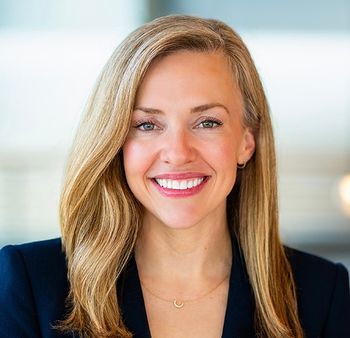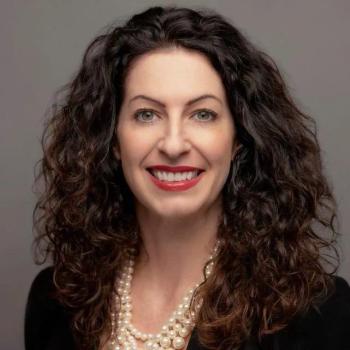

Perry spoke with Chief Healthcare Executive about Medicaid cuts, more Americans losing coverage, and the need to focus on keeping patients healthy.
Hours after the polls closed, party leaders began talking about working to reverse Medicaid cuts. Analysts see potential for restoration.
Democrats will take control of both the House and Senate in the next Congress, and the shakeup in Washington could lead to more money for healthcare programs, including Medicaid.
Of course, President Trump remains in office for two more years, so there will undoubtedly be clashes between a Republican White House and the Democratic majority in Congress.
The shakeup includes two Democratic physicians winning seats in the U.S. Senate. Dr. Annie Andrews captured a seat in South Carolina in a major upset, while Abdul El-Sayed won in Michigan. U.S. Sen. Roger Marshall, a Republican physician from Kansas, lost his race and won’t return.
Some top Democrats are already talking about restoring more money to Medicaid after Trump and the GOP-led Congress passed H.R. 1,
U.S. Rep. Hakeem Jeffries, D-N.Y., the likely House Speaker in the next Congress, talked about making sure Americans could afford to see doctors. He also mentioned hospitals and health systems moments after media outlets projected that Democrats would regain the House majority.
“We will fight for your hospitals,” Jeffries
U.S. Sen. Cory Booker, D-N.J., appeared on MS NOW’s “Morning Joe” Wednesday and said Democrats need to tackle the problems Americans are facing with affordability, and he cited healthcare costs.
“Right away, we can do bills on healthcare,” Booker
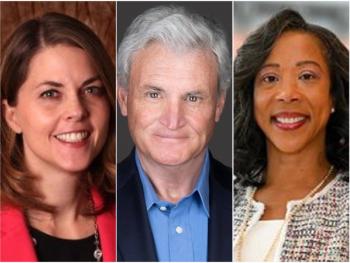
Chief Healthcare Executive® invited a group of federal health policy experts to discuss the mid-term elections and the potential impacts for funding health programs and affordability. The discussion took place two weeks before the election but the panel offered a host of relevant insights, including the potential for more funding for healthcare programs.
The panel agreed that with a Democratic victory, there would certainly be a push to restore at least some funding to Medicaid.
With H.R. 1, also known as the One Big Beautiful Bill Act,
Robert E. Andrews, the CEO of the Health Transformation Alliance, said that the Democrats will be pushing hard to restore funding for Medicaid. Andrews spent 24 years in Congress representing part of New Jersey in the U.S. House of Representatives.
“This time, the Democrats will have more negotiating leverage,” Andrews said during the panel. “Being the minority party, they advocated for renewal of the
The Democratic majority will need to strike some kind of deal with Trump to put more money into Medicaid. Andrews says he could envision a scenario where Democrats get an agreement with Trump to put more money back into Medicaid as part of a larger spending package, or to avert or end a government shutdown.
“I wouldn't rule anything out here,” Andrews said. “That if it's part of a grand bargain, let's say that all the Medicaid cuts in H.R. 1 would be rolled back, if the president got something that is of great importance to him, like extension of tariffs or making permanent some capital gains tax cut, he could conceivably do it.”
Lisa Kidder Hrobsky, the senior vice president of federal relations, advocacy and political affairs at the American Hospital Association, said she could see Democrats in Congress getting at least some restoration of funding for Medicaid.
“I think that there's an opportunity for some coalescing around maybe not pulling back all of the cuts. I mean, that would be pretty substantial to do,” Kidder Hrobsky said on the panel. “But changing the dates, pushing it out further, changing the rates so that the states are pulling down their state directed payments in a different way. So I do think that there's an opportunity for some movement and discussions there.”
Having said that, she also stressed that hospitals should continue to plan strategy with the Medicaid cuts in mind, since they remain in place.
Some key changes to Medicaid programs will take effect even before the next Congress takes office.
Starting Jan. 1, most healthy adults will be required to work 80 hours a month to receive Medicaid benefits, and recipients will have to prove eligibility every six months as opposed to once a year. Analysts and healthcare leaders have projected that
Danielle Turnipseed, the chief public policy officer of the Association of American Medical Colleges, said the fallout from some of those changes could drive lawmakers to push for changes.
“I think people have heard about the impacts of H.R. 1, and we have a little bit of experience,” Turnipseed said on the panel. “Many of the provisions were set to take effect after these elections, so we'll have to see what the facilities and the communities are experiencing by the start of the 120th Congress, and if there's the appetite, the will, to go in and make any changes.”
Turnipseed suggested there could be an appetite to review the impact of changes in eligibility requirements with the new Congress.
Hospitals have seen more patients without insurance following the expiration of tax credits supporting the Affordable Care Act.
Andrews and Kidder Hrobsky said they expected to see some Democrats push to restore tax credits for the Affordable Care Act.
However, they both suggested it would probably be a lower priority than trying to reverse or reduce the Medicaid cuts. Andrews said he thinks Democrats may have to make a choice between pushing to restore Medicaid funding and reviving enhanced tax credits for the Affordable Care Act.
“I think this becomes a really important internal decision within the Democratic Party as to which one of those two they value the most,” Andrews said.
One of the authors of the Affordable Care Act when he served in Congress, Andrews said the elimination of the subsidies has hurt people. But he said, “I do think that the political momentum will wind up behind the Medicaid restoration.”
“If I had to bet, they would choose to put more money back into Medicaid, and that is for a couple of reasons,” Andrews said. “The H.R. 1 cuts aren't just about Medicaid recipients; they're about the balance sheet of hospitals all over the country, and the number one employer in most people's districts is a hospital or hospital system.”
As Kidder Hrobsky said, “It's hard to reinstate a program once it has stopped.”
But she said there is a genuine appetite to address the Affordable Care Act tax credits.
She added, “I’m going to stay an optimist and say I think some something could get done there.”
The president has proposed steep cuts to the Health Department, and the National Institutes of Health, the prime source of federal aid for medical research.
With the prospect of a new Congress, Turnipseed said she hoped to see more support for NIH funding.
“We do expect Congress to continue to push back against any proposed cuts, and I'd like to see that funding stabilized and possibly increased to see some growth there,” she said in the roundtable discussion.
“There's no doubt that medical research has been threatened, especially over the past few years,” she said. “But what we've also seen is strong support from the American public, not just from Congress. There are many members of Congress, both sides of the aisle, both chambers, who have stood up for NIH, stood up for research, stood up for science, and I have to believe that that bipartisan support will continue.”
To learn more about the impact of the 2026 elections on healthcare, check out all the videos from the Chief Healthcare Executive Election 2026 Roundtable.