The question isn't whether to let AI into the patient journey. It's whether health systems will earn a seat in that conversation.

The chief information officer’s role has expanded in recent years, and those positions are in high demand. Jeffrey Sturman of WittKieffer talks about what hospitals are seeking.
The role of the chief information officer in a hospital has evolved significantly in recent years.
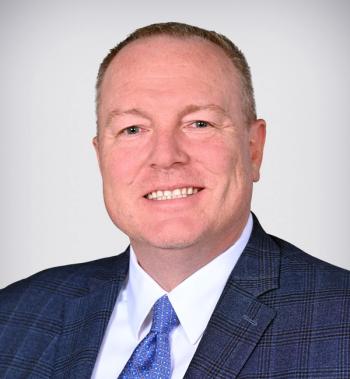
For many health systems, the CIO does much more than oversee the information technology department. Jeffrey Sturman, a managing partner at WittKieffer and a former CIO, says that view of the role is antiquated, and a philosophy that should have been ditched a decade ago, or longer.
“It's a big red flag when it's not that way,” Sturman says.
He spoke with Chief Healthcare Executive® in an interview at the ViVE conference about the CIO role, what hospitals want, and what they should be seeking. Sturman also offered perspective on how CIOs can succeed, and some mistakes to avoid.
In his current role, Sturman helps health systems find chief information officers, along with chief digital officers, chief medical informatics officers, and other digital positions.
He says health systems are missing an opportunity if they are looking at CIOs who are simply going to keep systems functioning.
“It’s not about technology …. keeping the lights on,” he says. “It actually is about strategy. It is about how we're operating differently.”
Interacting everywhere
More hospitals and health systems are looking at chief information officers as an indispensable leader in improving care.As Sturman says, hospitals want CIO to tackle problems such as: “How are they going to improve access? How are they going to make the experience easier and relieve the burden on our caregivers, but also on patients?”
In his work, Sturman says he was involved with clinical engineering, the patient access center, and the consumer experience.
“I think the CIO sits not just at the intersection of strategy, operations and technology and really innovation, but sits in this world of influencing and understanding and seeing, at least in the provider industry, all aspects of every other executive team person's job,” Sturman says.
“If you're the CIO, you have to know it all,” he says. “You have to do it all. You have to interact with our physicians. You have to interact with our patients now.”
Health systems often find themselves looking to fill the CIO position within a few years, Sturman says. Top talent often can find positions with better pay, and hospitals and health systems
And as technology is advancing rapidly, CIOs need different skills.
“The winds shift so quickly that the CIO three years ago is different than the CIO today, which will be different in another three years,” Sturman says. “So skill sets need to be kept up today. I like to say that we're always learning, and if you're not, you're probably going to put yourself out of a job over three years.”
Sturman says a CIO is in some ways a “generalist,” while surrounding themselves with great teams of people with specialized skills.Still, CIOs must stay up to date with AI and other new tools.
“That's hard, but you have to know enough to be dangerous,” he says. “You’ve got to be focused on governance. You’ve got to be focused on understanding big picture strategy and governance and budgets, because you still have to maintain your operations.”
Security demands on health systems have also changed, and CIOs need at least a fundamental knowledge.
“If a CIO doesn't have a pretty sound understanding on security, they're probably going to be in trouble,” he says.
‘Relationship management’
Sturman says another key element of the CIO is “relationship management.”
“You’ve got to know how to navigate these different, really diverse stakeholders,” he says. “Physicians are different than nurses, and nurses are different than administrators, and administrators are different than a radiology tech. And a radiologist is different than an ER doctor, and an ER doctor is different than a primary care doctor.”
With that focus on dealing with leaders across the organization, Sturman says CIOs need to be able to work well with others, and “soft skills” are now more important than ever.
Sturman says that’s something he stresses with clients and job seekers. He says he spends at least as much time on soft skills as the technical requirements.
“You can teach someone technology, teach someone some implementations,” he says. “You can teach someone about data centers and security. You almost cannot teach someone how to be a different person. And so culture fit is incredibly important.”
While Sturman says CIOs should be networking and present at conferences to learn and connect with others, he cautioned against becoming the “Hollywood CIO, who's always on stage and being out there and promoting themselves.”
“I'm hearing more and more from my CEOs and COOs across the industry, that we need people focused on our own organizations, and they need to be focused on improving, optimizing, fixing things in our health systems. They can't just be out all the time,” he says.
Sturman also said CIOs at hospitals must be passionate about health care.
“If you're not being focused on health care, you're not a person who really, at the end of the day, wants to make a difference in people's lives, this is the wrong industry for you,” he says.