Our panel looks at restoring funds to Medicaid, the potential for cuts and closures of health systems, and the Affordable Care Act.
The health system is using more renewable energy, reducing waste and aiming to do less harm to the environment. Beth Schenk of Providence talks about the system’s progress.
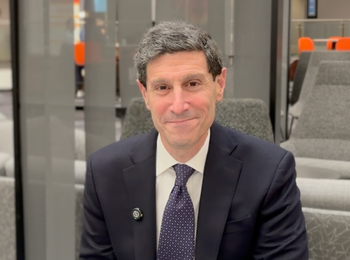
Beth Schenk says Providence’s work to reduce its impact on the environment is linked to the health system’s faith-based mission.
The chief environmental stewardship officer at Providence, Schenk says the goals of reducing waste, polluting less and using more renewable energy reflect the need to “care for our common home.”
But when it comes to measuring the system’s progress, Schenk isn’t relying on faith. The system compiles a detailed scorecard and tracks 175 data elements to gauge efforts in reducing waste and pollutants and being more energy efficient. And Schenk says the system is making important strides.
Providence has seen a 27% carbon reduction across seven key elements since 2019.
“It’s quite an accomplishment, especially when emissions are going up, typically across our economy,” she tells Chief Healthcare Executive®. “And so for us to rein that in and drive it down that much is substantial.”
The health system’s efforts are also producing significant financial savings.
Providence’s sustainability efforts led to a savings of $46 million in 2025, she says.
“If you're really consuming less, and that means purchasing less, we're trying to purchase fewer medical supplies, for instance, so that we avoid waste. We purchase less energy, we purchase less food, because we're working hard on reducing the waste products of food,” she says.
To recognize Earth Day, Chief Healthcare Executive is spotlighting some of the work Providence has done to improve its sustainability.
Finding the sweet spot
Providence
At Providence, the sustainability efforts are also tied to improving operations and overall patient care.
“We're trying to find that sweet spot of reducing our pollution through reducing consumption while increasing efficiency, while making everything work better,” Schenk says.
In health systems and hospitals, many aren’t thinking about sustainability because they’re thinking about their patients.
“They're thinking about the hard work they're doing of delivering care and saving lives,” she says. “I mean, literally, the stakes are so high, and we come and say, ‘Hey, we would like you to do it this way just to change a little bit.’ So even to make that request, we have to have a pretty good reason to do it.”
Schenk says the gathering of data is important because it helps build support for sustainability efforts.
“Healthcare is pretty data-driven,” she says. “We don't just make stuff up. We have to have evidence. So we have to look at the costs and benefits. And, you know, we're always using data and evidence for our decision making.”
Providence uses metrics to track the kilowatt hours per square foot in facilities, so the system can know how a small hospital is doing compared to a big hospital. The system also looks at waste streams on a patient volume basis. Schenk says the hospitals are able to compare themselves to others.
While Schenk says the data is critical, she says it’s equally important to build awareness and enthusiasm. Facts only go so far.
“We have a catchphrase, which is, data serve as the backbone of our initiative, and engagement is the secret sauce,” she says. “Engagement being: how do we talk to people? How do we share, how do we educate, how do we inspire, how do we invite and include? So those are fairly different, but they inform each other a lot, because people are used to seeing data, and they also like to see how they perform.”
Less waste in landfills
Providence has set some lofty goals. The system is also aiming to see a 50% reduction in waste sent to landfills by the end of the decade.
Schenk says Providence is making progress, but she acknowledges, “It’s a big lift.”
“Health care waste is enormously complex,” she says. “We have hazardous waste, infectious waste, sharps waste, pharmaceutical waste, hazardous pharmaceutical waste. We have multiple streams of diversion.”
The system tracks its waste disposal, but Schenk says the system also collects data on waste that’s avoided, or “the waste we don't create.”
Schenk points to an example of reducing waste: moving to disposable isolation gowns.
She says isolation gowns that can be laundered are preferred by staff and less expensive.
And she points out, “If we don't actually track what we didn't discard, it's forgotten.”
Providence is also working to use renewable energy throughout the entire health system. So far, more than 100 sites are using renewable electricity, and the system is adding more each year. Providence has been working with utilities and electricity suppliers to use renewable sources.
Schenk says Providence’s work to reduce waste and pollution and use more environmental energy is also aimed to address equity. And she says climate changes and environmental crises have a greater impact on the poor and vulnerable.
“The people who are more protected are probably going to be able to weather through that, but the people who are most vulnerable, they might not have air conditioning when it's 110 degrees. They may not have a way to recover after a major flood,” she says.
Since Providence is based in the western states, the system has seen firsthand the impact of climate change, she notes. Last year, the wildfires in Los Angeles ravaged a Providence clinic. High heat days, smoke from wildfires, and water scarcity aren’t hypothetical problems in Providence’s markets.
“From an accountability standpoint, healthcare is surprisingly polluting, and so we don't want to be part of that problem,” Schenk says. “So that helps us with our mitigation work, or driving down all of our pollution and our focus on those who are the most vulnerable, helps us with our resilience work, or getting adapting to these changes that we see in our environment that really impact health.”
Even with Providence’s robust data collection and years of work on becoming more sustainable, Schenk says there isn’t truly a track record to follow.
“We're discovering it as we go,” she says.
She also points to the need to continue to raise enthusiasm and awareness about improving sustainability.
“We have 125,000 caregivers,” she says. “We continue to work on that. So I think that it is becoming more and more part of the culture, but we work on it constantly to engage and share and educate thousands of people.”