
A new report says nearly 700 are in danger, with 260 rural hospitals at immediate risk of closure.
The leader of two rural hospitals talks with us about dealing with challenges, having a growth mindset, and novel ways to retain staff.
Rural hospitals may face tremendous pressures, but they are also adept at devising novel solutions to problems.
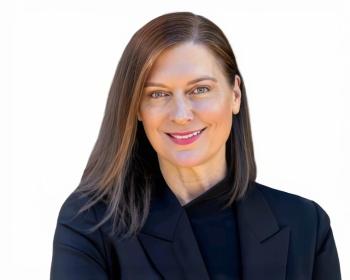
Kurt Forsyth says rural hospitals are sources of innovation, and he should know. He is the president of two rural hospitals in the Intermountain Health system: Delta Community Hospital and Fillmore Community Hospital in Utah.
“Innovation is really something that I think rural hospitals thrive at, even though we don't necessarily have all the funding to be able to add the fancy new robotic equipment and things like that,” he says.
Forsyth spoke with Chief Healthcare Executive® in an interview in Chicago while he was in town for the Becker's CEO + CFO Roundtable. He talked honestly about the difficulties for rural hospitals, but he also stressed the importance of controlling what can be controlled and maintaining a growth mindset.“People really cling on to things that they're frustrated about but they can't control, and they let it just really drag them down,” Forsyth says. “And so one of the things that really has helped our two hospitals, both with employee engagement and with quality, has been having that growth mindset. What can we do about it? How can we respond to these things that are uncontrollable?”
This is part of a series of conversations with C-suite leaders from the Becker’s conference. Look for more in the coming days. Here is a transcript of our interview with Kurt Forsyth.
Q: You're the president of two critical access hospitals. What are the big challenges facing rural hospitals?
Forsyth: “Big challenges facing rural hospitals vary by hospital. You may have heard that if you've been to one rural hospital, you've been to one rural hospital.
“Managing two hospitals or supporting two hospitals within the same county, each comes with its own unique challenges. Both happen to be about 40 years old, and they were not built with normal construction. The underneath is kind of washing away, and so they're ready for replacement. A lot of rural hospitals really struggle with replacing infrastructure, even though we're part of the Intermountain Health system. That's one of those things that we still struggle with: being able to update our buildings and our infrastructure. So that's one of the big things that's on our mind right now.
“A lot of what I've heard from other rural hospitals is workforce. We've been fortunate at both of my hospitals that we haven't really struggled with workforce, but we certainly anticipate that being a need in the future. Some of the things that we don't have, for example, would be respiratory therapy, so that's a workforce issue we have struggled with, just not having that. Even security guards, we didn't have any security presence until about three years ago, and finally, because of some of the episodes that had happened, we needed to add that. So infrastructure and workforce, I think, are definitely the two top of mind for my hospitals.”
Q: Rural hospitals often serve communities with older residents and greater health complications. How do you work to try and help patients stay as healthy as possible or manage their conditions as well as possible?
Forsyth: “With an aging population, the way that we try to manage and help support those demographics is really through what we call proactive care at Intermountain Health. What that is is value-based payment programs. So Medicare participates in a lot of those. At Intermountain, we're fortunate to have Select Health as a payer, and so we can experiment more with those value-based programs for different populations.
“For example, seniors. One of the things that we've done at our smallest hospital in Fillmore is based on our community health needs assessment. We recognized the need for additional behavioral health support in the community. Now, Fillmore has a very high demographic of older population, sicker, more challenging, complicated health conditions, behavioral health compounding that, and so we were able to connect with a partner organization. We didn't have to build it in house, but we contract with a company that specializes in geriatric outpatient intensive programs that can help these seniors have access to group therapy, family therapy, individual therapy, resources we have not historically had in the community.
“And so we've been able to help support them in that way by bringing this opportunity closer to home for them. And we also have telehealth, both through Intermountain and other resources, that helps bring applicable care, because not everything can be done through telehealth, but applicable care through telehealth, expertise that we haven't had in these rural towns in the past.”
Q: What opportunities do you see coming from the federal government's Rural Health Transformation Program? Will some of those funds help your hospitals?
Forsyth: “The Rural Health Transformation Program, I think, has really good intentions. The applicability of it for my two hospitals specifically is going to be challenging, in part because what we are offered already through Intermountain Health already satisfies what those funds would potentially do with value-based care programs, with telehealth, EMR support, revenue cycle support, infrastructure, those kinds of things. So we already have access to a lot of that through Intermountain Health.
“What we may be able to do is do some of those things sooner if we're able to qualify for some of those transformation funds. Now, in June, I was on a panel and also spoke at the Becker's conference, and I said then that I was a skeptic, that we would not be able to actually claim any of those funds. I stand corrected now. We actually have been awarded some funding to create a community paramedic program.
“Now, the challenges of that are going to be new to us. We don't know exactly how that's going to play out. There's caution against starting up new programs that may not be sustainable after five years. We're actually encouraged that this one, with deploying paramedics into the community and partnering with our local county EMS program, that we will be able to stand up a new program that will be sustainable in the long run. So, depending on what we can qualify for, I think we can make a difference on a bigger scale.
“Intermountain is partnering not only within the state of Utah but across multiple states to try to qualify for things that help with EMR interoperability and being able to access data from multiple states. We use Epic as our electronic medical record, and so we have access to millions of records through Epic. And then if we can create some interoperability between states, we'll have additional data through multiple sources. When unique problems come, we can actually see what somebody in other states has done to assist with those complicated problems and find best practices through those data sources.”
Q: What are the advantages of delivering care in rural communities? Do you sense a greater connection with patients and families since they may be familiar faces?
Forsyth: “The advantages of delivering care in rural communities, there are a ton. There's a long list, but really it does come down to we have the ability to create that strong connection, not only because it's our friends and family and neighbors that we're serving when they come into our clinics and our hospitals, but we also see them at different school events and different community events, and so we know who they are. We know things about them, and that does make it …. I don't know if it's easier, but it makes it more impactful to care for those people. It helps them. They've already got a strong sense of trust. It helps them to be more compliant with their treatment regimens.
“For us, in a rural setting, we have low inpatient volumes, and so when we do have two or three patients inpatient, we still are able to give dedicated one-on-one time frequently, where in busy ICUs and ERs they're not really able to give that same amount of time and take the appropriate time to make a strong connection with the patient. So I think that's one of the biggest advantages.
“I think the other advantage that we have in being in small hospitals is the ability to float and flex and learn different skills. So our nurses, for example, not only work in med-surg, but they also cover the ER and they also cover labor and delivery. And so they could be floating between two or three or even four — we have some that actually float to surgery as well — so they could be covering multiple specialties within the same day on the same shift. And having that skill set is really so critical, because we've actually had a handful that have been able to go to other hospitals, and because of their variety of knowledge, they're able to really be a strength in that subspecialty on that one unit, because they've learned so many different variations of ways to care for patients. So there's a lot of strength there, and it is hard to lose people.
“But at the same time, we have people that really find their work edifying, and they find joy in their work. And what that does is it makes others around them want to be in that area. People will move from a metro area to come down and work in our area because they see that we are having fun. And the same thing applies for specialty physicians as well: they want to do outreach, and they're willing to drive an hour and a half to come and do two, maybe three cases in a day because it's satisfying. It brings joy to them to be able to do that.
Q: How do you help attract and keep those talented clinicians in rural communities?
Forsyth: “Some of the things that we have to do in order to attract clinicians, specialty technicians, is to be able to modify the traditional job roles. So one example: many people may not think that housekeepers or environmental services technicians are considered clinical. To me, they're clinical. They go into the patient rooms. They interact with the patients.
“So we had a role that we created for four hours a week to help support our purchasing department, so we hired somebody to do that. That person wanted some additional hours, so they were willing to learn and pick up some shifts in the environmental services area. And then after about a year and a half, we were in need of a new environmental services manager, and so we plucked that person and elevated them and gave them the opportunity to be the environmental services manager. Had we not created that four-hour position within purchasing, we probably would not have had that opportunity to elevate that manager. And we have opportunities like that all the time.
“Another example, with physicians specifically, and this applies mainly to specialty surgeons, is we've developed a model where we can actually pay them directly rather than paying their practice or paying an organization. We pay them directly a flat daily rate to come out to our facility and do however many cases are on the schedule, clinic, travel time. It encompasses all of that. I learned that from being in an independent critical access hospital in Nebraska, and I brought that with me. It was successful there. It's been successful here.
“And so again, just being creative about the traditional ways that roles have been designed and set up, and figuring out how we can make them work for us.”
Q: Rural health doctors and nurses often have to improvise and come up with novel ways to solve problems. Is innovation an underappreciated element of rural health care?
Forsyth: “Innovation is really something that I think rural hospitals thrive at, even though we don't necessarily have all the funding to be able to add the fancy new robotic equipment and things like that.
“A lot of the innovation really comes from how we care for the patient. One example I'll give is a few years ago, we were able to qualify for a grant to receive an AI colonoscopy machine, which assists the physician in their colonoscopies to make sure that they don't miss something that could be a polyp. Again, this was four or five years ago, before AI was all the rage, and it was interesting, because as we tried to advertise that we have AI technology in our colonoscopies, it wasn't really something that attracted people to come to us, but now it kind of does. Partly because it's really hard to get a colonoscopy in an urban area right now. There's a three-month wait, but they can drive an hour and a half and come to us and get that AI technology to make sure that we get everything.
“So in a way, we have really tried to apply innovation where we can. Again, being a part of Intermountain Health is really a huge bonus to us, because our physicians are all able to use ambient listening technology to complete their documentation. And at a leadership meeting just this last weekend, the chief medical officer of the organization gave a speech about the end of pajama time. And so our doctors are no longer needing to stay for two or three hours, or get their laptop out at night after they have dinner and put the kids to bed, to be able to finish their documentation. Their documentation can be done before they leave the office or before they leave for home.
“So technology is really something that, as rural hospitals, we're embracing and we're welcoming. We can't afford everything, but for the things that make sense, I think it's definitely helped us and will continue to help us change the way that we do care.”
Q: You wrote a few months ago that you've been repeating a Jim Rohn mantra: "I choose to focus on what I can control." How do you make that work in practice, and how do you encourage your teams to do that?
Forsyth: “It's a quote by Jim Rohn, and really, there are a lot of things that can be frustrating in health care: government regulations, Medicaid cuts, low volumes, people choosing to go outside the community to receive care that we can provide locally. There's all sorts of things that can create frustration, and so we actually talk a lot about that.
“I do a weekly caregiver town hall, and I record it so that those who weren't able to join can listen to it later. And generally, I focus on some sort of a leadership topic. I believe that everybody at any level of the organization has some leadership ability and has the need to be a leader in some form or fashion. And so we do a lot of talking about that.
“And I talked recently about the difference between a growth mindset and a fixed mindset, and I think that really ties in well with being able to control what we can. There's so much negativity in the world, and people really cling on to things that they're frustrated about but they can't control, and they let it just really drag them down. And so one of the things that really has helped our two hospitals, both with employee engagement and with quality, has been having that growth mindset. What can we do about it? How can we respond to these things that are uncontrollable?”
“And I really feel like focusing on helping caregivers have that mindset and develop those leadership skills, no matter what level they're at, really translates into giving higher-quality patient care. And we don't seek after rewards, but I think it's evidenced in that last year, in 2025, Fillmore was the number one quality critical access hospital in the country, and this year, in 2026, it's Delta.
“And so we're really proud of the work that we do with our caregivers, because that allows them to have the autonomy and the empathy to make changes at the bedside that really impact that quality of care.”
Q: Is there anything else that we haven't discussed that you want to share or talk about?
Forsyth: “Really, I think the only additional thing that we haven't discussed is just the importance of leaders in the organization knowing and understanding what's going on in the organization.
“At the last Becker's conference in June, I interacted with several other executives who had a much stronger understanding of their denial rates, their payer mix, different things that were going on in the revenue cycle, and I didn't really have good visibility on that. And so, from that, myself and my administrative team actually started meeting weekly and starting to learn and understand what's happening with our denial rates, what's happening with our AR, what's happening with the different payers.
“We lost a Medicare Advantage program in our county, and where are those patients going? Where are those members going to get coverage now, and how is that now impacting us? And so that's just one element of things that we had little visibility on, and because of that, we're now focusing on that as a strategy. And I talked about infrastructure. I talked about workforce. Really, that's how we're going to be able to do that.”
“I mean, we're bleeding money because of denials and write-offs and things that we just aren't really paying attention to. And so, as an executive team, that's one of the areas that we're adding to our focus, in addition to, you know, again, trying to get additional funding from government sources and grants and fundraising and things like that.
“But at the same time, what I realize is that I need to continue learning from what others are doing, best practices that we can implement, and then also sharing what we're doing that's working well that others can take from us. So that give and take is just so important at the leadership level, and it really has helped benefit our hospitals.”