
The question isn't whether to let AI into the patient journey. It's whether health systems will earn a seat in that conversation.
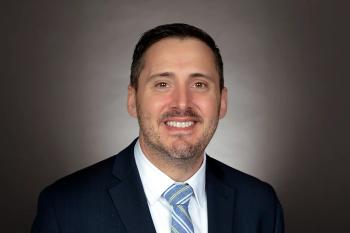
Mitchell Kentor of Endeavor Health shares some lessons from its physician-led governance model and human-in-the-lead automation program.
Ninety-five percent of organizations see no return on their AI investments, according to a recent
In healthcare, that translates to millions of dollars wasted on technology that fails to improve patient care, streamline operations, or boost the bottom line. At Endeavor Health, we challenged this status quo and found success with a physician-led governance model that ensures our AI initiatives deliver real, measurable value.
AI and automation offer to revolutionize healthcare, but implementing them successfully requires a solid foundation. Automation requires consistent, efficient workflows and homogenous processes, which are a challenge in complex healthcare environments. Building these across a large health system is resource-intensive, requiring cross-functional expertise, process improvement, quality assurance, and leadership buy-in.
Endeavor Health, serving around 1.5 million patients in Illinois, has achieved success with a human-in-the-lead automation program,
This success stemmed from nearly a year of preparation driven by a physician-led governance model. We believe this model offers a blueprint for other healthcare organizations seeking to navigate the complexities of AI and automation deployment.
Traditional governance structures often fall short because they lack deep, practical clinical insights and cross functional expertise. One of the most significant barriers to implementing a new automation program is the sheer volume of key decisions that must be made in rapid succession. These decisions, which can alter existing workflows and implement new technology, require input from multiple stakeholders and can easily become bogged down in bureaucracy.
To address this gap, we created a unique governance and operational structure revolving around a physician-physician dyad. One physician serves as the program lead, while the other acts as the clinical lead, responsible for patient safety and clinical efficacy. This dyad structure ensures that clinical considerations are at the forefront and serve as a driving force behind every decision.
The governance committee, led by the physician-physician dyad, was carefully constructed to incorporate comprehensive expertise. It included not only physicians and nurses, but also representatives from IT/automation, quality improvement, operations management, pharmacy, and patient experience. This diverse group provided a holistic perspective on the challenges and opportunities presented by automation.
To overcome the challenges posed by the multitude of complex decisions needed, the governance committee worked in close collaboration with our executive team to build a clear charter that empowered the committee to make decisions. By pushing decision-making down to a cross-functional group of experts with executive oversight, we fostered a culture of agility and enabled rapid, informed decision-making.
With the governance committee providing strategic oversight, the day-to-day work was split between several cross-functional workgroups. Overlapping membership across these teams facilitated communication and collaboration, preventing silos. Across groups, the physician-physician dyad was responsible for ensuring the flow of information and making operational decisions, with the governance committee responsible for final checks and approvals.
The result of this collaborative and clinically-driven approach was the successful rollout of JARVIS, which we continue to scale across our organization.
Our journey with JARVIS has yielded three key lessons for healthcare leaders seeking to deploy AI successfully:
By embracing a physician-led governance model and these lessons, healthcare organizations can drastically improve their ability to successfully implement AI and automation.
Given the high failure rate that many organizations have seen to date, being able to unlock the transformative potential of AI and automation is becoming a competitive advantage that will allow organizations to drive efficiency, improve patient outcomes, and position themselves for long-term success in the ever-evolving healthcare landscape.