A dozen health systems have joined the collaborative. Elad Walach, CEO of Aidoc, talks with us about using AI for better and faster diagnosis.
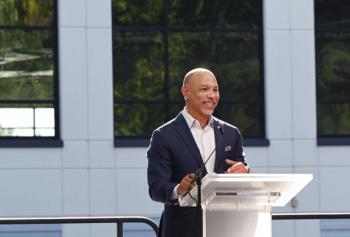
The Ralph H. Johnson VA Health System earned the American Hospital Association’s Quest for Quality Prize. Scott Isaacks, the system’s CEO, talked with us about innovating to serve veterans.
Scott Isaacks says that healthcare is a noble mission, but it’s even more meaningful to deliver care to veterans.
Isaacks is the director and chief executive officer of the Ralph H. Johnson VA Health System in Charleston, South Carolina. And the health system has just received national recognition.
The American Hospital Association announced last week that the VA system has been awarded the 2026 Quest for Quality Prize. The system received the honor at the AHA’s Leadership Summit taking place in Denver. It’s the first time a VA health system has won the AHA’s Quest for Quality Prize since 2002.
Isaacks says the honor is especially rewarding for the system, which serves 109,000 veterans.
“Everything we have, everything we do, all the freedoms we celebrate, it's because of the guys that walk through and gals that walk through our door every day,” Isaacks says. “So yeah, it's special to be recognized for this award. We feel very honored by it.”
In an interview with Chief Healthcare Executive®, Isaacks talks about the VA system’s work to speed access to mental health services, expand the delivery of care, the push to innovate, and the desire to continue to do better for those who served their country.
Seeking a vision
The Ralph H. Johnson VA Health System is one of 170 VA medical centers operating nationwide. The Veterans Health Administration is the largest healthcare system in America.
Isaacks has spent more than three decades working in the VA system. He says he has seen a transformation of the VA in recent years.
“It's changed a lot over the years,” he says. “It's gone from a an organization that maybe 15, 20 years ago was not quite thought of as an innovative, high quality organization, and it certainly is now.”
Isaacks points to the dedication and talent of the staff of the Ralph H. Johnson VA Health System.
“We look for the right team member here. It's about credentials. It's about really having the background to be able to provide great care. But if we can't see they have a vision and kind of are a dreamer as to what things could be, they don't fit here. Because we like folks that are really looking for what's next, and how we're going to not just remain high quality, but every day look at ways to become even higher quality. So it's kind of a fun place to work,” he says.
About 40% of the health system’s employees are veterans. Many of the other employees who never served in the military also have a connection to the armed forces, through a family member or loved one who served.
“If you're a great healthcare provider and you want to come work somewhere where it's all about the mission and really giving back to our veterans, pretty pretty great place to work,” Isaacks says. “I will say, once we have people that start here, they like staying here. You know, coming to work and kind of working with the same folks without a lot of turnover, kind of makes it home for our staff. So once we get them here, we try not to lose them.”
Isaacks has served as CEO of the system for 15 years, and other leaders in the organization have served for years. He says the continuity also helps serve as a draw for top talent.
Mental health services
The Ralph H. Johnson VA Health System has succeeded in helping veterans get access to mental services faster, an achievement the AHA noted in awarding its prize.
The health system has shortened the waiting time for mental health services from 24 days to 10 days.
“I think it's a lot of passion and understanding that access to care is healthcare, and we've got to get them in the door,” Isaacks says. “So it's fun to watch clinicians, you know, doctors, nurses, along with administrative staff, and I think some folks that really understand efficiency get into innovation and access, and innovation and managing space.”
Isaacks says the health system is using telehealth to help improve access to mental health services, and other health services.
“We know that brick-and-mortar hospitals are not the way where patients want to come to get their care,” he says.
The system is also using telehealth to allow mental health providers to connect with patients, giving staff more options to deliver care without coming into a hospital.
The VA system also recently organized training for police across the Charleston area to help them manage patients with mental health issues.
“We can't take care of all the veterans' needs ourselves,” Isaacks says. “We partner with those that can take care of veterans' needs, but we also partner to educate and really make sure that our community understands what veterans need, how to connect them to get those needs met.”
“We exist for our veterans, but we're a resource for our nation. And anything that the VA has where we can help others treat veterans, or we can help others understand veterans, it's a resource for our communities outside the VA as well,” he says.
Isaacks cites the goal of making sure that veterans feel like they are home, but he also says the health system has also worked to make sure that veterans aren’t slipping through the cracks.
“It's really important to make sure that we're getting them in and following their care through the process, so that they don't miss an appointment,” he says. “We really go after those patients and say, ‘Hey, you were supposed to come in last week. Where are you? We need you here. We’ve got to keep you healthy. So I think follow up's important.”
3D Printing
The Ralph Johnson system continually looks for ways to innovate, and the system has gained attention for its novel uses of 3D printing. During the COVID-19 pandemic, the system utilized 3D printing to create face shields.
The system has used 3D printing to create anatomical models from MRI images. Surgeons have used those models to help guide their procedures.
“You can see what you're going to see before you start surgery, and you can say the tumor's over here, and this is where it extends,” Isaacks says.
The system also used 3D technology to produce dentures for veterans, saving thousands of dollars, while producing them done more quickly.
“3D printing has been a neat thing,” Isaacks says. “But I think it's just a kind of a symbol of the larger commitment we have to trying new things and innovating and supporting our staff and just coming to work and having fun, providing important, high-quality care for veterans, but having fun coming to work.”