
The pace of mergers isn’t showing signs of slowing down, as health systems engage in more deals and bigger transactions.

In an interview with Chief Healthcare Executive, she says the healthcare industry isn’t financially sustainable, a tipping point is coming, and hospitals are at risk.
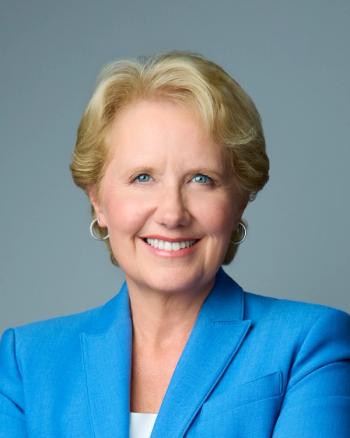
Los Angeles - Ann Jordan says it’s time to recognize the uncomfortable truth.
The president and CEO of the Healthcare Financial Management Association, Jordan says the healthcare industry is not financially sustainable.
And she has plenty who are backing up that assessment. An
In an interview with Chief Healthcare Executive® at the ViVE digital health conference, Jordan says the healthcare industry is facing an “existential tipping point” is coming within three to five years. And she says it’s time to act.
“It's now or never,” she says.
She adds, “Now that we've been confronted with the data and the facts, what are we going to do about it? Are we just going to talk about the problem? Are we going to look at solving it?”
Jordan says the system’s financial sustainability is precarious even as the system becomes less affordable for Americans. She says it’s time to see where technology can be applied “in a scalable way that delivers both to the public as well as to this essence of being financially sustainable as a system.”
“We’ve got to start being serious about where tech is being applied, and whether or not that vision people have, that tech can be the savior that health care is waiting for, can be a reality,” she says.
Fears of more closures
Jordan has led HFMA for nearly two years. She previously served as CEO of the American Society for Quality.
The HFMA has focused on healthcare finance professionals, hospitals, health systems, and health plans. But Jordan says she also sees a bigger mission.
“We’ve really got to step up our game and look at what's our role among stakeholders and the macroeconomics of the healthcare system,” Jordan says.
Jordan acknowledges the difficulty for hospitals and health systems, with many losing money and facing a precarious future.
The expected impact of cuts on Medicaid over the next decade
When asked if she sees the possibility of hospital closures happening, Jordan says, “There already are.”
“You're going to see hospital closures continue,” she adds.
Hospitals and health systems are making plans to deal with reduced funding from Medicaid programs and the expectation that
Health systems are looking at steps such as building more urgent care centers to help care for patients who don’t need to be in the emergency room. But she says health systems and hospitals are facing tougher choices.
She says health systems are facing “the realities of where certain hospitals potentially no longer can be supported in a community, and instead, what should be placed? Where should there be a hospital versus where should there be urgent care? What is the critical amount that's necessary in terms of how the workforce and the labor shifts are going to supply that?”
Hospitals in communities with fewer people relying on Medicaid are going to fare better, Jordan notes. And those that have more patients with lower incomes are going to face bigger problems.
“It's going to have an imbalance of impact depending upon care mix of those health systems,” she says. “And that is an undeniable truth that I do think the administration needs to have some ownership for. We really are going to go into an area where the success of a health system could depend upon the quality of life and ability of those groups to pay, so that is very unfortunate.”
At the same time, health systems are recognizing the need to invest in technology, including AI, and equipping hospitals with new tools that will enable them to serve their communities. And health systems will need to spend a considerable amount to upgrade their technology.
Given the need to invest more at a time when hospitals are facing the prospect of less funding from the federal government, Jordan says chief financial officers have a difficult road ahead.
“I don't envy the role of the CFO right now,” Jordan says.
“They're being tasked with having a crystal ball in terms of: are these technology investments going to pay out? Some of that is a big uncertainty,” she says.
Moving to value-based care
Jordan says she’s enthusiastic about the potential of AI and other advances in clinical care. But she says technology alone won’t save the industry.
“If you apply technology to a broken system without fixing the system first, you're going to get an accelerated problem,” Jordan says.
She sees the need for broader conversations about moving away from the fee-for-service model in the industry and moving toward investing in value-based care, with a focus on keeping people healthy and helping them avoid hospital stays.
She sees that as the focus of the federal government’s approach, including in
"You're seeing a trend from the administration to say value-based care is the future,” Jordan says. “I also believe that there has been a significant uptick in the payer conversation of going towards value-based care, as well as in the employer sector.”
Moving to value-based care poses financial challenges as well. For providers, she says, “The daunting reality of what that risk migration means to their finances is significant.”
Still, Jordan sees growing support within the industry for value-based care.
“There is a big camp, I would say, particularly the CFOs, that believe that is the future and that prolonging it is going to be more painful,” Jordan says. “But there are also some, particularly to get into the for-profit space, that are relying on fee-for-service and financially doing quite well. So what incentive do they have to look elsewhere? It's a mixed bag right now, but definitely seeing momentum from other stakeholders to move in that direction.”
She also says healthcare technology needs to “catch up to help promote and advance that trajectory.” She sees an uneven playing ground in how health systems can code and bill for fee-for-service versus value-based care.
“I'm hopeful that also the whole preventative and health movement will lead more to value-based care,” she says.
Setting the table
Given the gravity of the financial threats facing the healthcare industry, Jordan says HFMA won’t hide from the reality of the need to do better.
“As the organization charged with leading the financial management of health care, the fact that there is this sentiment that it is not affordable or financially sustainable, we have to own part of that,” Jordan says.
But she also sees the group’s mission as working with others to solve these monumental problems.
“We know we can't do it alone, but we can set a table to be a better collaborator with others in the industry to look at what can move the needle and to make the system truly sustainable for everyone,” Jordan says.
Despite her candidate assessment of the industry’s ills, Jordan says she’s optimistic about the future, including the changes in the finance and delivery of health care.
“It's exciting to say, we're going to be a part of this paradigm shift of this massive industry that really has needed the overhaul,” she says.