He spoke with us about plans to invest nearly $600 million in the Minnesota system, upgrading facilities and the alignment between the organizations.
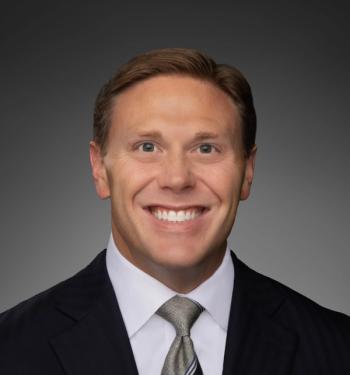
Jeffrey Flaks, Hartford’s president and CEO, talked with us about making care more accessible and affordable. And he talks about the desire to continuously get better.
Hartford HealthCare is focusing on making the system easier to use for patients.
Jeffrey Flaks, president and CEO of the Connecticut-based health system, has set a lofty goal. He says he wants to make Hartford healthcare “the most consumer-centric health system in America.”
“We really think that we have an opportunity to uplift health care in Connecticut, but actually across the country, because we're a great example of a system that's urban, rural, academic, teaching, suburban,” he tells Chief Healthcare Executive®.
Flaks points to the system’s investments in technology, behavioral health and rehabilitation. He also notes the system’s utilization of AI tools to make it easier to get answers, schedule appointments and connect for virtual visits around the clock.
“We have all the pieces,” he says. “But how do we put these together that it makes healthcare inherently better, so that you can demonstrate better outcomes from a quality standpoint, better from an affordability standpoint, that you can reduce the total cost of care for the people we care for and dramatically improve access?”
Patients are frustrated with the headaches involved in getting care, and the system has to do better, he says.
“It can't take 10 months to get a physical,” he says. “It can't take four months to go from a suspicion of a concern to get a confirmed diagnosis. We have to be better than that, and we're working to do that every day.”
‘People can’t be left alone’
Flaks says he’s looking to continue growing, but he’s more focused on making more healthcare services available.
“The way we're working to make it better is we're improving access, we're ensuring affordability,” Flak says.
The system is investing in AI, including the development of PatientGPT in partnership with K Health. With PatientGPT, patients can get answers to questions and set up virtual appointments with clinicians around the clock. Patients can also schedule appointments to be seen in brick-and-mortar locations.
About 50,000 patients have used HHC 24/7 to access virtual care, and about 200 have used PatientGPT.
Flaks says the early returns are encouraging. He says patients want the ease they have with shopping, banking or booking travel online.
“Health care is now adapting and doing the same thing,” he says. “It doesn't replace the traditional and conventional services. It's additive to it and it's complementary, but in our case, it's so tightly coordinated that it just makes it better. It enhances that level of care. So satisfaction scores are off the charts.”
Through PatientGPT and other strategies, Hartford HealthCare is focused on navigation, a topic Flaks stresses repeatedly.
“People can't be left alone. It's so intimidating for people when they enter a healthcare system. And we shouldn't rely on people to self-advocate for themselves. We have to have better systems,” he says, adding, “No one should ever feel left alone, and they should never feel unsupported.”
Focusing on prevention
Hartford HealthCare also is working to do more than treat patients in the hospital. Flaks says the system is focusing more on keeping patients healthy, or at least being able to manage conditions more effectively.
“We also have to move from a sick care system to a healthcare system, and a system that's providing prevention, wellness, early detection, coordination, home-care related services, differently than what we've done historically, with wearables and measurement devices and home monitoring,” Flaks says.
“So that's what makes this moment so special,” he continues. “These things shouldn't be looked at transactionally or episodically, but as we talk about consumerism, it becomes a relationship. And what people want is relationship, and they want to have trust, and they want to have loyalty. They want to have a health system that's not simply there to care for you in that moment where you're sick, injured, or your health becomes compromised, but is there for you 24 hours a day, seven days a week, anticipating your needs, supporting you on your health journey through good times and bad, in working for you, period. Always. And that's what we're creating.”
Flaks says it’s a journey, and the aim is to get better each day.
He points to the evolution of Apple’s iPhone, which is far more advanced than the initial version. And he says it’s likely that future versions of the iPhone are going to outpace the current model.
“That's how we have to look at where we are in health care,” Flaks says. “It's not about perfection. It's about getting better every day.”
“It's about improvements, and it's about, sometimes, breakthrough improvements,” he says. “Some days, it's incremental improvements, but it's about progress, and we need to continuously make progress and do it as fast as we can.”
Flaks says the system’s constant striving to get better played a big part in Hartford
“At Hartford HealthCare, we talk about being the best at getting better,” he says. “Not about being the best, but about being an organization that's obsessed with continuous improvement.”