






























The attackers were able to gain access to networks in a children’s hospital, authorities said. Organizations are being urged to search their networks for malicious activity.
The attackers were able to gain access to networks in a children’s hospital, authorities said. Organizations are being urged to search their networks for malicious activity.
On this week's episode of Data Book, Dedi Gilad, CEO and co-founder of TytoCare, discusses the evolving technology of a virtual visit, the current state of remote patient monitoring and more.

Gathering and having access to an enormous amount of data isn’t the most important thing; using that data at the time of need to influence care choices is crucial, said Jim Adams, chief innovation officer, AllianceRx Walgreens Prime.
On this week's episode of Data Book, Jesse Fasolo, director of technology, infrastructure, and cybersecurity at St. Joseph’s Health, discusses cybersecurity for hospitals and health systems, the biggest threats and points of vulnerability, how attackers are evolving, how to respond when there is a breach and more.

The hospitals are participating in a federal effort to collect and study the health data of women and babies. The hope is to reduce disparities in outcomes among racial and ethnic groups.

While telehealth is traditionally defined as between a patient and their provider, the use of telehealth to connect providers has been important, said Heather Bonome, PharmD, director, pharmacy URAC.

The Biden administration has directed federal agencies and private companies to address weaknesses. The government has also released a catalog of vulnerable systems and products.

Using and analyzing data for some subpopulations is still in the early stages and there remain a lot of questions around what is the right data to collect, said George Van Antwerp, MBA, managing director, Deloitte Consulting.

Managed cloud services can help healthcare organizations overcome obstacles that hinder their digital transformation

A University of Michigan study shows how wearable devices such as the Apple watch offer a window into the daily lives of thousands, offering valuable research and clinical information.

Panelists during a session at the Galien Week of Innovation discussed their technological innovations that allow for a health system with a more connected patient.

Information security is changing so fast, healthcare systems need to work on shorter strategies so they can pivot to what’s current, said Jesse Fasolo, PhD student, director, technology infrastructure & cybersecurity, information security officer, St. Joseph's Health.

When it comes to securing data, healthcare ranks number one — for all the wrong reasons.

Organizations must recognize that cybersecurity is more a journey than a destination.

Patients expect more convenient communication options and user-friendly technology from healthcare providers now.

Telehealth isn't the only enduring technology that was implemented during the COVID-19 pandemic; artificial intelligence (AI) was being used more than ever across Moffitt Cancer Center, said Edmondo Robinson, MD, MBA, MS, FACP, senior vice president and chief digital officer at Moffitt Cancer Center.
Hospitals and health systems are largely not equipped to handle all the patient data they could receive and turn it into actionable information, explained Edmondo Robinson, MD, MBA, MS, FACP, senior vice president and chief digital officer at Moffitt Cancer Center.

The COVID-19 pandemic has proven healthcare organizations, even in a crisis, need to tirelessly forge ahead with innovation to be successful. Senior-level healthcare executives need to follow the macro-trends driving the industry forward.
Hospitals receiving publicly reported negative feedback improved their electronic health record medication safety.
Tomer Shussman and Hila Glick of OneStep, a physical therapy app, discussed the challenges with traditional physical therapy, how OneStep improves the proportion of patients who complete their therapy, and more.

Automated patient engagement technology can streamline communications without excessive costs, implementation challenges or healthcare providers losing the "human touch."

Owing in large part to the pandemic, telehealth is growing increasingly popular with consumers.

A majority of hospitals had challenges related to public health reporting in 2019 with half reporting a lack of capacity to electronically exchange information with public health agencies.

Craig Newman, the chief strategy officer at HealthChannels for ScribeAmerica, discusses how technology can be used to help reduce the amount of time and energy providers spend doing administrative tasks.
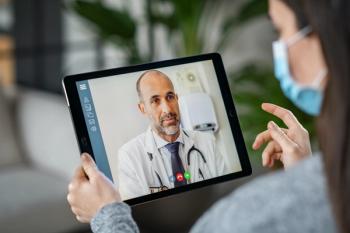
Telemedicine for diagnosis scaled up dramatically as a result of the pandemic, but there isn’t much known about the impact on diagnostic quality and safety.