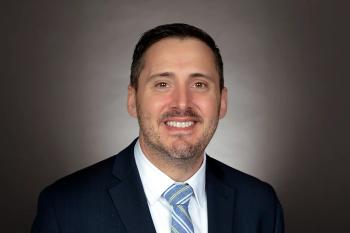
Maria Ghazal, president and CEO, talks about finding consensus across the healthcare ecosystem and in Washington.
The COVID-19 pandemic has proven healthcare organizations, even in a crisis, need to tirelessly forge ahead with innovation to be successful. Senior-level healthcare executives need to follow the macro-trends driving the industry forward.
“A gem cannot be polished without friction, nor a man perfected without trials.” This proverb from ancient Roman philosopher Lucius Seneca is a profound reminder for senior executives that excellence is born out of tribulation.
In a similar way, the COVID-19 pandemic has proven healthcare organizations, even in a crisis, need to tirelessly forge ahead with innovation to be successful. For CEO-level healthcare professionals and the organizations they serve, the current era of disruption is pushing healthcare into the future at a blistering pace.
Industry experts and healthcare futurists agree the pandemic has accelerated the need for organizations to innovate and adapt. Recently, management consulting firm
At the heart of transformation are new technologies and innovative applications. While senior-level executives should not be expected to know every new application or upgrade, they need to follow the macro-trends. Here are five that will drive the industry forward:
Personalized medicine. Already healthcare executives are planning for a day in which care is based on specific, personal, genetic information versus physical exams, patient complaints or symptoms alone. Researchers are hard at work identifying ways to collect data that will one day enable highly tailored healthcare.
A catalytic event will take place in 2028, when the National Institutes of Health completes its
Virtual care. The innovations and technology brought on by managing the COVID-19 pandemic has accelerated virtual care. The practice of telemedicine — once limited primarily to individual online consultations — has broadened to include coordinated and comprehensive virtual care. This convergence will continue to evolve to include data capture through wearables, video environments and post-acute monitoring. Senior-level executives should understand new capabilities, especially those powered by augmented information and artificial intelligence.
Pharmaceutical technology. Instead of making medications for diseases, drug makers will make treatments that work for the individual patient, taking specific needs into account. Data will also play a critical role in areas like clinical trials, in which several treatments are tested simultaneously and take place at home. This also extends to pharmacies where, according to pharmaceutical distributor
Cloud computing. COVID-19 dramatically increased the rate at which healthcare organizations moved information ecosystems to the cloud. In order to improve care, increase agility and protect data, healthcare providers shifted data centers to the cloud in droves — and there are no signs of that trend slowing. According to consulting firm Accenture,
Divisional structures. In the future, biotech companies will not be one organization, but a sum of multiple parts (like technology company Alphabet, the parent company of Google). Each company will operate separate units using a unified technology platform and mission. Innovative biotech companies will grow companies from scratch while making long-term investments in innovations and technology that enhances the entire organization. Senior executives will need to understand this new business model and how to fit in as a division, partner, or supplier.
To be sure, public health crises like COVID-19 are not the only frictions in healthcare. The push for expanded access to care, an escalating nationwide physician and nurse shortage and the unending call to bend the cost curve will continue to test the traditional limits of the U.S. healthcare system.
Disruptive technologies and innovation are already brightening the path to better medical outcomes. Indeed, the trend toward rapid innovation and transformation surges ahead. According to the Accenture study, 81% of senior healthcare executives say the pace of digital transformation for their organization is accelerating and 93% report their organization is innovating with an urgency and call to action this year.
As all these variables rub together with increasing force, the rough corners and faults will be polished out. A shimmering future lies ahead for those willing to keep pace with innovation.
John Figueroa is the chairman and chief executive officer of CarepathRx, a company providing innovative pharmacy solutions to hospital health systems. He also serves on the Pepperdine Graziadio Business School board and will moderate the