
























The University of Aberdeen has received nearly $10 million to use AI to determine the human behaviors that lead to attacks, and how to modify them.
The University of Aberdeen has received nearly $10 million to use AI to determine the human behaviors that lead to attacks, and how to modify them.
The company's DeepMind subsidiary and the UK's Royal Free health system may not have done enough to inform patients their data was in use. The two are working to develop an alert application to analyze risk of kidney disease.

The UN has released its annual report on global cybersecurity. The report aims to measure which countries are most committed to making the web more secure, scoring countries according to five pillars: technical, organizational, legal, cooperation and growth potential.

The recent attack ravaged everything from Maersk to Merck. It also impacted small health systems in the US, whether it meant to or not.

Using the same exploit as WannaCry, a new attack is ravaging computer systems worldwide.

Another week, another IT security threat with a conveniently catchy name: the U.S. Department of Health and Human Services late last week released a warning about a new threat, or series of threats, that could impact healthcare systems.
Experts say that the problem will only get worse, and exponentially so. Still, much can be learned from the recent WannaCry attack.
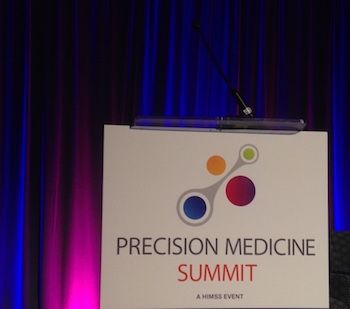
"We are pitting the enthusiasm of the futurists...against the public health perspective that says ‘be careful what you screen for,’” the prominent genomicist says.
The FDA, GINA, and variants of unknown significance all muddy the waters of genomic research and data storage.

Cerner Corp. nailed down a $4 billion-plus Department of Defense contract in 2015. The deal with the VA bypassed the typical public bidding process.

"My particular joy is in innovation, and trying to innovate before the problem occurs, before the pain is really felt, and having a solution ready for when it does hit," Suit says.

No matter how they safeguard, it’s not a question of whether health systems will suffer a breach but rather when, according to many experts.
Respected surgeon pens plea in Annals of Surgery urging increased use of electronic prescribing platforms to stem the tide of opiate misuse.
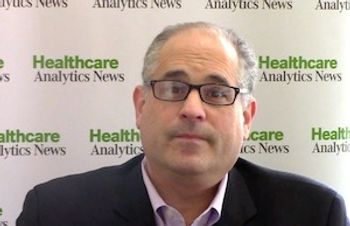
In the final interview installment, David Engelhardt of ReadyDock Inc., speaks of how the company’s collaboration with Samsung can clean a device of bacteria and data alike.
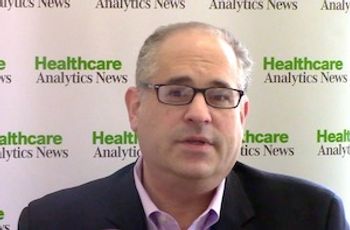
In Part 2 of his interview with HCA News, David Engelhardt, the founder of ReadyDock Inc., discussed the company's chemical-free mobile and tablet disinfection device designed to mitigate the burden of hospital-acquired infections. Here, Engelhardt details how ReadyDock’s technology works and infection-causing bacteria it can kill.
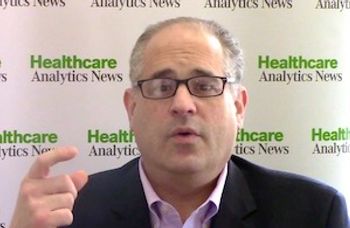
David Engelhardt, the founder of ReadyDock Inc., met up with HCA News for an interview at the HIMSS17 conference in Orlando, Florida. ReadyDock is chemical-free mobile and tablet disinfection device designed to mitigate the burden of hospital-acquired infections. In this section, Engelhardt speaks of the severity and complexity of the infection issue.

Trivalent has released a new encryption and file shredding technology, Trivalent Protect, at the HIMSS17 meeting. The new service, which works with the Windows OS, uses AES256 bit encryption and was labeled as the "next-generation" of data protection by the company.
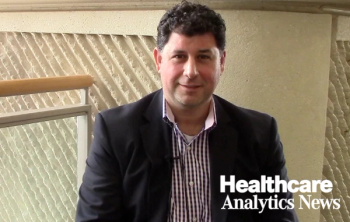
Trivalent’s Vice President of Products Yiannis Vassiliades sat down with HCA News to talk about challenges for the industry and the HIMSS experience.

Yiannis Vassiliades of Trivalent details how building data security for defense informs healthcare information security.
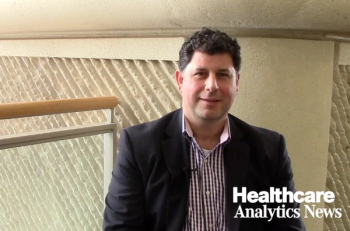
At HIMSS17 in Orlando, Florida, Yiannis Vassiliades of Trivalent spoke with HCA News about the cybersecurity risks associated with the healthcare industry, giving a basic example of the potential problems seen in day-to-day life and detailing his background in IT security and his organization’s aims.
At HIMSS17 in Orlando, Florida, HCA News spoke with Ashish Sharma, Chief Marketing Officer at Spectralink. Spectralink's communications technology is nearly ubiquitous in hospitals, and Sharma discussed the move from simple, utilitarian devices to the creation of new, integrated touchscreen units.

Ransomware, which is expanding at a rapid rate, has crippled several hospital systems and hurt patient care, warranting close attention and proper steps to address these concerns.
The main goal, he said, was not merely insuring compliance to regulation, but instead insuring actual security.

Goldberg sat down with Healthcare Analytics News to discuss the platform’s goal of delivering real-world data to oncology departments in order to expedite transitions to value-based models and provide attuned patient care.

With words like “crisis” and “epidemic” increasingly murmured after “opioid,” the maker of the famous, and perhaps notorious, opioid joins the effort to curb abuse.