
These episodes of the Data Book podcast gained the most attention over the past year.
These episodes of the Data Book podcast gained the most attention over the past year.
Michael Hamilton, founder and chief information security officer of Critical Insight, talks about trends in attacks and emerging threats in the coming year.
J.T. Lane of the Association of State and Territorial Health Officials talks about sharing information, working with the private sector and preparing for future threats.

Sponsored Content
Siva Namasivayam, CEO of Cohere Health, talks about using AI to help improve the process and reduce clashes between healthcare providers and insurers.
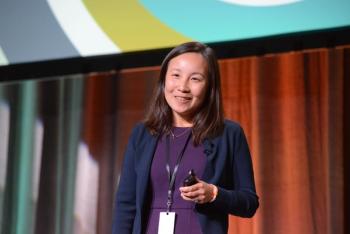
In the latest episode, she talks about using technology to improve care transitions, trends in post-acute care, and the changing desires of patients.
Christine Swisher of Project Ronin talks about the work to give doctors more data and insights to improve cancer care.

Arti Masturzo, the chief medical officer of CCS, talks about her diagnosis of breast cancer and how the healthcare industry needs to do better for patients.

The former CEO of Strava is now a venture chair for Redesign Health, which has launched dozens of companies. He talks about the ingredients for success and some all-too-common mistakes.
The chief medical officer of Qualtrics, Boissy talks about organizations living their values, improving access, and how empathy provides a great return on investment.

In our latest episode, the president of the healthcare technology company talks about the need to embrace technology so hospitals can survive.

C.K. Wang of COTA talks about the disparities in outcomes for the sexual and gender diverse population. He talks about the need for more information and improved training for clinicians.
She talks about the opportunities to meet the needs of patients who don't have easy access to mental health services and what must be done to expand telehealth.
In this episode, Chanda Hinton, founder of the Chanda Center for Health in Denver, talks about her journey, her center and how the healthcare industry can offer better care.
In the latest episode, he talks about how artificial intelligence can change the practice of medicine, its promise and some thorny ethical questions.
In our latest episode, Cotter talks about his nonprofit organization that helps the health sector prepare for emergencies, and the need for more data to manage the supply chain.
In our latest episode, Ryne Natzke of Sphere talks about how providers need to take different approaches to ensure they are getting paid without leaving patients with heavy debt.
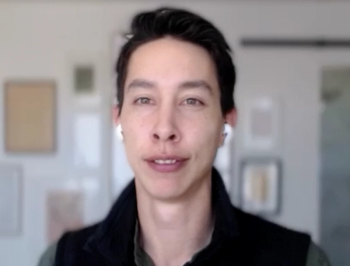
Justin teaches about digital health at Stanford Medicine and is a partner at GSR Ventures. He talks about the potential of ChatGPT, the ethical questions, and how AI will transform the industry.
In the latest episode, Ajay Khanna explains how healthcare organizations can use artificial intelligence to gain new insights into their business.
Kevin Olson is the chief information officer of Jupiter Medical Center, one of south Florida's top hospitals. He talks about digital transformation, cybersecurity and helping patients.

We talked about the company’s work with hospitals, the work towards interoperability, and why he’d like to see a nationwide patient ID.
The founder and CEO of Lumeon, he spoke with us about using automation to reduce the burden on staff and improve patient care.

Mark Spinner, CEO of AccessOne, discusses some of the financing concerns that patients expressed in a recent AccessOne survey as well as some solutions that hospitals and health systems can implement to improve communication and price transparency.
On this week's episode of Data Book, Dedi Gilad, CEO and co-founder of TytoCare, discusses the evolving technology of a virtual visit, the current state of remote patient monitoring and more.
On this week's episode of Data Book, Jesse Fasolo, director of technology, infrastructure, and cybersecurity at St. Joseph’s Health, discusses cybersecurity for hospitals and health systems, the biggest threats and points of vulnerability, how attackers are evolving, how to respond when there is a breach and more.
On this week's episode of Data Book, Charlotte Lee, MBChB, of Big Health, a digital therapeutics company, discusses digital therapeutic options for anxiety and insomnia, the importance of improved access to mental health care, reducing perceived stigma for mental health care and more.
Joe Polaris, senior vice president of product and technology at R1 RCM, discussed how price transparency can increase hospital revenues and address patient concerns regarding exorbitant healthcare costs as well as the impact that CMS’ new price transparency rule could have on hospitals.
Tomer Shussman and Hila Glick of OneStep, a physical therapy app, discussed the challenges with traditional physical therapy, how OneStep improves the proportion of patients who complete their therapy, and more.
Ira Tauber, president of Triose, discussed the supply chain issues that emerged at the beginning of the pandemic, as well as potential upcoming supply chain issues as hospitals and health systems care for an aging U.S. population.
Several problems exist with current programs that address social determinants of health (SDOH); however, a new social model aims to combat these issues and improve the programs’ effectiveness.